Orphanhood
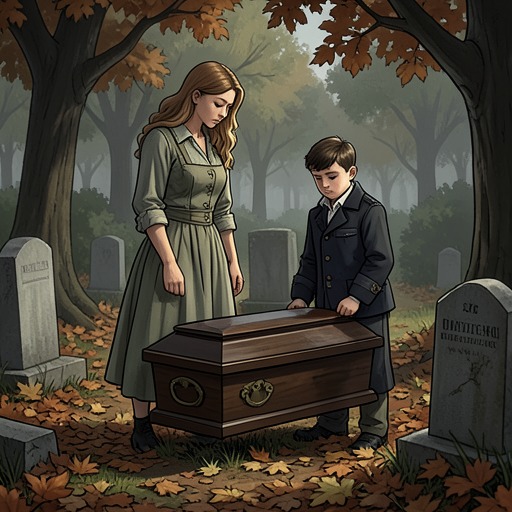
A Werewolf Thing: A Rejected Mate Werewolf RomanceOrphanhood is the state Saphira and Trevor enter when Trevor arrives with the news that their father has died. The revelation confirms that their mother was already gone, leaving the twins without either parent and forcing them to confront bereavement while other dangers, Saphira’s pregnancy, and Trevor’s vulnerable condition continue around them. The loss is therefore not only a family fact but a decisive reorganization of their identities: they become the surviving children of a dead household and, increasingly, one another’s closest remaining family.
The Revelation of Their Father’s Death
The orphanhood state is triggered abruptly in an intimate domestic scene. Ashton has just told Saphira that he loves her, and she begins to answer before Trevor runs into the kitchen, panting and crying. The sight of Trevor produces an immediate physical response in Saphira: her heart drops, her knees buckle, and she loses the strength to remain standing. The narrative connects this reaction to two earlier moments of overwhelming pain, including Trevor’s disclosure about their mother, so the new interruption is recognized by Saphira’s body before the news is spoken.
Trevor then states that their father is dead, and Saphira loses consciousness as the world disappears around her. His brief announcement carries the force of a final confirmation rather than an abstract fear. The event is communicated through Trevor’s tears, Saphira’s collapse, and the sudden cessation of her ability to respond, making the family loss an embodied shock rather than merely an item of exposition.
Recognition and Emotional Aftermath
When Saphira regains awareness, she initially resists the memory. She recalls Trevor telling her that her father was dead, but calls the conclusion crazy while smiling and shaking her head. Her denial depends on Ashton’s response: when he does not reassure her that the memory is false, his sad eyes reveal that the death is real. The silence becomes a form of confirmation, and Saphira’s expression changes as she understands what Ashton cannot soften for her.
Saphira repeats that her father is dead and gone, then recognizes the larger consequence: both of her parents are gone, and Trevor and she are orphans. The wording moves from the individual death to the permanent condition it creates. Her repeated refusal—covering her ears and whispering for the loss to stop—shows the mind attempting to block an irreversible fact, while her tears mark the point at which denial gives way to recognition. Ashton apologizes and rubs her back, offering physical comfort rather than an explanation that could undo the loss.
Orphanhood and the Future Family
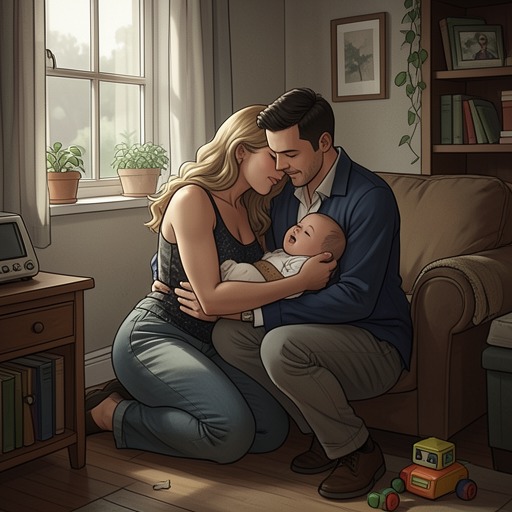
The death is sharpened by the future Saphira is carrying. In the aftermath, she rests a hand on her stomach and quietly says that her father will never see the child. When Trevor asks whether the baby is a girl, the exchange briefly turns grief toward an unborn descendant. The unborn child represents a continuation of the family, but also makes the father’s absence more concrete: he will not meet the next generation or occupy the living grandfatherly role Saphira imagines for him.
This juxtaposition gives orphanhood a generational dimension. Saphira and Trevor have lost the parents who connected them to the previous generation, while Saphira is preparing to become a parent herself. The family does not simply end with the death; it changes direction, with memory and responsibility passing toward the unborn child. Saphira’s statement also reveals why the loss cannot remain private mourning: it alters the future relationships that the child will never have.
Protection, Vulnerability, and Responsibility
The orphaned status develops alongside a wider pattern of danger and care. Earlier, an arrow that struck Saphira was revealed to have been coated in poison, establishing that the family’s losses unfold within a violent supernatural conflict rather than a secure domestic world. Later, Trevor is found limp, pale, and visibly struggling to wake, and Saphira has to beg Carmen for more than five minutes to be allowed an hour alone with him. Carmen has not slept since Trevor arrived and is eating poorly, evidence that his condition has exhausted his caregivers as well as threatening him directly.
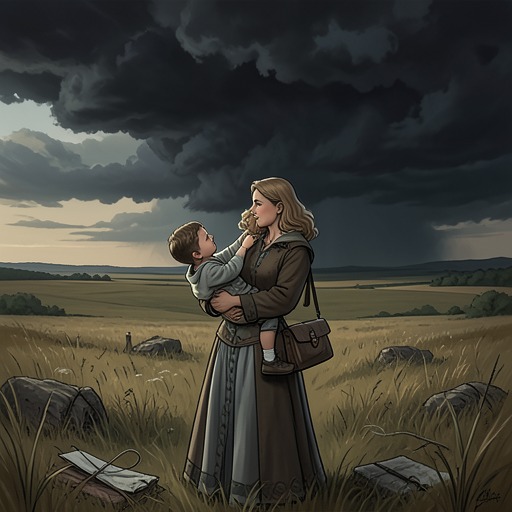
Trevor’s vulnerability and Saphira’s pregnancy also create competing definitions of protection. Trevor warns Saphira that she cannot lead an army because she is pregnant, while Saphira answers that she is half faery and can cast a protective charm on herself. His warning treats pregnancy as a reason to withdraw from combat; her response insists that her mixed heritage gives her a means of defending herself. For the orphaned twins, survival is not passive. They must negotiate who may act, who must be protected, and whether care preserves agency or limits it.
Continuing Bonds and Narrative Significance
Orphanhood does not dissolve the bond between Saphira and Trevor; it makes that bond more consequential. Trevor is the person who delivers the news, the sibling whose distress allows Saphira to sense that something terrible has happened, and the surviving family member with whom she shares the loss. Their orphanhood is thus presented as a paired condition rather than two isolated biographies. Each carries knowledge of the dead parents, and each becomes a living witness for the other.
The state also changes the meaning of Saphira’s relationships with Ashton and the unborn child. Ashton’s embrace catches her when her knees buckle, and later he holds her carefully around her stomach, combining romantic devotion with awareness of her pregnancy. Such gestures cannot replace the dead, but they form a new protective circle around the surviving family. The contrast is central to the novel’s treatment of loss: the parents are irretrievably absent, yet care continues through Trevor’s warning, Ashton’s physical support, Carmen’s sleepless vigilance, and Saphira’s determination to defend the life she carries.
As a narrative state, orphanhood therefore marks both an ending and an inheritance. It closes Saphira and Trevor’s access to their parents while compelling them to become custodians of memory, one another, and the next generation. The father’s death is the immediate catastrophe, but the lasting consequence is a changed family structure in which survival depends on bonds the characters must actively maintain.