Rose
A Werewolf Thing: A Rejected Mate Werewolf RomanceRose is Saphira Richards and Trevor’s maternal aunt and the sister of their deceased mother. Though she is initially associated with a family rupture and long silence, her intervention becomes the doorway through which the twins recover a suppressed part of their heritage. By summoning them to Rome to perform the faery ritual, Rose helps move their story from private family secrecy into the public and political world of faery leadership, prophecy, and conflict among supernatural species.
Identity and Family Background
Rose belongs to the maternal line that links Saphira Richards and Trevor to both faery and witch inheritance. Saphira explains that their mother had been the leader of the witches, while Rose, the sister whom the family rarely discussed, took over that position after their mother’s death. Saphira and Trevor are both half werewolf and half witch, so Rose’s place in the family is connected to a complicated inheritance in which bloodline, supernatural identity, and leadership are inseparable. Her authority is therefore not merely familial; it is part of the hidden structure that has shaped the twins’ lives.
Rose’s relationship with Saphira’s father had deteriorated after the death of Saphira’s mother. The two were not on speaking terms, and the family’s silence about Rose reflects that unresolved fallout. Her absence is consequently more than geographical distance. It marks a break in the maternal family and leaves Saphira and Trevor disconnected from the branch of their heritage that Rose represents.
The Summons to Rome
Rose re-enters the narrative by requesting that Saphira and Trevor visit her immediately because the matter is important. Saphira’s father makes clear that he will not accompany them; Rose has asked specifically for the twins, although they may bring their mates if they wish. The arrangement emphasizes both the personal and institutional nature of the summons. Rose is calling for the heirs connected to her family line, not simply inviting relatives to resume ordinary contact.
The destination is Rome, where Rose lives. At the airport, Saphira recognizes her aunt holding a sign marked with the family name. Rose is presented as two years younger than Saphira’s mother, with black hair arranged in a messy bun and sparkling green eyes. These concrete details give the reunion an intimate, recognizable texture after the tension surrounding her name and reputation. Rose drops the sign and pulls Saphira into a crushing hug, and Saphira relaxes when she realizes that Rose is not angry about the years without contact. Saphira also recognizes Rose’s familiar faery scent, confirming that the reunion is bodily and supernatural as well as emotional.
Rose then embraces Trevor, extending the welcome to both twins. Her thirteen-year-old daughter, Sondra, adds another link to the recovered family network by greeting Saphira enthusiastically and hugging her tightly. Sondra is Rose’s only child, so the Rome household introduces Saphira and Trevor to a maternal family that has existed outside their immediate experience. Within only a few hours of arriving, Saphira has spent much of her time catching up with relatives, although the intensity of the reunion leaves her exhausted.
Faery Leadership and Ritual Authority
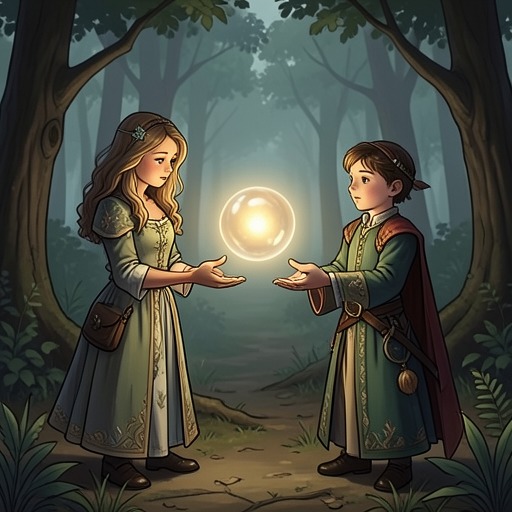
Rose’s summons ultimately leads to the revelation that Saphira and Trevor are needed to perform the faery ritual. Their grandfather explains that they were supposed to lead the faeries once they reached the age of eighteen, but their mother’s departure changed the expected course of succession. Rose’s role is thus situated within a broader family system of interrupted leadership. The twins are not being asked to participate in an arbitrary ceremony; they are being recalled to an obligation that had been attached to their age and ancestry.
The ritual also clarifies why Rose’s family has remained important despite the years of estrangement. The maternal line carries political responsibility, and the twins’ mixed supernatural identities make them figures at a boundary between groups. Their werewolf and witch heritage places them within more than one classification, while the faery ritual claims them for a leadership structure connected to their mother’s family. Rose’s significance lies in helping convert that concealed inheritance into an active public role.
Rose’s Place in a Divided Supernatural World
The larger world surrounding Rose is organized by sharp species boundaries and threats. Banshees are described as natural enemies of the faeries, and their screams can reach a pitch capable of killing members of the faery community if exposure continues. The Banshees’ arrival produces screams throughout the village, turning the faery setting into a site of immediate danger. Rose’s family leadership therefore exists under conditions in which identity is not symbolic only: belonging to one supernatural kind can determine who is protected, who is attacked, and who is treated as an enemy.
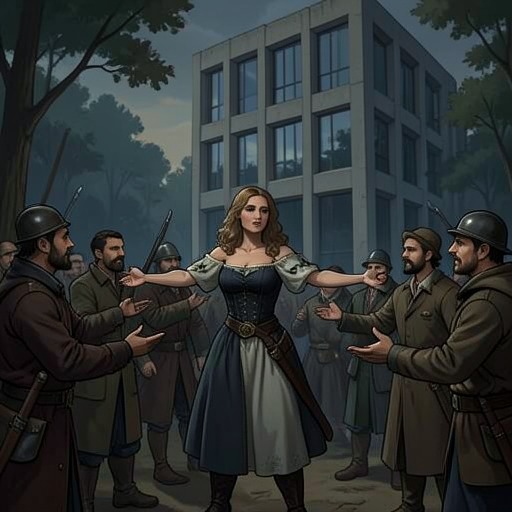
The danger extends beyond the faery-Banshee conflict. A prophecy states that a war will occur when the sun is black and stars cross the sky, with vampires and werewolves fighting to determine which race will become dominant. The prophecy further says that two hybrids of the same origin will lead the winning side. Against this background, Rose’s decision to summon Saphira and Trevor has implications beyond family reconciliation. Their mixed heritage and twin connection may place them at the center of a supernatural struggle in which inherited identity becomes a source of both authority and danger.
Narrative Function and Significance
Rose functions as a herald of buried identity. Her appearance does not resolve the family’s earlier conflict with a simple explanation, nor does it erase the years of silence. Instead, her summons forces Saphira and Trevor to cross from the familiar family setting into Rome, where relatives, ancestry, ritual, and leadership confront them at once. The journey changes the meaning of their past: what had seemed like a private loss connected to their mother becomes part of a larger interrupted succession.
Her reunion with Saphira also gives family restoration a physical form. The airport sign, the embrace, the familiar faery scent, and Rose’s welcome to Trevor counter the estrangement that had defined the family’s memory of her. Yet Rose’s warmth is inseparable from obligation. She brings the twins back not only because they are missed, but because their heritage requires their presence. In that tension between affection and duty, Rose embodies the way kinship in the novel operates as both refuge and summons.
Rose’s narrative importance is consequently concentrated rather than extensive: the evidence does not follow her through a long independent arc, but it gives her a decisive turning-point function. She is the family member who reopens a closed maternal line, connects the twins to faery leadership, and places their hybrid identity within the supernatural world’s larger system of prophecy and species conflict.