The Hybrid War Prophecy Revelation
A Werewolf Thing: A Rejected Mate Werewolf RomanceThe Hybrid War Prophecy Revelation is the disclosure that gives the novel’s supernatural conflicts a prospective historical shape. Amanda explains to Saphira Richards that a prophecy foresees a war between Vampires and Werewolves, fought under a sky marked by a black sun and crossing stars. The revelation becomes decisive when Amanda says that Saphira and her twin brother Trevor Richards may be the two hybrids destined to lead the winning side, making their bodies, family bond, and future choices central to the survival of two competing races.
Causes and Background
The prophecy is introduced during a private conversation between Amanda and Saphira. Amanda first asks Saphira not to react with panic, then explains that Vampires possess abilities beyond those of ordinary members of their race, including the power to erase memories and preserve the secrecy of their existence. That explanation establishes the context for the prophecy: knowledge is dangerous because the supernatural communities are divided by secrecy, competing authority, and the possibility of open war.
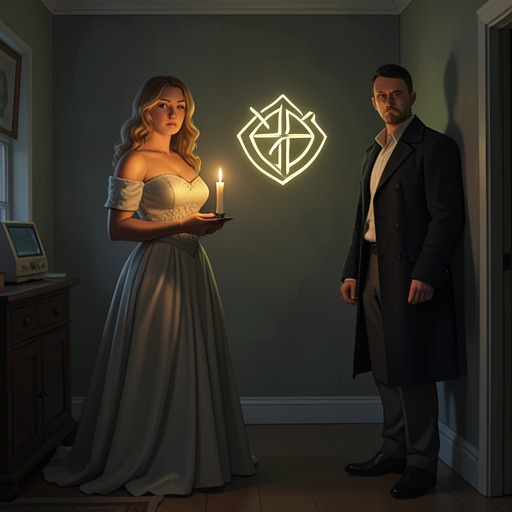
Amanda describes the prophecy as a conflict between Vampires and Werewolves that will determine which race becomes dominant. Its celestial sign is unusually specific: the war is associated with a solar eclipse and a meteor shower occurring on the same night. Amanda initially places that combination roughly a thousand years in the future, but the apparent distance collapses when she adds that a solar eclipse is expected in March and that the councils are discussing the possibility that a powerful sorcerer will deliberately summon a meteor shower on that night. The threat therefore depends not only on fate or natural signs but also on political actors willing to manufacture the conditions of the prophecy in order to provoke fighting.
What the Revelation Identifies
Amanda defines a hybrid as a being with two origins and applies that definition to Saphira and Trevor. Her conclusion is not presented as certainty based on a visible transformation; it is an alarming interpretation of their shared nature and ancestry. The disclosure changes the meaning of their twin relationship. Trevor is no longer only Saphira’s brother and emotional counterpart but potentially one half of a pair whose connection has consequences for the entire supernatural world.
The prophecy also supplies a test for recognizing the chosen hybrids. Amanda says that something extremely bad will happen and trigger an increase in power within the two individuals. That change will be accompanied by an internal awareness that war is approaching and by an instinctive preparation for it. The prophecy thus links revelation to ordeal: identity is expected to emerge through catastrophe rather than through a calm declaration or formal ceremony. Its knowledge is consequently both explanatory and threatening, because the event that confirms the prophecy must itself be terrible.
Immediate Personal Stakes
Saphira receives the revelation while pregnant, and pregnancy makes the predicted war more than a distant question of supernatural succession. She points out that she is not physically prepared to fight or lead an army. Amanda answers that if Saphira and Trevor are the hybrids named by the prophecy, they will have no choice but to fight. The prediction therefore places a collective demand against Saphira’s immediate bodily condition, turning her pregnancy into both a vulnerability and a political issue.
Trevor later takes the protective position that Saphira must not fight because she is pregnant and cannot lead an army safely. Saphira rejects that restriction. She argues that, as someone who is half Faery, she can cast a protective charm, and she insists that if she and Trevor are the chosen pair, she will participate regardless of his objection. Her response gives the prophecy an important ethical dimension: it does not simply assign a destiny to her; it provokes a struggle over whether others may define the limits of her agency through concern for her body and unborn child.
Connection to Power and Succession
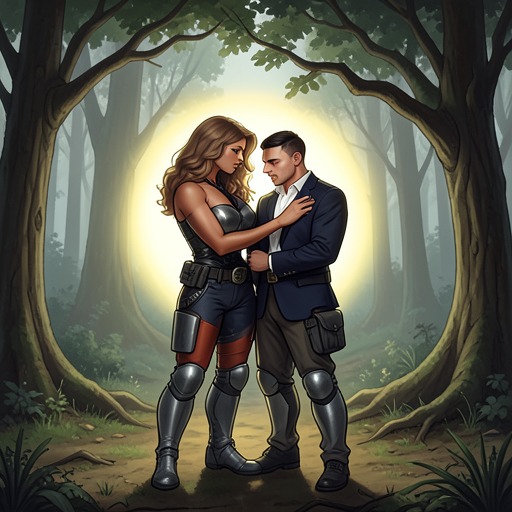
The revelation arrives within a broader sequence of changes in Saphira’s identity and public position. She has agreed to the full moon ritual with Ashton Smith, a ceremony in which a rejected mate accepts the partner previously rejected and restores the mate bond. She and Ashton are subsequently presented before the pack as the new Alpha and Luna, with Ashton becoming Alpha and Saphira joining him as Luna. The prophecy interrupts this movement toward domestic and pack stability by expanding the scale of responsibility from one pack’s leadership to a possible interspecies war.
Saphira’s family identity is likewise repeatedly placed beside institutional succession. Her grandfather summons Saphira and Trevor to perform the Færy ritual, explaining that they were expected to lead their people when they reached eighteen, although their mother’s departure changed that course. The Hybrid War Prophecy Revelation therefore gathers several succession pressures into one interpretive frame: Saphira is a mate seeking restored union, a pregnant future parent, a Luna, a potential Færy leader, and possibly one of the hybrids who will determine the dominance of Vampires or Werewolves.
Consequences and Narrative Significance
After hearing Amanda’s interpretation, Saphira begins to treat the prophecy as a possible explanation of events still to come rather than as an abstract legend. She wonders how she and Trevor could know whether they are the hybrids, and Amanda’s answer makes the future dependent on a coming crisis. The prophecy becomes a mechanism of suspense: the story must approach the solar eclipse and possible meteor shower while withholding the exact catastrophe that will awaken the hybrids’ power.
The revelation also changes the meaning of danger around Saphira. She is later found in a dark storage room, and she encounters unfamiliar spaces and boundaries that make captivity and escape part of the same larger pattern of threat. The book repeatedly connects supernatural power to limits: a wolf’s territory can be defended by force, a Banshee can cross boundaries more easily than a Faery, and a confined body may be unable to control its circumstances. Against that background, the prophecy promises extraordinary power but attaches it to injury, war, and loss of ordinary choice.
The event’s later resonance reaches beyond the immediate crisis into family continuity. Years afterward, Saphira is living as a mother to her six-year-old daughter Crystal, who calls to her in the kitchen while Saphira prepares a meal. That domestic image does not resolve the prophecy’s political danger, but it places the predicted war beside an enduring family future. The prophecy’s force lies in that contrast: it imagines Saphira and Trevor as instruments of a history governed by celestial signs and rival species, while the later scene preserves the intimate life that war threatens and that Saphira is determined to protect.