Werewolves
A Werewolf Thing: A Rejected Mate Werewolf RomanceWerewolves are the story’s principal supernatural community and its most important social framework. They are not presented merely as humans who can change shape: their lives are organized through packs, territories, heightened senses, wolf consciousness, mate bonds, family ties, and systems of rank. The narrative repeatedly shows Werewolves as capable of tenderness, loyalty, and collective protection, but also as a species divided by territory and threatened by internal and external conflict. Their world ultimately expands from school-day recognition and personal rejection into a prophecy of war between Werewolves and Vampires.
Nature and Recognition
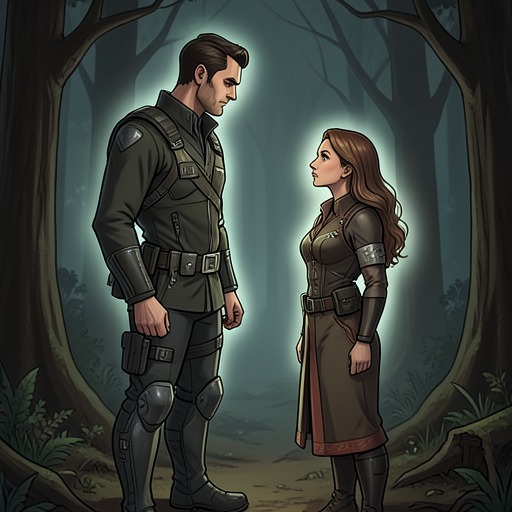
Werewolves possess senses and physical abilities that distinguish them from ordinary humans. Ashton Smith recognizes a strawberry scent at school that makes his wolf howl with joy, and he identifies Saphira Richards as a Werewolf from her scent when she enters his history classroom. The same instinctive response reveals the importance of mate bonds within Werewolf culture: Ashton’s wolf identifies Saphira as his mate before he is emotionally prepared to accept what that relationship would require. Simon List explains that it is easy for one Werewolf to recognize when another has found a mate, suggesting that the bond is not merely private sentiment but a visible and socially legible feature of their species.
The Werewolf identity can coexist with other inheritances. Saphira Richards and her twin brother Trevor Richards are both half Werewolf and half Witch, while their mother had been the leader of the Witches. Their mixed heritage places Werewolves within a wider supernatural network rather than isolating them as a self-contained species. The story therefore treats species identity as layered: a character may belong to a Werewolf world while also carrying another bloodline, another set of powers, and another political obligation.
Packs, Territories, and Boundaries
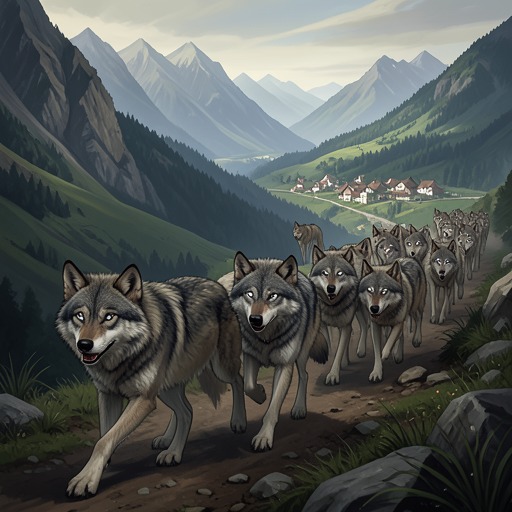
Werewolf society is structured through pack membership and territorial control. Ashton Smith is the rebellious son of an alpha, and Simon List belongs to the same pack as Ashton; Simon is also Ashton’s cousin. These details connect rank, kinship, and pack identity, showing that social position is inherited and relational rather than purely individual. School life provides a temporary human setting, but the pack remains the deeper structure through which the characters understand one another.
Territory is both a source of authority and a trigger for violence. When Saphira Richards crosses into another pack’s land, a member of that pack tells her that she is being taken in because she remains on their territory. He mind-links his pack, and multiple wolves pursue her after she escapes his attempted grab. The scene makes the boundary materially dangerous: crossing it changes a passing encounter into an act treated as an intrusion. Werewolf space is therefore governed by rules that can be enforced through collective pursuit.
The boundary system also differs between species. During the conflict with the Banshees, Saphira Richards understands that a Banshee can cross boundaries more easily than a Færy can cross into Banshee territory. A Færy entering that territory would be vulnerable to shrieks capable of defeating them. The comparison shows that supernatural borders are not neutral lines; their risks depend on the species attempting to cross them. Werewolf territorial logic belongs to a larger world of competing jurisdictions in which geography, bodily capability, and species difference determine who can pursue, defend, or escape.
Family, Mate Bonds, and Pack Loyalty
Mate bonds give Werewolf relationships an intensity that can exceed ordinary choice, but the story also emphasizes the conflict between instinctive destiny and personal refusal. Ashton Smith initially resists the idea that having a mate would force him to surrender his freedom. His recognition of Saphira Richards is immediate, yet his emotional response is hostile: he rejects her and tells her that he does not love her and never will. The Werewolf bond consequently appears as both a promise of belonging and a mechanism capable of producing humiliation and abandonment.
Family bonds operate alongside mate bonds and can be more dependable in moments of danger. Saphira Richards and Trevor Richards share a twin bond through which each can sense the other’s emotional distress, and physical injury to one is felt by the other. Their connection makes kinship a bodily experience rather than a legal label. Saphira initially dislikes the bond because it prevents her from hiding her pain, but it also ensures that Trevor can recognize when she is suffering even when she lies about it.
The same principle of family loyalty governs Saphira Richards’s actions during the Banshee attack. When Sondra is seized and carried toward Banshee territory, Saphira and Trevor coordinate through their mind link to recover her. Saphira explicitly treats Sondra as family and refuses to regard kidnapping as an acceptable loss. Trevor tackles the Banshee, causing Sondra to fall from the attacker’s shoulder. In this episode, Werewolf kinship becomes an ethical command: family is not left behind, even when rescue requires crossing into a hostile and species-specific danger zone.
Conflict, Protection, and Species Relations
Werewolves are defined by conflict with other supernatural peoples as much as by their internal bonds. The Banshees are described as natural foes of the Færy, and their lethal screams make prolonged exposure fatal. Elsewhere, a Vampire’s arrival produces an immediate defensive response from Saphira Richards, who smells the newcomer and rises protectively. Simon List adopts the same stance, but he protects the Vampire because she is his mate. The moment turns species hostility into a test of relational allegiance: Simon’s bond does not erase the danger associated with Vampires, but it changes whom he stands beside.
The Werewolves also face the Ravenous pack. During a battle, the attacking wolves can be distinguished from the defending pack by their condition: the defending Werewolves are clean and healthy, while the Ravenous wolves look dirty and sick. Their eyes provide the clearest mark of difference. The eyes of ordinary pack members match the colors of their human forms, whereas the Ravenous wolves have sickly pale-white eyes regardless of their human coloration. The contrast makes the Ravenous pack appear not simply politically opposed but visibly altered, and it gives the conflict a disturbing biological and moral texture.
Werewolf violence is not limited to rival packs. Rogues invade the pack’s boundaries and successfully pass the main guards by taking the territory off guard. When Saphira Richards cries out in fear, Ashton Smith shifts and runs toward the home, only to find the front door open and Saphira already gone. The invasion transforms territorial security into personal catastrophe. Pack defense is therefore also domestic protection: the failure of the boundary allows the abduction of a mate from the center of the pack’s private life.
Leadership, Prophecy, and Future Change
Werewolf society is tied to systems of succession. Saphira Richards and Trevor Richards are summoned by their grandfather to perform the Færy ritual, which they were expected to complete when they reached eighteen in order to lead the Færy community. Their mother’s departure changed that succession plan, but the obligation remains. Their Werewolf identity is thus entangled with inherited authority from another supernatural lineage, making leadership a matter of blood, age, ritual, and disrupted family history.
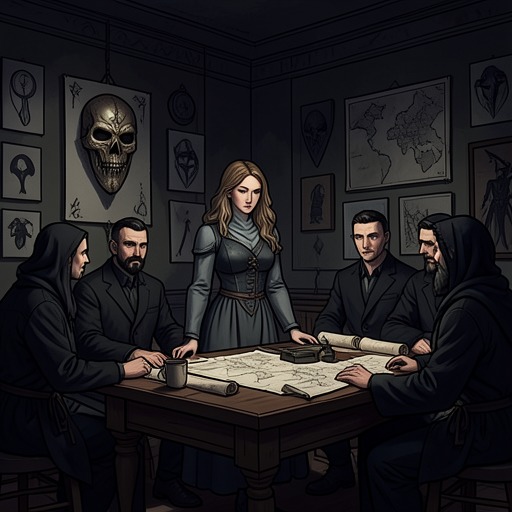
The species also stands at the center of a larger political prophecy. The prophecy states that war will occur when the sun is black and stars cross the sky, and that the war will be between Vampires and Werewolves. Its outcome is expected to determine which race becomes dominant. The prophecy further claims that two hybrids of the same origin will lead the winning side. Werewolves are consequently not only one community among several; they are one of the two populations whose future supremacy is at stake, while hybrid characters become possible instruments of historical change.
The prophecy creates a direct contradiction within Werewolf politics. One rogue tells Saphira Richards that he does not want a war and believes she is the one who will lead the Werewolves. He prefers the existing order because war would change everything. His words reveal that the rogue threat is not necessarily driven by a desire for species conquest. It can instead arise from resistance to prophecy, succession, and the destabilizing possibility that Saphira’s leadership would alter the current arrangement.
At the most intimate level, Werewolf vigilance persists even in apparent safety. When Saphira Richards awakens to the click of the main entrance door, her wolf immediately goes on high alert as footsteps approach. The response compresses the species’ larger condition into a domestic instant: Werewolf life depends on instinctive perception, but that instinct is also a burden, keeping danger present inside spaces that should offer rest. Across the story, Werewolves therefore function as a people whose strongest forms of belonging—pack, family, mate bond, and inherited leadership—are also the structures most exposed to territorial violence and political upheaval.