Gensher
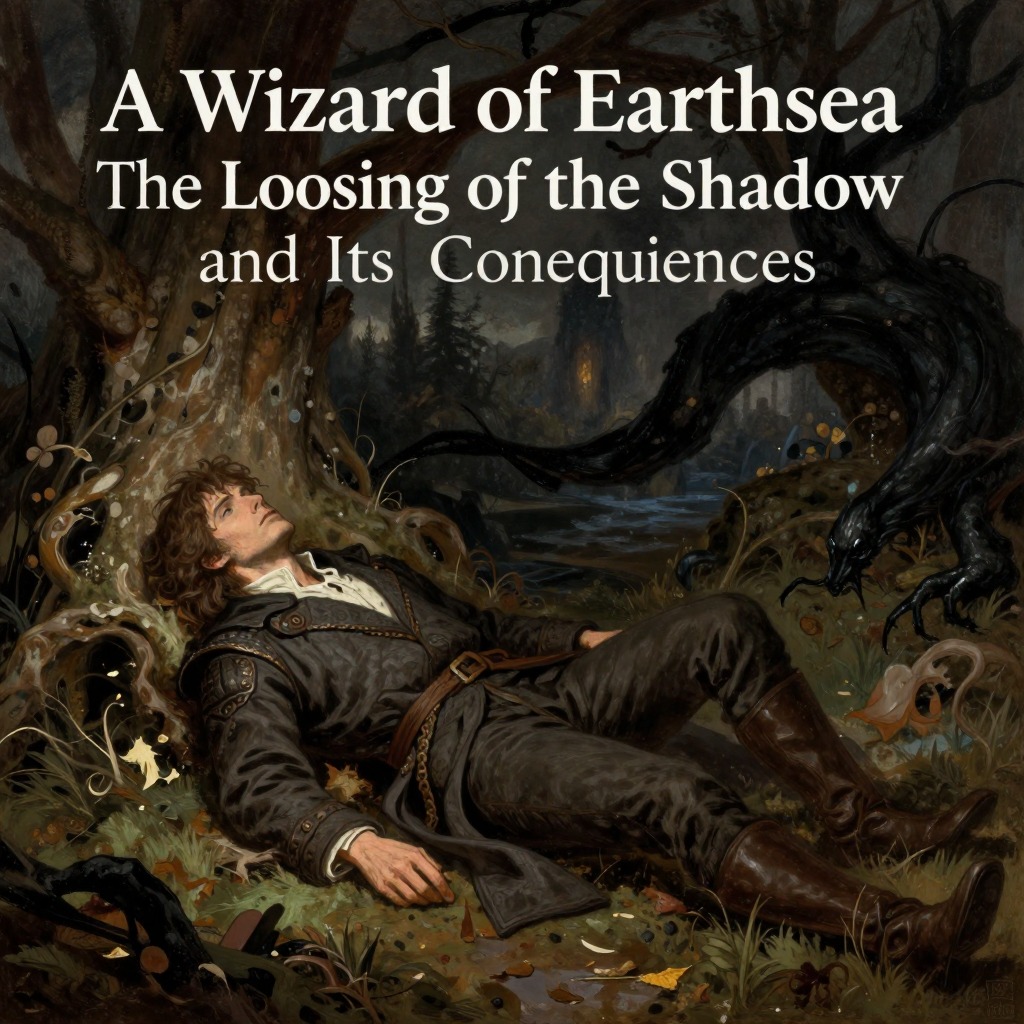
A Wizard of EarthseaGensher, the Archmage who succeeded Nemmerle after the catastrophic Loosing of the Shadow on Roke Knoll, is a figure of stern authority and grim pragmatism. Chosen by the Nine Masters in the Immanent Grove after Nemmerle's death, he was brought from Way Island by the Master Windkey, who raised the magewind into the sail of the ship that fetched him. Unlike the white-cloaked, ancient Nemmerle, Gensher was black-skinned, like most men of Way and the East Reach, and his look was black, under thick brows. He did not walk amidst wonders; he delivered hard truths and imposed necessary limits, shaping Ged's path not through gentle teaching but through confrontation with the consequences of his own pride and folly.
Authority and Judgment
When Ged, still lamed and scarred from the shadow's attack, finally came to offer his fealty months after Gensher's arrival, the new Archmage did not accept it. In the court of the Fountain where Ged had once felt himself a word spoken by the sunlight, Gensher looked at him and said, "I know what you did, but not what you are. I cannot accept your fealty." He refused to let Ged leave Roke, explaining that the shadow would find him and possess him, turning him into a gebbeth, a puppet doing the will of that evil. "You must stay here," Gensher declared, "until you gain strength and wisdom enough to defend yourself from it—if ever you do." He told Ged that Nemmerle himself could not undo the evil, and that the shadow had no name, calling it "the shadow of your arrogance, the shadow of your ignorance, the shadow you cast." When Ged said he would rather have died, Gensher rebuked him: "Who are you to judge that, you for whom Nemmerle gave his life?" He ordered Ged to go on with his training, to do his work well, for that was all he could do.
The Sending to Low Torning
When the Isle-Men of Low Torning begged for a wizard to protect them from the dragons of Pendor, Gensher judged their fear well founded and chose Ged for the post. He spoke to Ged with unusual directness about the darkness that clouded his future. "I do not know if I do right to send you from your safety here," he said very low. "I cannot see your way. It is all in darkness. And there is a power in the North, something that would destroy you, but what it is and where, whether in your past or on your forward way, I cannot tell: it is all shadowed." He admitted that he had thought of Ged for Low Torning because it seemed a safe place out of the way, where he might gather his strength, but confessed, "I do not know if any place is safe for you, or where your way goes. I do not want to send you out into the dark." Despite this foreboding, he sent Ged forth, and Ged accepted the charge not from obedience alone but because his desire had turned against fame and display, and the talk of dragons drew him with a great curiosity.
Narrative Role and Significance
Gensher functions as the embodiment of institutional authority and hard-won wisdom after catastrophe. Where Ogion taught through silence and patience, and Nemmerle through sacrifice and vision, Gensher teaches through limitation and consequence. He does not offer comfort or easy answers; he names the shadow as Ged's own arrogance and ignorance, and he refuses to accept fealty until Ged has proven himself worthy of trust. His refusal to see Ged's path, his admission that all is shadowed, underscores the gravity of the shadow's threat and the uncertainty of Ged's quest. Yet by sending Ged to Low Torning, he sets in motion the chain of events that leads to the dragon-battle, the flight to Osskil, and ultimately the final confrontation. Gensher's role is that of the stern gatekeeper who, by denying Ged easy absolution, forces him to earn his own redemption.