Ioeth
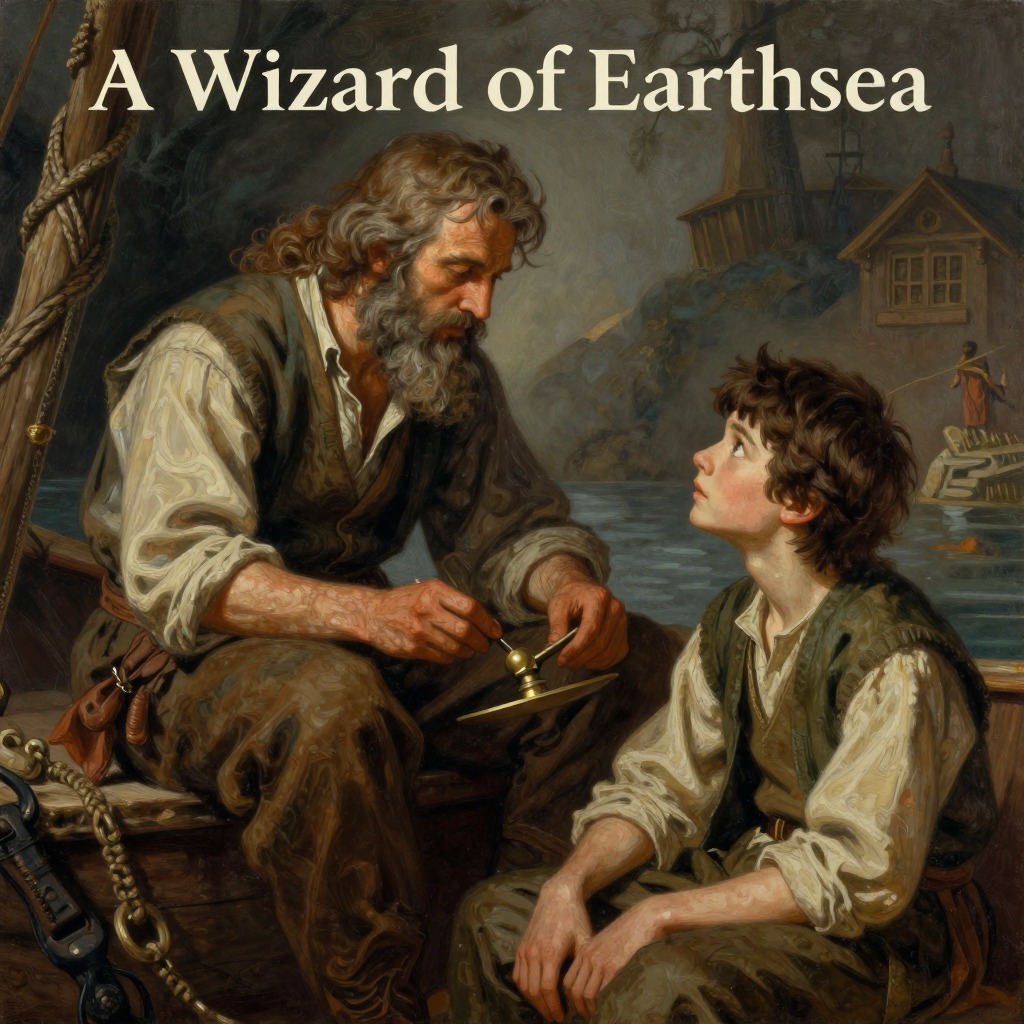
A Wizard of EarthseaIoeth is the little son of Pechvarry, the boatmaker who becomes Ged's first friend in Low Torning. He is a small child, the recipient of a catboat his father built and on which Ged laid a binding-spell and a finding-spell. His presence in the story is brief but decisive: his illness and death force Ged into a confrontation with the limits of his power and with the shadow that hunts him.
Illness and the Healing Attempt
Along in late autumn, Ioeth fell sick with the red-fever. The local witchwoman of Tesk Isle, a good hand at healing, treated him, and for a day or two all seemed well. Then in the middle of a stormy night, Pechvarry came hammering at Ged's door, begging him to save the child. Ged ran down to the boat with him and they rowed in all haste through dark and rain to the boatmaker's house. There Ged saw the child on his pallet-bed, the mother crouching silent beside him, and the witchwoman making a smoke of corly-root and singing the Nagian Chant, the best healing she had. She whispered to Ged, "Lord Wizard, I think this fever is the red-fever, and the child will die of it tonight." When Ged knelt and put his hands on the child, he thought the same, and drew back a moment. The Master Herbal had taught him the first and last lesson of all healing lore: "Heal the wound and cure the illness, but let the dying spirit go." The mother saw his movement and the meaning of it, and cried out aloud in despair. Pechvarry stooped down by her saying, "The Lord Sparrowhawk will save him, wife. No need to cry! He's here now. He can do it." Hearing the mother's wail, and seeing the trust Pechvarry had in him, Ged did not know how he could disappoint them. He mistrusted his own judgment, and thought perhaps the child might be saved, if the fever could be brought down. He said, "I'll do my best, Pechvarry." He set to bathing the little boy with cold rainwater that they brought new-fallen from out of doors, and began to say one of the spells of feverstay. The spell took no hold and made no whole, and suddenly he thought the child was dying in his arms.
Crossing the Boundary
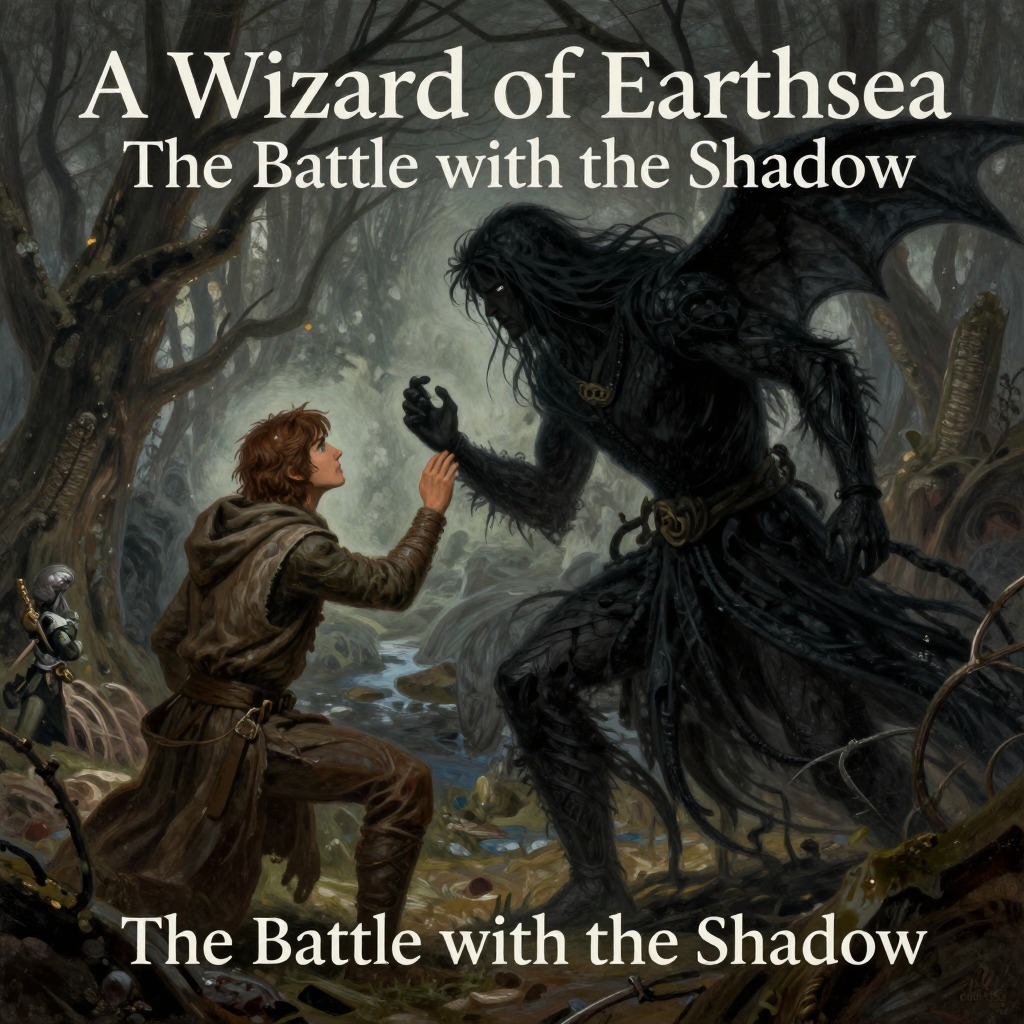
Summoning his power all at once and with no thought for himself, Ged sent his spirit out after the child's spirit, to bring it back home. He called the child's name, "Ioeth!" Thinking some faint answer came in his inward hearing he pursued, calling once more. Then he saw the little boy running fast and far ahead of him down a dark slope, the side of some vast hill. There was no sound. The stars above the hill were no stars his eyes had ever seen. Yet he knew the constellations by name: the Sheaf, the Door, the One Who Turns, the Tree. They were those stars that do not set, that are not paled by the coming of any day. He had followed the dying child too far. Knowing this he found himself alone on the dark hillside. It was hard to turn back, very hard. He turned slowly. Slowly he set one foot forward to climb back up the hill, and then the other. Step by step he went, each step willed. And each step was harder than the last. The stars did not move. No wind blew over the dry steep ground. In all the vast kingdom of the darkness only he moved, slowly, climbing. He came to the top of the hill, and saw the low wall of stones there. But across the wall, facing him, there was a shadow. The shadow did not have the shape of man or beast. It was shapeless, scarcely to be seen, but it whispered at him, though there were no words in its whispering, and it reached out towards him. And it stood on the side of the living, and he on the side of the dead. Either he must go down the hill into the desert lands and lightless cities of the dead, or he must step across the wall back into life, where the formless evil thing waited for him. His spirit-staff was in his hand, and he raised it high. With that motion, strength came into him. As he made to leap the low wall of stones straight at the shadow, the staff burned suddenly white, a blinding light in that dim place. He leaped, felt himself fall, and saw no more.
Aftermath and Significance
What Pechvarry and his wife and the witch saw was this: the young wizard had stopped midway in his spell, and held the child a while motionless. Then he had laid little Ioeth gently down on the pallet, and had risen, and stood silent, staff in hand. All at once he raised the staff high and it blazed with white fire as if he held the lightning-bolt in his grip, and all the household things in the hut leaped out strange and vivid in that momentary fire. When their eyes were clear from the dazzlement they saw the young man lying huddled forward on the earthen floor, beside the pallet where the child lay dead. To Pechvarry it seemed that the wizard also was dead. His wife wept, but he was utterly bewildered. The witch had some hearsay knowledge concerning magery and the ways a true wizard may go, and she saw to it that Ged, cold and lifeless as he lay, was not treated as a dead man but as one sick or tranced. He was carried home, and an old woman was left to watch. The little otak, hiding in the rafters, crept down and began to lick Ged's hands and wrists, his temple, his scarred cheek, and softly his closed eyes. Very slowly under that soft touch Ged roused. He woke, not knowing where he had been or where he was or what was the faint grey light in the air about him, which was the light of dawn coming to the world. Later, when Ged thought back upon that night, he knew that had none touched him when he lay thus spirit-lost, had none called him back in some way, he might have been lost for good. It was only the dumb instinctive wisdom of the beast who licks his hurt companion to comfort him, and yet in that wisdom Ged saw something akin to his own power, something that went as deep as wizardry. From that time forth he believed that the wise man is one who never sets himself apart from other living things, whether they have speech or not. He had now made unscathed, for the first time, that crossing-over and return which only a wizard can make with open eyes, and which not the greatest mage can make without risk. But he had returned to a grief and a fear. The grief was for his friend Pechvarry, the fear was for himself. He knew now why the Archmage had feared to send him forth, and what had darkened and clouded even the mage's foreseeing of his future. For it was darkness itself that had awaited him, the unnamed thing, the being that did not belong in the world, the shadow he had loosed or made. In spirit, at the boundary wall between death and life, it had waited for him these long years. It had found him there at last. It would be on his track now, seeking to draw near to him, to take his strength into itself, and suck up his life, and clothe itself in his flesh. Ioeth's death thus becomes the catalyst that forces Ged to recognize the shadow's active, personal pursuit and the true stakes of his quest.