Old Man of the Nameless Isle
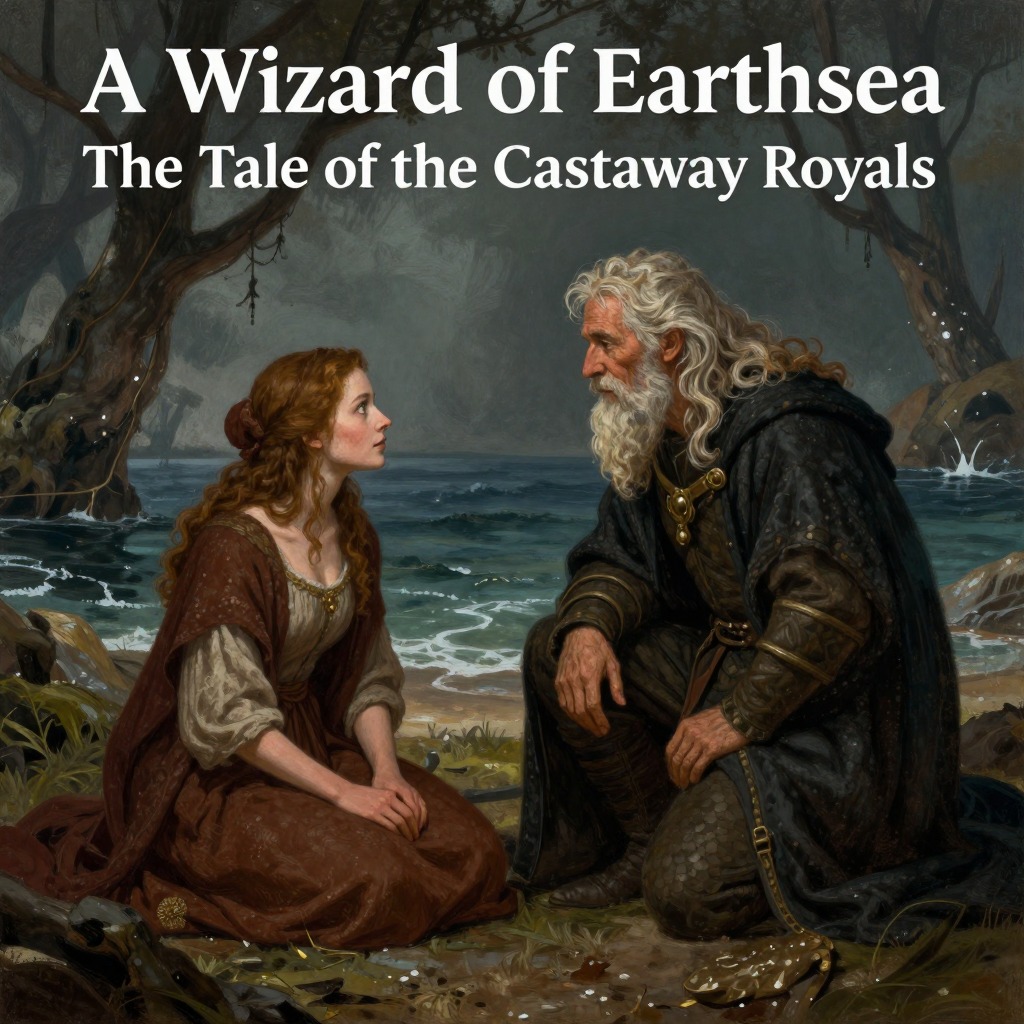
A Wizard of EarthseaThe Old Man of the Nameless Isle is one of two castaways—a prince and a princess of the Kargad Empire—who were exiled as children to a barren sandbar in the East Reach and lived there for forty or fifty years in complete isolation from all other human beings. When Ged, shipwrecked and half-drowned, stumbles into their driftwood hut, the old man cowers in terror against the far wall, his mind broken by a childhood nightmare of blood and giants and screaming. He is a figure of profound desolation, a living emblem of the cruelty of the Kargish dynastic politics that cast him away, and his silent, sullen dread marks the furthest extreme of human loneliness that Ged encounters on his journey.
Identity and Background
The old man is a Kargish noble, almost certainly a prince of the royal house of the Kargad Empire. The evidence of his origin is a small child's dress of silk brocade stiff with seed-pearls, stained with salt and yellow with years, which the old woman keeps wrapped in a rag. On the bodice, the pearls are worked into the double arrow of the God-Brothers of the Kargad Empire, surmounted by a king's crown. Ged guesses that a tyrant or usurper, fearing to shed kingly blood, sent the two children—one a boy of eight or ten, the other a stout baby princess—to be cast away on an uncharted islet far from Karego-At, to live or die. The old man's only language is Kargish; when Ged asks "Kargad?" he nods once, like a sad old puppet on strings, but that single word is the extent of their communication. He has forgotten that there are other people in the world.
Life on the Nameless Isle
The islet is a rocky sandbar a mile wide at its widest, fringed with shoals and rocks, with no tree or bush, only bowing sea-grass. The hut is piled up from driftwood planks and branches. Their water comes from a little brackish well; their food is fish, shellfish, and rockweed. The tattered hides in the hut and the store of bone needles and fishhooks come from spotted seal. The old man's sullen dread never lessens; when Ged comes close enough to touch him, he hobbles away, peering back with a scowl around his bush of dirty white hair. He refuses Ged's offer to take them to any land—Gont, Spevy, the Torikles, even a lonely shore of Karego-At—shaking his head and shaking his head, all his memory of other lands and other men a child's nightmare.
Relationship with the Old Woman
The old man and the old woman live together in the hut, but their relationship is one of shared trauma rather than tenderness. The old woman, who at first hides whimpering under a pile of rags, later brings Ged water and mussels, and shows him the little silk dress and a broken ring. The old man, by contrast, remains frozen in terror throughout Ged's three-day stay. When Ged leaves, they both keep hidden in the hut, as if they fear to watch him go. They die alone on the islet, leaving no sign of their presence except the sweet spring that Ged charms for them, which gives the place its later name, Springwater Isle.
Narrative Role and Significance
The Old Man of the Nameless Isle serves as a stark contrast to the world of wizards and dragons that Ged inhabits. He is a victim of the Kargish Empire's brutal politics, a living reminder that the white-skinned, yellow-haired people Ged fought as a boy are not merely savage invaders but also capable of inflicting terrible cruelty on their own. His presence deepens the novel's moral complexity, showing that the Kargish are not a monolithic enemy but a people with their own hierarchies of power and suffering. The old man's refusal to leave his barren isle, even when offered rescue, underscores the depth of his psychological damage and the impossibility of return from such extremity. Ged's gift of a sweet spring is the only kindness he can offer, and it outlasts both their lives.