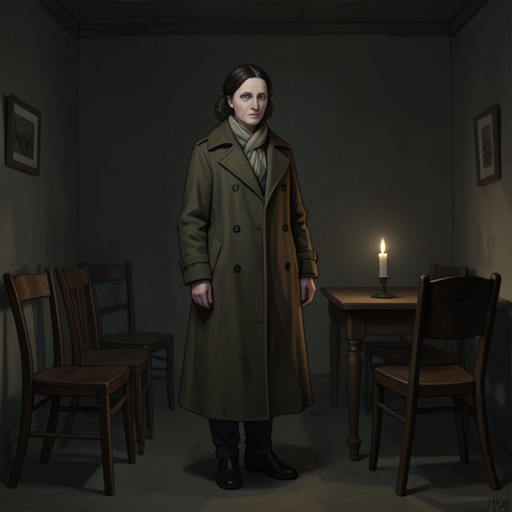
Adele Fairley’s reliance on alcohol
A Woman of SubstanceAdele Fairley’s reliance on alcohol is presented as a recent, concealed response to pain and anxiety, not as an established condition beyond her control. Whisky and brandy offer temporary relief, and Murgatroyd helps her obtain them without Adam’s knowledge. Yet Adele can still resist drinking when circumstances demand it. The contrast between secret access, urgent craving, and deliberate restraint makes her dependence a private negotiation with distress rather than a simple portrait of habitual excess.
A private means of relief
Adele’s drinking serves an immediate purpose: it blunts the sharp edges of her pain. The narrative specifies that she has turned to alcohol as an anodyne only within the last year, and distinguishes her from someone already sodden with drink or a confirmed alcoholic. That distinction matters. Her need is real and growing, but the evidence also shows awareness, interruption, and choices about when to drink. Alcohol is a means of coping whose use has begun to shape her routines, not a condition the narrative presents as complete or irreversible.
The means of access are discreet. Murgatroyd supplies whisky and brandy surreptitiously so Adam will not know, making the drink part of a small domestic arrangement conducted behind her husband’s back. Adele’s dependence therefore has a social form as well as a physical one: it relies on the cooperation of a servant whose own position in the household gives him unusual importance to her. She regards him as someone who can procure what she wants, even as his foul temper and jurisdiction are otherwise part of the oppressive household from which Emma seeks relief.
Craving, memory, and concealment
One episode makes the habit’s disorienting effect tangible. After an earlier search for a drink, Adele finds the decanter on the floor and cannot at first remember why it is there. Examining it for cracks, she gradually recalls taking it from the vitrine. She then laughs at her earlier panic and recovers a sense of authority by imagining herself ordering Murgatroyd to bring the bottles. The decanter, the forgotten action, and the locked cabinet disclose a pattern that Adele does not openly discuss: desire has already led to secret action, while the surrounding household keeps that action hidden.
The same scene places the craving amid physical discomfort. Adele is cold, her hands and feet feel like icicles, her thin robe offers little warmth, and the fire has dwindled to embers. The decanter has slipped unnoticed to the floor. These details connect the drink to a moment of bodily vulnerability, without reducing every discomfort to alcohol or making the episode proof of continuous intoxication. Her ability to recall what happened and to restore the decanter to the vitrine shows a return to deliberate concealment as the scene ends.
Restraint before the dinner party
Before a dinner party, Adele manages to postpone drinking by going to bed. She falls asleep from exhaustion and wakes feeling better and less anxious. The narrative calls the strategy cowardly, but also confirms that it works: for that afternoon, removing herself from temptation helps her resist. She keeps herself occupied with the newspaper, yet an advertisement for ale brings the whisky to mind and makes her mouth dry. Reading about a hunt becomes another effort to direct her attention away from the drink she imagines.
Her restraint has a particular occasion and cost. Adele fears Adam’s wrath if she behaves strangely that evening, and expects a long dinner at which several wines will be served. She therefore tries to preserve a clear head and not begin drinking early. When Edwin suggests brandy to give her strength, she cries out sharply, startling and hurting him. She then explains that she might take a small glass for medicinal purposes at another time, but wants to wait until the dinner is over. The explanation is not evidence that the desire has vanished: the account makes clear that she needs a drink desperately and is fighting the urge. Her refusal is purposeful, but effortful.
Dependence within the household
Adele’s relationship with Emma adds a second dimension to her dependence. Emma takes charge of her daily needs and comforts, and Adele comes to regard her as indispensable. The narration places this reliance alongside Adele’s dependence on Murgatroyd for secret supplies of drink, while distinguishing the two women’s different roles: Emma provides care; Murgatroyd provides alcohol. Adele does not appear to object to Emma’s sometimes bossy manner, and apparently does not notice it, allowing the younger woman to manage much of her everyday life.
That care is not presented as a cure for Adele’s drinking. Rather, her vulnerabilities gather within a household where help itself is divided into unequal, private arrangements. Emma feels protective toward her and interprets her lapses as thoughtlessness and lack of exposure to working-class life, not conscious cruelty. Adele, meanwhile, must conceal her drinking from Adam, resist it when the evening requires her composure, and accept care from others. Her reliance on alcohol thus marks both the persistence of her pain and the narrow, secret channels through which she attempts to manage it.