Cave beneath Ramsden Crags
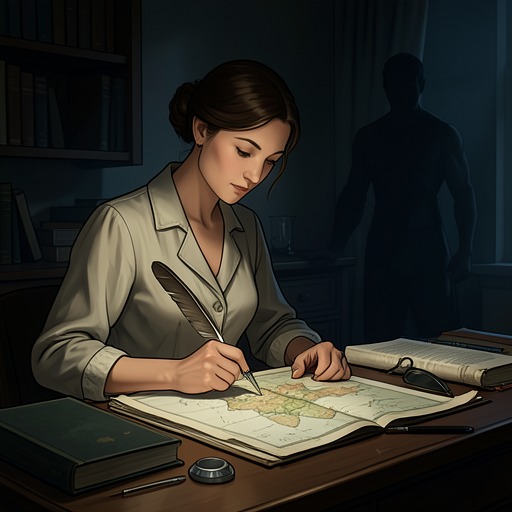
A Woman of SubstanceThe Cave beneath Ramsden Crags is a concealed cavern whose discovery brings Emma Harte and Edwin Fairley together in exploration and whose inscriptions expose a buried connection between their families. A narrow opening in the face of Ramsden Crags leads into a chamber that is at once a physical mystery and a record of private history. The names cut into its wall, read alongside objects preserved elsewhere, make the cave a place where a past that has been concealed can begin to be understood.
Discovery and entrance
Emma and Edwin uncover the entrance while testing a rock face with a crowbar. When the rock finally shifts, it reveals an aperture about eighteen inches wide and two feet high. Edwin peers through and finds a little tunnel, along with a shilling and a nail, small clues that make the hidden space feel already touched by human hands. The discovery is shared: Edwin has pressed the crowbar, but Emma is beside him when the rock gives way, and she hurries to the opening to see where it leads.
The passage is low at first. Emma follows Edwin inside, crawling before the tunnel rises and widens enough for them to move crouched. After the brightness outside, she adjusts to the darkness by the light of candles. This gradual passage from a cramped entrance into an expansive chamber gives their exploration a physical shape: the cave is not visible all at once but reached by moving carefully inward.
Interior and traces of earlier visitors
The cave opens into a large cavern with a high, conical ceiling. Its rocky walls alternate between ledges, deep indentations, and unusually smooth stretches. Candlelight reveals the scale and variety of the interior, while its cool, dry silence contrasts with the effort and conversation of the explorers. Emma responds to the cavern with awe; for both visitors, its size makes it more than the little tunnel they expected to find.
The chamber also contains evidence that they are not its first visitors. Edwin finds remnants of a fire: blackened wood that crumbles when he kicks it. Emma spots what appear to be sacks in a far corner, and above them Edwin notices an old piece of tallow candle on a ledge. These remnants suggest earlier use without establishing who used the cave or when. The shilling, nail, charred wood, sacks, and candle turn discovery into a question about the people who had been there before.
Names and the hidden family history
While searching the cavern, Emma notices faint marks on a smooth patch of wall. By bringing her candle close, she recognizes writing. The first name she reads is Elizabeth; below it are several variations, including Elizabetta, Isabella, Lilibeth, Beth, Betty, Bess, Eliza, Liza, and Lisa. Beside this column, the much larger name ADAM is carved above a heart pierced by an arrow, with the initials A E inside it.
The arrangement makes a personal attachment legible in the stone: many forms of Elizabeth’s name gathered beside Adam’s, joined by a heart and initials. Emma connects the initials with the locket she has found hidden beneath the velvet lining of her mother’s wooden jewellery box. The locket contains a picture of Elizabeth Harte as a young woman and a small lock of fair hair. Seeing the cave carving, Emma recognizes the possibility that her mother and Adam Fairley were connected, though the inscription by itself does not tell her the full story.
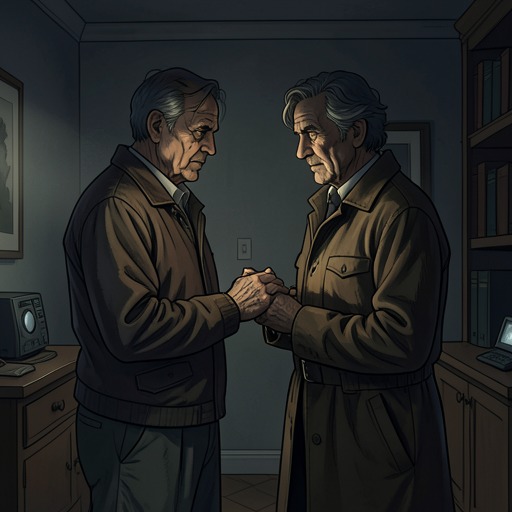
Edwin offers a different explanation while they sit together in the cave. He reasons that the Elizabeth in the carvings may have been Lord Sydney’s sister, because her name was Elizabeth and his father and the Sydneys had grown up together. Emma has not known of such a sister. The scene therefore holds two readings at once: Edwin treats the marks as a childhood friendship or romance from his father’s past, while Emma’s locket gives the initials a more intimate and troubling relevance to her own family.
Memory carried beyond the cave
The cave’s importance continues through objects and stories passed between generations. Edwin later gives Adam Fairley a painted pebble wrapped in a silk handkerchief, identifying the image as resembling Olivia Wainright. Decades afterward, Jim Fairley brings Emma the stone on behalf of his grandfather and explains that Adam had eventually understood it as a portrait of Elizabeth Harte, not Olivia. He also passes on Adam’s account of the Harte women’s recurring, thwarted attachments to Fairley men and his appeal for the younger generation to end that pattern.
The later revelation does not make every uncertainty about the carvings disappear; instead, it changes how the family reads its surviving evidence. The cave inscription, Emma’s hidden locket, and Adam’s painted stone belong to a chain of objects whose meanings are recognized belatedly and transmitted unevenly. First Emma sees the names and suspects a secret; much later, a descendant delivers the family history that those marks had only partly disclosed. The cave thus serves not simply as a secluded setting for Emma and Edwin, but as a storehouse of memory whose signs acquire new force as the next generation asks what happened before it.