Edwina’s birth certificate
A Woman of SubstanceEdwina’s birth certificate is a legal document that becomes the fragile hinge between biological truth, chosen parenthood, and a family’s carefully managed account of itself. Created when Emma Harte gives birth outside marriage, it records Blackie O’Neill as the father, although he is not Edwina’s biological father. Hidden from Edwina for years, the certificate eventually exposes the lie that Joe Lowther was her birth father—but does not disclose the deeper truth that Edwin Fairley was.
Registration and the name entered
When Emma is preparing to register her baby’s birth in Leeds, Blackie reminds her that the law requires the father’s name. Emma has already considered the difficulty and intends to give the registrar no name, leaving the father unknown. Blackie proposes an alternative: she should put his name on the certificate. He recognizes that the document will still show that the child is illegitimate, but argues that a named father is preferable to an officially blank place.
Emma resists the suggestion, asking why Blackie should take on the responsibility. His reply makes the proposal more than a practical solution: he asks whether she would rather name the real father. Emma refuses. Blackie then insists that the decision is settled and says he will accompany her to the registrar’s office to ensure that she follows through. He presents his offer as responsibility for the child, whom he affectionately calls his godchild. The certificate’s entry therefore begins as a deliberate act of protection and care, not an assertion of biological paternity.
The record preserves the child’s illegitimate status even as it supplies a father’s name. That distinction matters: the certificate cannot make Blackie Edwina’s biological father or erase the social consequences of Emma’s circumstances. It can, however, give the official record a name where Emma had planned to leave a conspicuous absence. The document thus bears both a limit and a compromise: it registers an acknowledged father figure while withholding the child’s true parentage.
A document kept from view
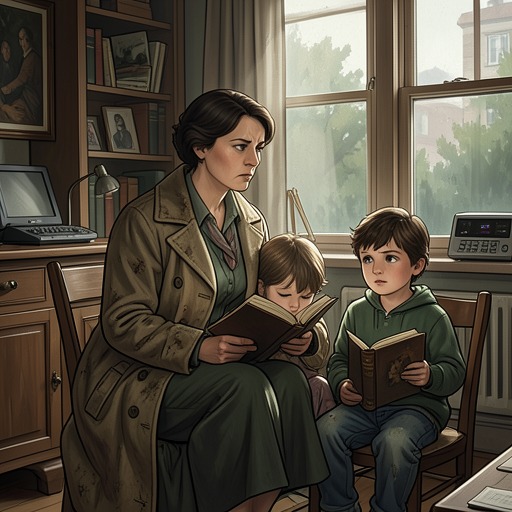
Emma immediately understands that the certificate itself could destabilize the story she has told. She says it must be kept safely under lock and key and that Laura O’Neill must never see it. Blackie initially does not understand her concern, until Emma explains that Laura might discover that Emma is not married and that the baby is illegitimate. Emma has told Laura that she is the widow of a sailor named Winston Harte; the certificate, bearing Blackie’s name, could lead Laura to suspect that he is the father.
Emma presents her secrecy as an effort to protect both Blackie and Laura from the consequences of the false story. She does not want Laura to be hurt or to mistake Blackie’s name on the record for a declaration of actual paternity. The birth certificate is therefore not merely hidden because it contains an embarrassing fact. Its meaning depends on who reads it and what other information that reader possesses. To Emma, it is a record that must be controlled; to someone unaware of the arrangement, it could appear to confirm a different relationship.
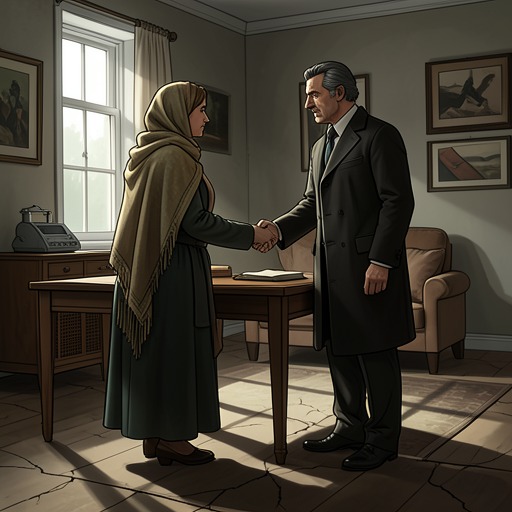
The concealed document also belongs to a wider pattern of partial disclosure. When Joe Lowther proposes marriage, Emma tells him that Edwina is illegitimate but withholds the father’s identity. She continues to present herself as the widow of a sailor, rather than explaining that Winston Harte is her brother and that Edwin Fairley fathered the child. Her account gives Joe enough information to accept her and her daughter without revealing the certificate’s particular entry or the full history behind it. Joe later adopts Edwina and gives her his name, establishing the parental relationship that the birth record cannot describe.
Discovery and misreading
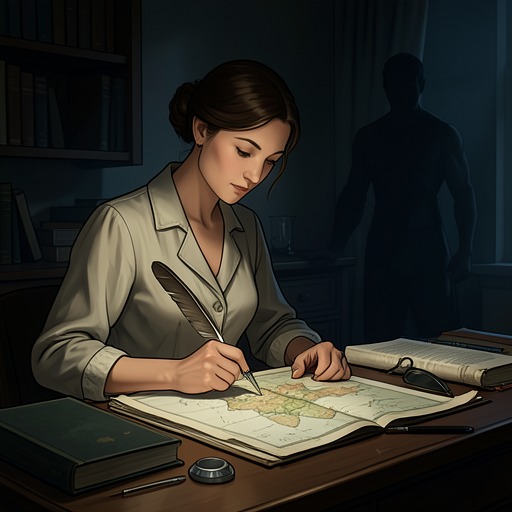
At eighteen, Edwina comes home wanting to confront Emma. She has obtained a copy of her birth certificate from Somerset House because Emma would not give her the original. The document makes her see that Emma concealed the fact of her illegitimacy and that Blackie O’Neill’s name appears as her father. Edwina treats the entry as the answer to her question about her birth father and accuses Emma of allowing her to believe for years that Joe was her father.
The discovery is a genuine revelation, but an incomplete one. The certificate confirms that Joe was not Edwina’s biological father and exposes Blackie’s name in the official record. It does not reveal that Edwin Fairley is her biological father. Edwina consequently interprets the document as a complete explanation when it is only a partial one: Blackie accepted the recorded role to protect Emma and the child, while the identity that Emma most fears exposing remains absent from Edwina’s understanding.
Emma does not deny the certificate’s importance, but answers Edwina by distinguishing biological descent from parenthood. She insists that Edwina’s name is Lowther because Joe adopted her and gave her his name. In Emma’s account, Joe’s love and care make him her father in the fullest sense, regardless of blood. Edwina, however, experiences the withheld information as a betrayal, and leaves with the copy she obtained. The paper has moved from a concealed safeguard to evidence in a rupture between mother and daughter.
Identity, law, and chosen parenthood
The certificate’s significance lies in the gap between what an official record can state and what a family understands by fatherhood. Its named entry reflects Blackie’s willingness to stand beside Emma and accept responsibility, but the name does not establish biological descent. Joe’s later adoption gives Edwina a family name and a devoted father, while the record remains an artifact of the earlier, precarious circumstances of her birth. Each form of parenthood answers a different need: the certificate supplies a registered name, Blackie offers protection, and Joe becomes the father who raises and loves her.
For Emma, keeping the certificate from view is a means of preserving the life she has built around Edwina and avoiding the exposure of Edwin Fairley’s paternity. Yet concealment gives the paper greater force when Edwina finally finds it. The document can settle one question—why Emma hid the original and whose name it carried—while intensifying another, because its partial truth encourages Edwina to mistake the recorded father for the biological one. Its journey from registration to locked-away secret to unwanted discovery shows how a record intended to fix identity can also transmit an unfinished and misleading family history.