Elizabeth Harte
A Woman of SubstanceElizabeth Harte is the gravely ill mother whose death alters the course of the Harte family: she leaves Emma Harte with the duty of caring for those at home and gives Jack Harte a loss from which he cannot recover. Though her strength is almost gone, Elizabeth remains an active presence through her tenderness toward her children, her openly returned love for Jack, and the memories and secrets that survive her.
Identity and presence
Elizabeth’s illness makes her body seem increasingly fragile. When Emma finds her near the end, her hand is icy and lifeless, her face without colour, and her breathing shallow and rapid. Her lips are nearly as white as the bedsheet, and dark marks shadow her eyes. Yet the scene does not reduce her to an image of sickness: when she recognizes Emma, her clouded eyes become more comprehending, and she greets her daughter with warmth. The effort of lifting a hand to Emma’s face is beyond her, but the wish to do so remains unmistakable.
Her beauty is remembered in several forms. During an earlier period of illness, Emma washes her face and brushes her hair, then wraps a blue shawl around her shoulders. In candlelight, Jack sees her as delicate and finely formed, with her dark hair spread over the pillows and her blue eyes intensified by the shawl. Later, Emma sees Olivia Wainright without her usual clothes, cosmetics, and carefully arranged hair, and is startled by how closely Olivia resembles her mother. The resemblance is not simply between two attractive women: Emma recognizes in Olivia the beauty Elizabeth possessed before poverty, consumption, undernourishment, and pain wore it down. The discovery moves her, and she later wonders whether an earlier, unacknowledged recognition helped shape her adoration of Olivia.
Marriage and family life
Elizabeth and Jack’s relationship is marked by direct, durable affection. When Jack visits her while she is ill, her voice gains a new vividness at his presence, and she imagines being out of bed so the family can share supper by the fire as they used to. Jack insists that she rest, worries over whether she will eat, and asks her to promise she will not attempt anything foolish. His concern is both practical and intimate: he wants her to keep her strength, but he also cannot bear the prospect of losing her.
Their exchange makes clear that their love is mutual and, to them, enduring beyond death. Elizabeth tells Jack she loves him until the day she dies and even afterward. He kisses her and leaves the bedroom with movements that seem suddenly disjointed, unable to sustain his usual command of his body. Their marriage is thus shown not through a long account of its history but through a bedside scene in which care, fear, and devotion are concentrated in a few gestures. The earlier hope of returning together to the moor in summer sharpens the contrast: the February ground is frozen, and the outing to the place Elizabeth calls the Top of the World cannot happen.
Her bond with her children is expressed through everyday care as well as her final request. Emma worries that her mother never seems hungry and urges her to eat whatever Lily brings, trying to make cheerfulness stand in for the fear she feels. Elizabeth answers faintly that she will. Near death, she asks Emma to look after Winston Harte, Frank Harte, and Jack. She presses Emma for a promise even when Emma tries to stop her speaking. The request gives the eldest daughter a family responsibility at the very moment she is losing her mother; it also confirms how closely Elizabeth’s concern remains fixed on the people who will be left behind.
Illness and death
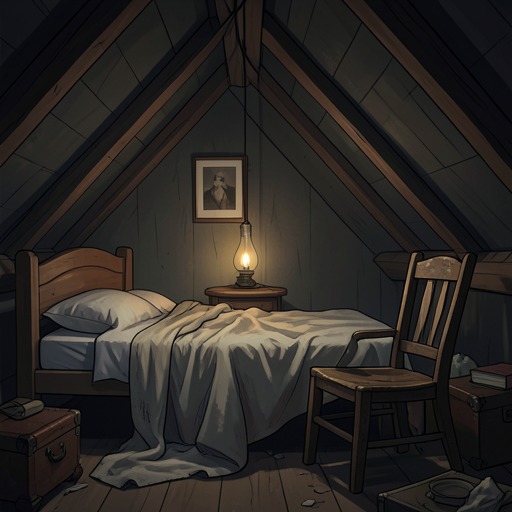
Elizabeth’s decline is shown through changes in the household’s hopes. At one point she appears more tranquil: the feverish glaze has disappeared, and the family gathers by her bed in clean but patched clothes. Her face lights up when Jack arrives, and he draws her feeble body against his own. The moment briefly makes recovery or renewed family life imaginable. Elizabeth says she intends to rise and join them for supper, but Jack, following the doctor’s instruction for complete rest, persuades her to remain in bed.
That hope gives way to a final deterioration. Emma returns to find Elizabeth barely able to open her eyes. Recognition comes slowly, then briefly brightens her expression. She calls Emma a good girl and asks her to care for the family; her breath becomes laboured, and her eyes widen with urgency as she insists on the promise. Jack sits beside her and holds her, then carries her to the open window. Almost weightless in his arms, she looks toward the moors. At that instant her voice becomes clear and young as she names the Top of the World. She falls back, smiles faintly, sighs deeply, and dies. Jack carries her to the bed, arranges her hands, smooths her hair, and kisses her; Emma’s cry registers the abruptness of the loss.
The later account of Jack’s own death confirms how completely Elizabeth’s absence governs him. After Jack is injured in the Fairley mill warehouse fire, Winston Harte recalls that his father said he wished to be with Elizabeth and could not live without her. Jack asked Winston to care for the younger children and to tell Emma to pick a sprig of heather at the Top of the World for both parents, keeping it as a remembrance. He died peacefully in his sleep that night. Elizabeth’s death therefore continues to shape the family years later: Jack’s last request turns the moorland heather into a material link between the parents and the daughter who has lost them both.
Secrets and narrative significance
Elizabeth’s past also appears in a discovery made after her death. In a cave beneath Ramsden Crags, Emma finds a sequence of forms of Elizabeth’s name scratched into the wall, beside Adam Fairley’s name and a heart pierced by an arrow containing the initials A E. Emma remembers the locket she had found in her mother’s wooden box and is shaken by the implication that Elizabeth and Adam shared a concealed attachment. The inscription does not explain the relationship or establish its full history; its force lies in placing a private, apparently intimate connection beside the visible story of Elizabeth’s marriage to Jack.
These traces make Elizabeth more than the absent mother around whom the family grieves. In life, she is a wife and parent whose final words and requests bind the household together. After death, her face persists in Emma’s perception of Olivia, her love persists in Jack’s last memories, and her name persists on the cave wall as evidence of a past Emma did not know. The novel lets these forms of remembrance remain distinct: familial devotion is explicit, while the meaning of the cave inscription is suggestive and incomplete. Elizabeth’s influence is carried both by what she asked her children to do and by the unanswered history she left behind.