Emma Harte’s pregnancy
A Woman of SubstanceEmma Harte’s pregnancy by Edwin Fairley makes their private relationship impossible to keep separate from the class order governing their lives. When Emma tells him she is expecting a child, his first response is fear of his father and of losing his future, while Emma is left to face the immediate consequences. Her decision to continue the pregnancy and conceal Edwin’s identity becomes a defining act of protection, but also a source of lasting secrecy around her daughter, Edwina.
Circumstances and Disclosure
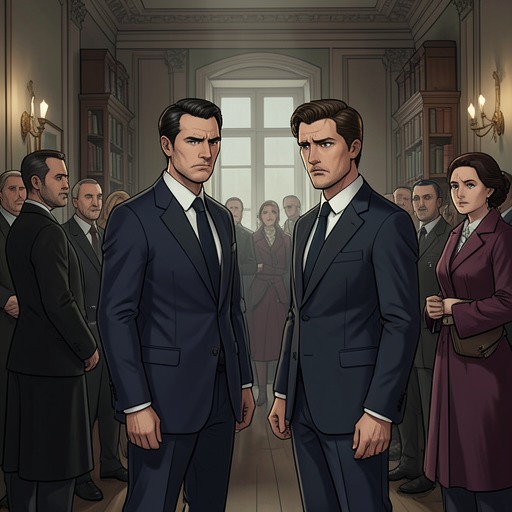
Emma and Edwin’s relationship had grown through private meetings and outings on the moors. When Edwin returned to Fairley Hall after a two-week visit to Olivia Wainright in the South, Emma had been waiting anxiously to see him. They arranged a brief meeting in the rose garden before he went riding. Emma had missed him during his absence, but the reunion also gave her the chance to disclose the news she had been carrying alone: she was going to have a baby.
Emma had spent the preceding weeks worried about the pregnancy and unable to confide in anyone. She watched Edwin closely as she told him, hoping for support. His visible shock and disbelief made clear that the news had altered his understanding of their relationship. He asked whether she could be mistaken, but Emma was certain. The scene marks a sharp change from their earlier intimacy: what had been a secret between two people now demanded a decision about a child, marriage, and their futures.
Edwin’s Response and the Class Divide
Edwin initially framed the problem around his own fear. He imagined the anger of his father, Adam Fairley, and suggested that he might find a doctor in Leeds or Bradford willing to end the pregnancy. Emma rejected the suggestion, alarmed by the danger she believed such an intervention could pose. Her response also exposed the difference between their positions: Edwin could imagine options in terms of money and family consequences, while Emma had to consider her physical safety and the prospect of being abandoned with the child.
Marriage briefly presented itself to Edwin as the decent course, but he did not say so. He feared that his father would disown him and jeopardize the future he had planned, including his education at Cambridge and his ambition to become a barrister. He also returned to the social distinction between them: Emma was a village servant, and he belonged to the gentry. Although he had contemplated speaking up for her, he remained silent. Emma recognized that silence as a refusal to marry her. The pregnancy thus brings the relationship’s class boundary into the open: affection had crossed it, but Edwin could not bring himself to accept the consequences publicly.
Emma’s Choices and the Birth Record
Emma would not seek the doctor Edwin proposed, and Edwin’s failure to offer marriage left her to make her own arrangements. Her pregnancy became part of the circumstances under which she left Fairley and began a new life in Leeds. She was determined to present herself there as a young woman of quality, using clothes discarded from Olivia Wainright’s wardrobe and a carefully practised genteel manner to shape how strangers saw her. The performance was not merely a disguise: it served her wider ambition to become financially independent and to escape the vulnerability she associated with poverty and dependence on the rich.
The child’s birth also created a legal difficulty. When Emma discussed registration with Blackie O’Neill, he reminded her that the law required the father’s name on the birth certificate. Emma did not want Edwin identified. Blackie proposed that his own name be entered instead, reasoning that it would be preferable to leaving the father unknown, even though the record would still mark the child as illegitimate. He insisted on accompanying Emma to the registrar’s office and accepted the responsibility. The arrangement gave the child a named father on paper while keeping Edwin’s paternity concealed.
Secrecy, Motherhood, and Consequences
Emma later told Joe Lowther that Edwina was illegitimate when he proposed to her, but she withheld the father’s identity. She repeated the explanation she had previously given Blackie, presenting the child’s circumstances without disclosing the connection to Edwin. Joe accepted her past and her daughter, and Emma’s candour about the illegitimacy allowed her to enter the marriage without revealing the central secret. She also gave Laura O’Neill and David Kallinski partial explanations, while keeping the truth from them at first.
The concealment shaped more than the birth record. It meant that those closest to Emma could know that Edwina was not Joe’s child without knowing who her biological father was; even Emma’s brothers had to be told about the daughter without receiving the full history. The pregnancy therefore persists in the narrative as a family secret with practical consequences for trust, identity, and belonging. Emma’s actions protect Edwin’s identity and secure a place for Edwina within the life she builds, but they also establish a divide between mother and daughter that the truth can later reopen.
Significance
The pregnancy reveals how unequal power governs the choices available to Emma and Edwin. Edwin’s prospects, his father’s authority, and the social distinction between a gentleman and a servant shape his retreat from responsibility. Emma, by contrast, refuses the dangerous solution he proposes and takes control of what can still be decided: where to go, how to support herself, what to disclose, and whose name will appear on the child’s certificate.
Her secrecy is both protective and costly. By raising Edwina without naming Edwin, Emma preserves her own independence and shields the child from the immediate consequences of the class-bound relationship; at the same time, she leaves a concealed fact at the center of her daughter’s origins. The pregnancy thus links Emma’s personal history to her wider pursuit of security and self-determination, while making the unresolved consequences of Edwin’s silence part of the next generation’s story.