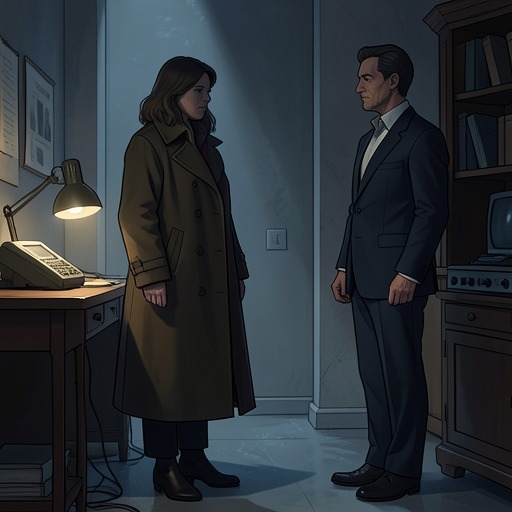
Emma’s blessing of Paula and Jim Fairley
A Woman of SubstanceEmma Harte’s blessing of Paula and Jim Fairley marks a decisive break with the bitterness Emma had allowed to shape the younger generation’s choices. By welcoming Jim as a possible husband for Paula, she turns a private change of heart into an act of reconciliation—and gives her granddaughter back a future she had begun to believe was impossible.
The grievance behind the decision
Emma’s resistance to Paula’s relationship with Jim arose from the long history between the Harte and Fairley families. She had invited Jim to dinner partly because of his indirect involvement in family business, but she admits that this was not the whole reason: she had invited him for Paula as well. When Paula protests that her grandmother had always hated the Fairleys, she exposes how completely that inherited hostility had governed her expectations.
Emma describes herself as tough and strong, but also tired and perhaps bitter. Looking back at events from sixty years earlier, she recognizes that pride and old injuries have been clouding her judgment. Her reversal is not a denial that the past mattered; it is a decision that the past should no longer determine the happiness of the person she loves most. The history of Emma’s own connection with Edwin Fairley, including the class barrier that helped keep them apart, gives that change added resonance: the old division between the families had once shaped intimate choices as well as public loyalties.
Permission becomes a blessing
Emma tells Paula plainly that she no longer objects to her seeing Jim. She has spoken with him the previous day and learned that his feelings remain serious and that his intentions toward Paula have been so for a long time. Emma has already told him that, if he wishes to marry Paula, he has not only her permission but her blessing, offered with love.
For Paula, the news overturns months of enforced resignation. She had trained herself not to think about Jim and had poured her energy into work while believing there could be no future for them. Her disbelief gives way only when Emma firmly confirms that she has changed her mind. Paula then breaks into sobs, releasing the feelings she had kept contained; Emma gathers her close, strokes her hair as she did when Paula was a child, and comforts her until the heaving sobs subside.
From family news to personal action
Emma does not leave her blessing as a formal statement. She urges Paula to call Jim, who is still at the paper and waiting for her. Paula can invite him to dinner that evening or, Emma suggests, drive into Leeds and dine with him alone. Emma offers to remain with Emily and Sarah, while allowing that Alexander and the others may arrive in time for supper. Her light reminder that she has other grandchildren softens the intensity of the moment and makes room for Paula to leave without guilt.
Paula hugs and kisses Emma before hurrying out, transformed from the rigid, stunned figure who had returned to the fireplace into someone eager to go to Jim. Emma imagines her moving as if she had wings. The contrast makes the consequence of the decision visible: what had seemed to Paula a closed possibility becomes an immediate meeting she is free to pursue.
A change of inheritance
Emma’s choice is both intimate and generational. She tells Paula that she has endured enough unhappiness for both of them, making her own hard-won experience a reason not to pass old suffering onward. Instead of using family authority to enforce inherited resentment, she uses it to remove an obstacle and gives Paula room to choose love without repudiating her grandmother.
After Paula leaves, Emma remains alone for a while, thinking of Paula, Jim, and other matters. She then goes to the window and watches evening settle over the still garden: the daffodils pale after sunset, the hedges darken, and mist gradually veils the terrace and trees. The quiet scene follows the emotional release without reversing it. Emma has acted; Paula is on her way to Jim, and the old family grievance no longer has the final word over their relationship.