Fairley woollen enterprises
A Woman of SubstanceFairley woollen enterprises are the textile business built by generations of the Fairley family, joining inherited land to wool production and turning local geography into commercial power. Their rise began with cottage weaving and a small mill, but depended just as much on water, sheep and access to land as on machinery. By Adam Fairley’s time, the business was both a major family inheritance and the focus of an unresolved question about who would control it next.
Land, lineage, and the beginnings of cloth
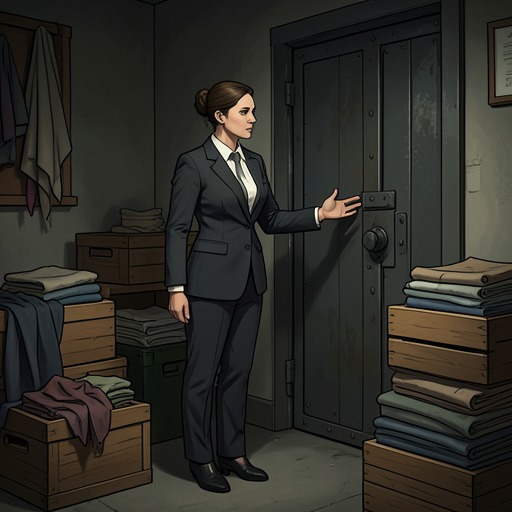
The family’s fortune rested on two principles: acquiring land and making cloth. The land came first. The Fairleys traced their lineage to Hubert Fairley, whose grant of Arkwith and Ramsden in the West Riding of Yorkshire was recorded in a document drawn in 1155. The document, preserved in the vault at Fairley Hall, states that the Crown granted the lands to Hubert in the presence of Henry II at Pontefract Castle. As Hubert prospered and became known as a trusted royal servant, Arkwith came to bear the family name. He built the original Fairley Manor on the site of the later Hall.
Later generations enlarged the estate through royal favour and service to the Crown. John Fairley received Ramsden Moors from Henry VIII in connection with the King’s ecclesiastical reforms. Under Elizabeth I, William Fairley bought the valley of Kirkton on the river Aire. The purchase proved commercially decisive: the river would provide power for the family’s original mill. The estate’s history was therefore not merely a backdrop to the textile business. It supplied the land and water on which that business could be established.
At the end of the sixteenth century, Francis Fairley began a small domestic wool-weaving industry. Villagers continued to spin and weave in their cottages, but production increasingly shifted from making cloth for household use to making it for sale. By the beginning of the seventeenth century, Fairley had become a wool-manufacturing hamlet with a cropping shop, a fulling mill on the river and a breached reservoir. Francis’s achievement was to join the family’s landholding to commercial cloth production; the enterprise grew from that combination into a source of wealth and influence across the West Riding.
The West Riding as an industrial resource
The business’s growth depended on the particular conditions of the West Riding. Fairley village lay in the foothills of the Pennines, where the geology, rainfall and vegetation created a setting unusually favourable to wool manufacture. Farther north, limestone hills supported sweet grass but offered few springs, and limestone water was harsh on fibres. Around the Aire Gap, south of Skipton, the hills changed to millstone grit, edged by coal measures and covered in places with peat or clay.
This terrain supported the materials and processes cloth-making required. Millstone grit country produced little beyond oats and coarse grass, but short-haired sheep thrived on that grazing. Coal and grit country also had numerous streams that rarely failed. Moisture-laden winds from the Atlantic brought rain throughout the year, and the streams’ soft, lime-free water treated fibres more kindly than the hard water of limestone country. Sheep’s wool and soft water were both essential to making cloth, and both were abundant in the West Riding. The family’s industrial success was thus rooted in a conjunction of natural resources: land for grazing, a reliable supply of wool and water suitable for processing it.
Expansion through innovation
The enterprise grew especially rapidly in the eighteenth century, when three successive Fairleys—Joshua, Percival and David—combined knowledge of the wool trade with a readiness to invest in new technology. As manufacturers encountered inventions capable of increasing production, some West Riding rivals resisted them. The Fairleys instead bought the new machines and put them to work. Their willingness to adopt machinery gave the business a practical advantage in production and helped transform a local trade into a much larger industrial concern.
The family’s wealth therefore reflected more than the size of its estate or the availability of raw materials. The Fairleys had turned geographical advantages into an ongoing manufacturing system, and their successive investments helped that system expand. By the time of Adam Fairley, the family’s holdings included the mill alongside its lands, Hall and other properties. Bruce McGill also suggested that Adam consider buying land in Australia and establishing a sheep station to supply wool directly. This was presented as a possible investment, with Bruce offering to find workers and supervise the station; the evidence does not establish that Adam acted on the proposal. It nevertheless shows how the prospect of connecting wool production abroad with the family’s manufacturing interests could enter discussion of the business’s future.
Family control and succession
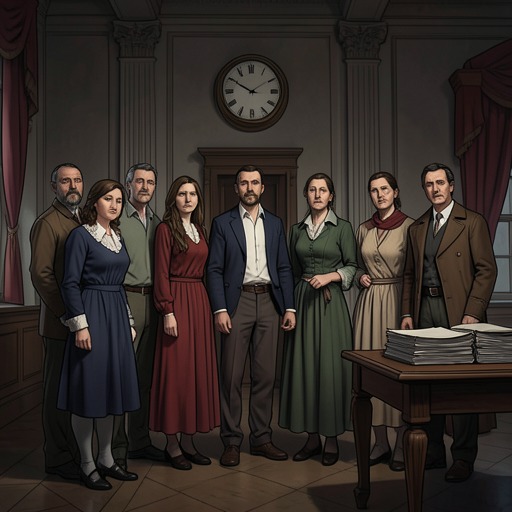
By Adam Fairley’s time, the enterprise had acquired a dynastic as well as an economic character. Adam controlled the family fortune, while primogeniture made Gerald the presumptive heir to the Fairley lands, Hall, mill and other holdings. Under that arrangement, Gerald would inherit the principal assets and was expected to provide for his younger brother. Adam considered that an uncertain safeguard for Edwin: his son would otherwise receive nothing of substantial value and would depend on Gerald’s goodwill.
The succession issue made the mill more than a source of income. Adam recognized that Edwin might want to enter the wool business, and concluded that he should make proper provision for him in his will rather than leave his future solely to the inherited order. His concern was intensified by his lack of trust in Gerald. The family’s business history had been built through the accumulation of land and generations of commercial decisions; its continuation now depended in part on how Adam distributed control and security between his sons.
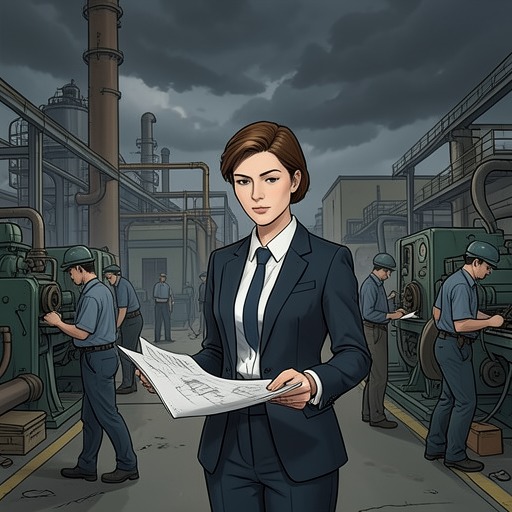
Gerald, meanwhile, possessed an intense attachment to the wool business that Adam did not share. On the mill floor, he felt alive among the machinery and regarded its clatter as beautiful music; the smell of oily wool, unpleasant to his father, intoxicated him. The sight of the many bolts of Fairley cloth stirred an excitement he had not found elsewhere. For Gerald, the business was not simply an inheritance dictated by birthright but a source of personal vitality. His passion sharpened the contrast between the family’s legal succession and the different meanings the enterprise held for father and son.
Significance
Fairley woollen enterprises represent the convergence of inherited property, environmental advantage and industrial adaptation. The family’s river land enabled a mill; local sheep and soft water made cloth production practical; and eighteenth-century investment in machinery increased the scale of manufacture. These factors explain how a modest cottage industry could underpin the Fairleys’ status as powerful woollen manufacturers in the West Riding.
The business also concentrates the novel’s concern with inheritance and family obligation. Its productive history is collective and cumulative, but its ownership is governed by a rule that favours the eldest son. Adam’s plan to provide for Edwin exposes the tension between that rule and a father’s responsibility to a younger child, while Gerald’s enthusiasm makes succession a matter of both material power and personal identity. The enterprise’s future is consequently shaped not only by markets, land or machinery, but by the family’s struggle over who is entitled to share in the wealth generations of Fairleys created.