First Somme Offensive
A Woman of SubstanceThe First Somme Offensive enters the novel both as a battlefield advance and as a loss that reaches into Emma Harte’s family life. Its account sets the Seaforth Highlanders moving through devastated ground toward Trônes Wood; later, Emma identifies the offensive as the place where Joe Lowther was killed, giving the military campaign a lasting personal consequence.
Wartime Background
The battle belongs to a war that had rapidly transformed both public life and private business. Before the fighting began, the closure of the London Stock Exchange and the rise in the bank rate from four to eight per cent signalled to Emma the severity of the approaching crisis. She proceeded with a new business venture but abandoned her plan to finance it by borrowing, unwilling to take on that risk as the financial situation worsened.
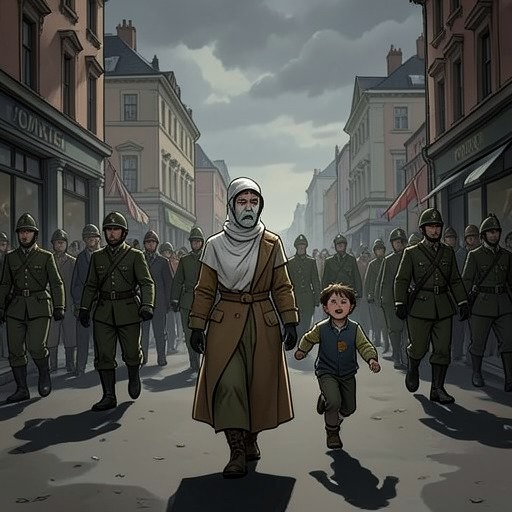
War then altered the commercial calculations she had made. Emma expected that manufacturers would turn their factories toward government contracts, making merchandise scarce; she therefore regarded the stock already held in the warehouse as a resource rather than a liability. The wider mobilization was swift: the first four divisions of the British Expeditionary Force crossed the Channel between August 6 and August 20, 1914, and two more followed early in September. The account places the Somme fighting within this expanded national effort, without treating the campaign as separate from the economic and human demands of war.
The Advance on Trônes Wood
The battlefield passage follows the 51st Division of the Seaforth Highlanders behind a moving barrage. They advance from the Somme Canal across fields torn by shelling, cut with trenches, and crossed by wire entanglements. The movement is framed by nearby towns: Hardecourt lies behind the division, Combles and Guillemont to the right, Mametz to the left, and Bazentin and Longueval ahead. Trônes Wood, at the centre of this terrain, is their objective.
The position is described as a defended wedge rather than an abstract point on a map. General von Arnim’s forces hold the wood, where trenches run through its centre and along its northern and southern sides. Wire and machine guns protect the western edge, while two railway lines pass through the area. The account gives the ground’s dimensions—1,400 yards from north to south and 400 yards along its base—and explains its position against the German second line at Guillemont and Longueval. These details make the advance legible as a struggle over a specific, fortified landscape; the passage does not state its eventual outcome.
The War at Home
The campaign’s pressures also appear in the operation of Emma’s businesses. She races among Harte’s, Gregson Warehouse, Layton’s mill, and the clothing factory, while the war increases the demands on production. Layton’s meets large government contracts, and the factory turns from Lady Hamilton Clothes to uniforms. Emma treats the commercial opportunity with practical reasoning: the forces need clothing, and manufacturers across the West Riding are supplying khaki, navy, and air-force-blue cloth. Her enterprises remain stable and productive, even as she recognizes that work is consuming time she might otherwise give to her family.
The simultaneous scenes of military mobilization and industrial output show the campaign’s reach beyond the battlefield. Orders, materials, factories, and workers become part of the same wartime system that sends divisions to France. For Emma, the consequences are both economic and intimate: business expands under wartime demand, while the fighting threatens the people closest to her.
Loss and Later Recognition
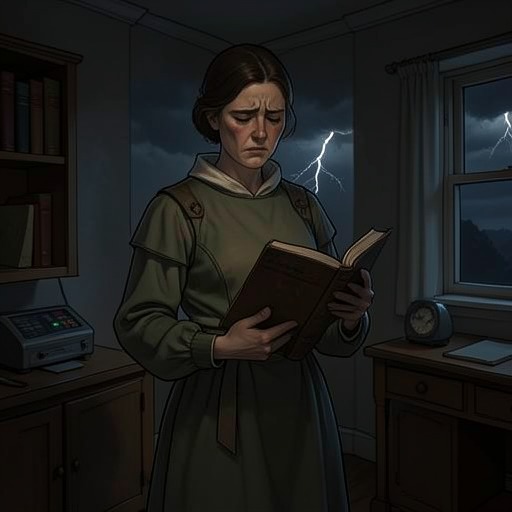
The offensive’s personal meaning becomes explicit in a later exchange with Major McGill. When he addresses Emma as though her husband were still alive, she corrects him: she is a widow, and Joe was killed eighteen months earlier in the Somme offensive. The disclosure recasts the campaign’s earlier military geography as the site of a family bereavement. The novel does not describe Joe’s death in detail; instead, it lets Emma’s brief correction establish the fact and its enduring place in her life.