Harte’s Town Street shops
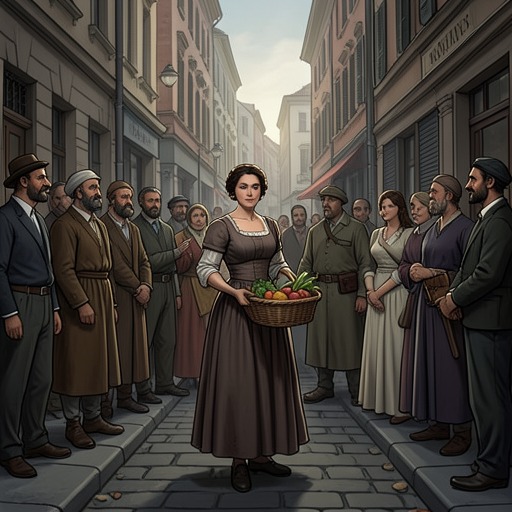
A Woman of SubstanceHarte’s Town Street shops are the retail premises through which Emma Harte turned a small, self-financed trade into a growing business. Beginning with one vacant shop rented from Joe Lowther, the enterprise developed across adjoining units on Town Street, combining food sales, dressmaking and haberdashery. Their significance lies not only in the goods sold there, but in the practical security Emma built through relentless work, reinvestment and disciplined management.
From labor to a business plan
Before she had a shop, Emma had learned to impose order on work that seemed designed to overwhelm her. At Fairley Hall, Polly’s illness left Emma doing both her own duties and Polly’s, from six in the morning until seven at night. The experience was exhausting, and the house’s disorganized routine made the burden worse. Emma began timing tasks on scrap paper, listing daily chores and weekly jobs, and distributing the heavier work across the week. That methodical approach became part of the way she later organized her business: time, labor and money were all resources to be measured and deployed.
At seventeen, Emma worked at the mill by day and, after a hurried evening meal, sewed garments for a growing clientele. She used Sundays for catering, making pies, cakes and desserts with recipes from Olivia Wainright, and preserving produce for later sale. Laura Spencer had helped spread word of Emma’s sewing and reasonable prices. Emma lived on her weekly mill wage and put the proceeds from dressmaking and catering back into the business, buying materials and food. The first profits were modest, but they confirmed that her work could support an enterprise rather than merely supplement a wage.
Emma’s immediate objective was to acquire a shop and then expand beyond it. She imagined elegant stores serving the carriage trade, where she believed a retailer could make larger profits. That ambition required capital for rent, fixtures, display stands and stock. She saved toward those costs while continuing to work, treating the shop not as a sudden opportunity detached from her earlier labor, but as the next stage of a business she had already begun to build.
Securing the first premises
Emma found the opportunity while shopping for groceries. One of three adjoining shops on Town Street stood vacant, its window whitewashed except for a clear space displaying a notice to let. The landlord was Joe Lowther, whose address she memorized. Emma had the rent and money for stock ready, and she was determined to apply before another prospective tenant could do so, even though the next day was Sunday.
Joe initially resisted renting to her, doubting her youth and experience. Emma answered with confidence, explained that she already had a dressmaking and catering business in Armley, and offered to take the premises at once. When her assurances did not immediately persuade him, she produced a roll of banknotes and proposed paying in advance. She expected the shop to succeed within six months. Her approach converted an abstract claim of ability into visible evidence that she could meet the financial commitment.
Joe agreed to rent the shop for a guinea a week, with payment arranged at four guineas a month. The premises included living quarters behind the shop: a kitchen-parlour, a bedroom and a large cellar for storage. Emma considered living there, recognized the usefulness of the accommodation, calculated the annual rent and asked for a receipt. Joe promised her a key and rent book and marked six months as paid. The exchange established a lasting business connection between the tenant and landlord; the vacant premises became Emma’s first shop and the physical base for her next phase of independence.
A growing retail operation
The business soon extended beyond the first unit. Within just under three years, Emma’s two shops had become the busiest on Town Street, and her profits were high. Their appeal rested on both presentation and product: Emma made her goods and premises more attractive than those of nearby competitors, while her homemade foodstuffs and dressmaking became known across the surrounding area. The profits gave her capacity to invest two thousand pounds in David Kallinski’s business, showing how her retail earnings could support ventures beyond the shops themselves.
The shops were also sites of detailed, hands-on management. At Christmas, Emma rose at four-thirty to prepare displays for the food shop. Glass cabinets held almond-topped Christmas cakes, plum puddings tied with red ribbon, mince pies and chocolate-coated yule logs. She arranged imported delicacies rarely available in other Armley shops, including French glazed fruits, Turkish delight, Egyptian dates, Greek figs and German marzipan. Assisted by the Long girls, she had spent hours baking; extra supplies waited in large tins in the cool cellar. She anticipated that the seasonal stock would sell, and opened the shop ready for early orders from cooks and housekeepers serving the nearby mansions.
A second shop enlarged the operation into distinct retail spaces. During the year Emma had rented Joe’s second shop, she persuaded Laura to manage it; sales there doubled in its first six months. Emma checked the haberdashery ledger at the counter, attending to the figures alongside the daily business of serving customers. The growth mattered to her in concrete terms: she regarded the future of both herself and Edwina Harte as assured. The shops provided income, but their books and expanding sales also gave Emma evidence that her plans could be made durable.
Joining the shops and their wider significance
Emma’s next step was to secure the third adjoining unit. When Mrs Minton’s premises became available, Joe recognized that Emma had been hoping to expand and that three connected shops could approximate the larger store she envisioned. Blackie O’Neill brought Emma plans for renovating the middle shop and joining all three. The design proposed access from the haberdashery and through the wall adjoining Mrs Minton’s unit, creating a passage between the premises. Work was to begin after Christmas, with the aim of having Emma in the expanded shop by the middle of January.
The arrangement turned a row of separate units into a coordinated business space: food retail, haberdashery and the new middle premises could be linked while retaining their distinct functions. Emma’s excitement at Blackie’s plans reflected a recurring pattern in the enterprise. She identified an opening, accumulated the resources to use it, and then reorganized the available space to serve a larger purpose. The expansion was not simply a matter of acquiring more floor area; it brought her closer to the integrated, substantial retail operation she had imagined when she first set out to earn enough for a shop.
The Town Street premises also gave Emma a sense of protection from the Fairleys. She associated the shop with being secure and beyond their reach, making commercial independence both a financial achievement and a refuge from an earlier threat. In that respect, the business answered several needs at once: it turned her labor into capital, supported her plans for Edwina, and gave her greater command over where and how she worked.
The shops mark an early, tangible stage in Emma’s rise as a retailer. Their growth depended on work done beyond the counter as much as on sales: mill employment, evening sewing, Sunday cooking, careful reinvestment, attractive displays, ledger-keeping and the management of staff. Later, as war altered the conditions of her wider business, Emma’s enterprises included Harte’s, Gregson Warehouse, Layton’s mill and a clothing factory, with production redirected to uniforms and the mill fulfilling government contracts. Against that wider commercial history, the Town Street shops remain the initial demonstration that Emma could turn initiative and labor into a functioning, expanding enterprise.