Marriage as compromise
A Woman of SubstanceMarriage as compromise in Emma Harte’s life is shaped by unequal class relations, concealed parentage, family obligations, and the desire for security. The idea takes different forms: a marriage Emma hopes for is denied, one she strategically accepts helps establish a household, and another is chosen as a substitute for a lost love. Across these turns, compromise is neither simple surrender nor a reliable route to happiness; it is a way of acting within constraints, with consequences that persist after the decision.
Class, pregnancy, and a marriage refused
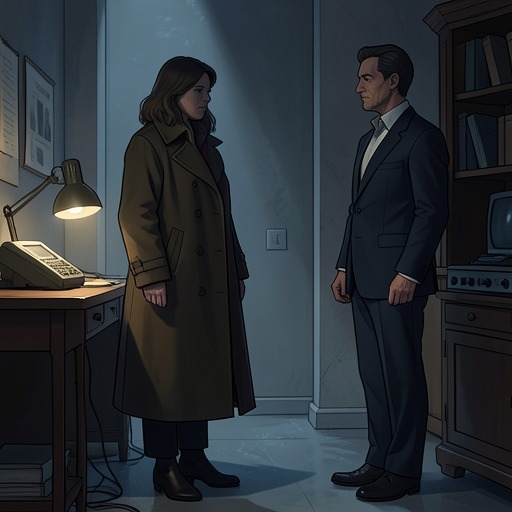
When Emma Harte tells Edwin Fairley that she is going to have a baby, his first response is shock and distress. He considers marrying her, even thinking of eloping, but recoils at the prospect of his father’s anger and the loss of financial support and future prospects. His thoughts turn to Cambridge and his planned career as a barrister; he also reduces Emma to her position as a village servant and treats the distance between the gentry and working class as an insurmountable barrier. He remains silent rather than claiming her as his partner.
That silence makes marriage a choice shaped by class power rather than affection alone. Emma recognizes his refusal in his expression and answers with bitter clarity: she will not seek a doctor, and his failure to offer marriage tells her where he stands. Her pregnancy does not lead to the security of a marriage, and the rejection helps determine the conditions in which she must make later decisions about her child and her own future. In this early episode, compromise is imposed on Emma: Edwin’s concern for his position takes precedence over the life they might have made together.
Parentage, protection, and marriage to Joe Lowther
The practical consequences continue when Emma considers registering her daughter’s birth. Blackie O’Neill reminds her that the registrar will require the father’s name. Emma does not want to identify Edwin Fairley, and Blackie proposes putting his own name on the certificate instead of leaving the father unknown. He acknowledges that the certificate will still record the child as illegitimate, but believes a named father will be preferable. His offer is an act of protection, taking on a public responsibility that is not biologically his.
Years later, Emma is candid with Joe Lowther about Edwina Harte’s illegitimacy when he proposes marriage, but she withholds the father’s identity and repeats the account she had previously given Blackie O’Neill. Joe accepts her past without pressing for more. Emma, who does not want to begin their marriage by concealing her circumstances or her child, nevertheless maintains that half-truth because explaining the full story would expose the false account she has given of her own history. Her marriage to Joe thus contains both honesty and concealment: he knows Edwina Harte is not his child, but he does not know Edwin Fairley is her father.
Emma has deliberately steered Joe Lowther’s courtship toward marriage. He loves her, admires her industry and business ability, and is pleased when she accepts his proposal, without recognizing how much she has maneuvered the relationship. The match provides a husband and a family structure, but it is not an uncomplicated romantic choice. Emma’s agency lies in arranging a workable future under difficult conditions; the need to manage her daughter’s identity remains part of that future.
Love set aside: David Kallinski’s proposal
Emma’s decision to refuse David Kallinski’s earlier proposal establishes that compromise does not always mean accepting the most desired partner. After the war, David tells Emma that his marriage is unhappy and that he still loves her; he hopes that becoming free would allow them to marry. Emma still loves him, but distinguishes that love from the kind of love she once felt. She refuses to create a new catastrophe for the sake of their happiness, pointing to his wife, his two young sons, her own children, and the suffering their union could cause others.
Her answer recognizes that private feeling has consequences within a wider family. Emma does not deny the affection between them, but believes happiness cannot be built on other people’s misery. David says that believing Emma loved him had helped sustain him during the war; her response makes clear that the past cannot simply be restored. In this exchange, restraint rather than marriage is the compromise: she preserves the relationship as friendship while refusing to turn mutual love into a new household at the expense of others.
Arthur Ainsley and the cost of expediency
Emma’s marriage to Arthur Ainsley represents a more explicit compromise. After Paul McGill’s prolonged absence and silence leave her believing there is no future with him, loneliness and concern for her children lead her to seek a more ordinary life. She wants a father for the children and a suitable male head for her household, and concludes that great love is not always necessary for a happy marriage. Arthur appears to meet those practical needs: he is a gentleman, attentive, charming, attractive to her, and good with the children. Emma also believes he will not interfere with her business or direct her life, leaving her with the greater measure of control.
Arthur pursues Emma after returning from the war. Their courtship begins when she seems to soften toward him on Boxing Day night in 1919; after three months, they marry in the spring of 1920. Arthur believes Emma is as enamoured of him as he is of her. Emma, however, marries in part to stop yearning for Paul McGill and to replace an uncertain future with a settled domestic arrangement. She chooses action over waiting, and her brothers and Blackie O’Neill find that her determination leaves little room for their objections.
The settlement proves less successful than Emma expects. Within weeks she regrets her decision, but she has conceived on their honeymoon. Arthur’s charm gives way to traits she finds shallow, captious, and indolent; although she takes her obligations seriously and tries to preserve a civilized marriage, she is still in love with Paul McGill. For a time, her self-control and dissembling make the union appear relatively tranquil. After Robin Harte and Elizabeth Harte are born in 1921, Arthur becomes more careless and assumes that Emma’s devotion and the marriage are secure. The arrangement that was meant to provide stability instead separates outward respectability from Emma’s actual feelings.
The marriage eventually ends. After Arthur Ainsley inherits his family’s money, he allows Emma Harte to divorce him on the grounds of adultery; the apparent gallantry has been bought for ten thousand pounds. Emma is then able to bring the twins to live with her and welcomes their upbringing apart from Arthur’s influence. The divorce shows the limits of marriage as a practical solution: the arrangement could provide a household and a father figure for a time, but it did not create lasting intimacy, and its end still required a financial transaction.
A changed inheritance of choice
The pattern also throws later decisions into relief. Emma’s long bitterness toward the Fairley family has shaped her efforts to protect her children from it. Yet she eventually gives Paula permission to marry Jim Fairley, acknowledging that it would be wrong to let an old grievance obstruct her granddaughter’s future. She had hired Jim Fairley on his merits, despite her prejudice, and later recognizes that a Fairley who once represented inherited pain might instead bring joy.
This reversal does not erase the compromises made earlier in Emma Harte’s life. Rather, it shows a change in what she is willing to demand of the next generation. Her own marriages were entangled with class barriers, secrecy, loneliness, and the need to secure a home for her children. In allowing Paula and Jim to choose each other, Emma refuses to make inherited resentment another condition imposed on a marriage. The concept therefore links private relationships to wider family histories: compromise can protect a person in the present, but it can also preserve old injuries unless someone chooses not to pass them on.