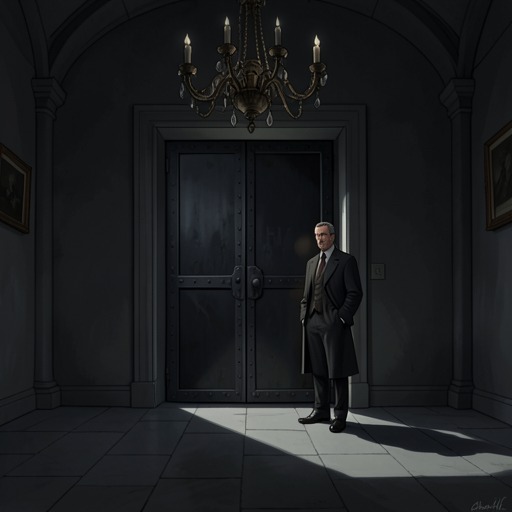
Paul McGill’s will
A Woman of SubstancePaul McGill’s will is both a vast transfer of wealth and his final public acknowledgment of Emma Harte. It makes her executrix and leaves her his estate in perpetuity, with the inheritance passing to Daisy McGill and then to Daisy’s descendants. Alongside provisions for Paul’s wife and son and bequests to employees, the will places the McGill dynasty in Emma’s hands, granting her a status and authority that their life together had not formally secured.
Presentation and reading
At the beginning of October, Mel Harrison travelled from Sydney to London to deliver the will. He first took a four-engined C Class Qantas flying boat to Karachi, then continued aboard an English aeroplane. His journey gives the document a far-flung passage into the hands of its intended executor: it crosses continents as the final business of Paul’s life is brought before the solicitors handling the McGill family’s legal affairs in England and Europe.
Emma arrived at Price, Ellis, and Watson dressed austerely in black. Though she appeared wan and fragile, she was composed. Winston Harte, Frank Harte, and Henry Rossiter accompanied her. The reading was not merely a private disclosure of Paul’s intentions: Emma heard his decision in the presence of family and a trusted friend, at a formal legal meeting where her place in his affairs became explicit.
Terms and inheritance
Mel told Emma that Paul had appointed her executrix of his estate. She was taken by surprise and could only nod, at a loss for words. The appointment gave her responsibility for carrying out the will as well as its principal inheritance; she was not simply named as a beneficiary but entrusted with administering Paul’s estate.
The will made bequests to servants and to old, loyal employees. It also established a two-million-pound trust fund to provide for Paul’s wife and son during their lifetimes, after which the fund was to pass to charity. These provisions set out distinct obligations within the estate: care for his immediate family, recognition of those who had served him, and a charitable destination for the trust after the beneficiaries’ deaths.
Paul left his entire estate to Emma in perpetuity. Upon her death it was to pass to Daisy, and from Daisy to her progeny. The holdings were worth well over two hundred million pounds, making Emma one of the richest women in the world and Daisy the heiress to a great fortune. The succession is therefore more than a bequest to a beloved partner: it sets out a route for the McGill wealth to continue through Emma’s daughter and her descendants.
Emma’s recognition and responsibility
The scale of the inheritance astonished Emma, but the form of Paul’s acknowledgment moved her most. Although she had been his common-law wife, Paul accorded her the respect and consideration generally reserved for a man’s legal widow. Through the will, he recognized her relationship to him before the wider world and entrusted her with his estate. Its terms give material force to a bond that had existed outside formal marriage, without disguising the distinction between Emma’s position and that of a legal widow.
The transfer also makes Emma the custodian of a family succession extending beyond her own lifetime. The estate passes first to her and then to Daisy, before continuing to Daisy’s descendants; it is not presented as wealth that ends with the immediate beneficiary. Paul’s final arrangement thus places Emma at the centre of both the present inheritance and its future transmission.
Aftermath and significance
The will’s arrival follows Paul’s death and Emma’s reading of his final letter. As she held the letter, she remembered the years of joy and love he had given her, forgave him, and came to understand his dilemma and motives. At the reading, the will confirms that devotion in a different register: not through a conversation between them, but through the legal appointment, inheritance, and succession he had arranged before his death.
Emma’s grief did not disappear after the reading. She continued to miss Paul and yearn for him, even as she gradually regained the ability to function and the world crisis demanded her attention. The will cannot undo the separation, but it leaves Emma with substantial responsibilities and a durable connection to Paul’s legacy. Its decisive effect is to make her the executor and principal inheritor, while ensuring that the fortune continues through Daisy and her descendants.