Pennistone Royal
A Woman of SubstancePennistone Royal is Emma Harte’s country home near Ripon and the place she associates most strongly with belonging and peace. Set against the Yorkshire landscape, the historic house offers a refuge from her far-reaching business life; later, its drawing room, dining room, and library become stages for family reunions, the disclosure of old secrets, and Emma’s arrangements for the future of her dynasty.
Setting and significance
For Emma, Pennistone Royal is not simply a residence but a point of return. While travelling home after an exhausting stretch of corporate meetings in Odessa, she recalls the Yorkshire sky in a painting above the upstairs parlour fireplace and imagines the tranquillity of Pennistone, its gardens, and her grandchildren. Her work takes her between distant centres of power, including Texas and New York, but the prospect of returning to the house restores her sense of balance. She thinks of it as the one place on a turbulent planet where she has found peace.
The journey makes the contrast concrete. Emma wakes as the car enters Yorkshire, recognizing the region as the place where her roots lie, then passes through Leeds, the industrial city she regards as the foundation of her wealth and power. The route moves from her stores and factories back towards the country. Pennistone thus stands in relation to two parts of her identity: the commercial empire built in the city and the home that connects her to family, landscape, and personal history.
House and grounds
The grounds combine formal design with a setting shaped by the northern weather. In early March, daffodils brighten the lawns, which slope towards a lily pond below the long flagged terrace. Topiary hedges border the approaches to the house. The wind can make even a bright day raw and cold, and Emma and Paula hurry inside rather than linger outdoors. The gardens and lawns provide an expansive setting for the house, but the weather keeps the moorland landscape physically present at its thresholds.
Pennistone’s architecture gives it a distinct historical weight. Its beginnings reach back to the seventeenth century, and the house combines Renaissance and Jacobean features, including crenellated towers, mullioned leaded windows, and weathered grey stone. The building appears to Emma to belong to the landscape rather than merely to have been placed upon it. Its imposing scale is softened by age: even the projecting gargoyles have lost their former menace. The house is presented as both enduring and lived-in, grand without being entirely forbidding.
Rooms, memory, and refuge
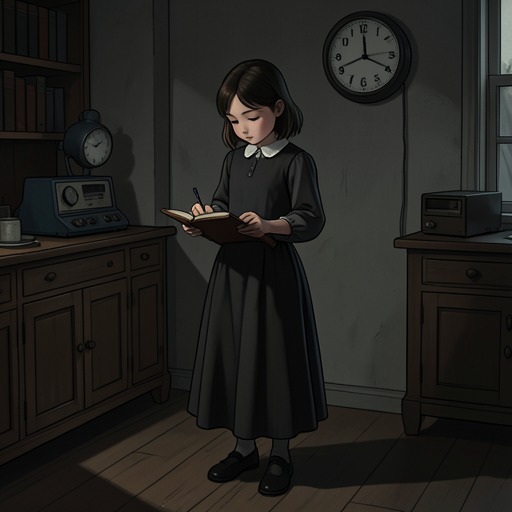
The upstairs parlour recurs as a particularly important interior. Its fireplace and the Turner painting above it are bound to Emma’s image of home; years later, the room also frames conversations and preparations for family occasions. At seventy-eight, she reviews legal documents at her desk there, pours sherry, and waits for the children and grandchildren she has summoned. Its familiarity gives a private setting to decisions whose consequences reach across the family and its businesses.
Other rooms carry different kinds of formality. The Adam dining room, with its long mahogany table, hosts a family dinner where warmth and ceremony coexist with concealed tension. The library has eighteenth-century pine panelling, mullioned windows, antique furniture, and a grand Chippendale desk. Its stone fireplace dates to the house’s construction in 1611, while a relief of the Judgement of Solomon above it gives the room an apt setting for a difficult reckoning. The house’s rooms are not interchangeable backdrops: the parlour shelters reflection, the dining room gathers the family under a public surface of civility, and the library becomes the place where Emma’s decisions are made explicit.
Family gatherings and succession
Pennistone welcomes Emma back after an absence of almost six weeks. On her return, the housekeeper Hilda greets her with evident relief, tells her that everyone has been worried, and assures her that preparations for the family are in hand. The welcome reinforces the house’s domestic role: it is a place maintained for Emma’s return and for the family’s presence, not merely a property attached to her public standing.
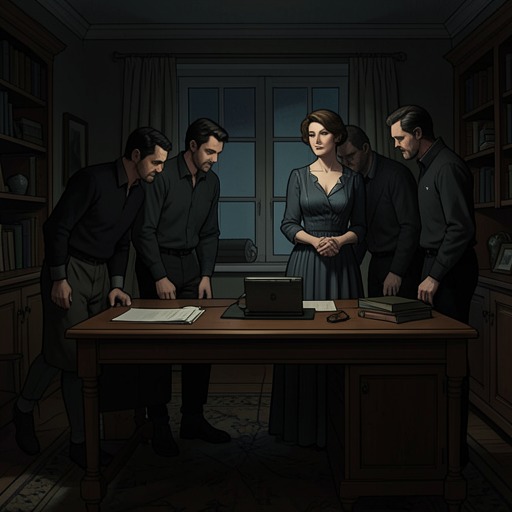
The house later becomes the setting for a reunion that is also a confrontation. Emma summons her children and grandchildren, ostensibly for a family weekend after her illness, but privately intending to address a conspiracy against her and the business she has spent decades building. The household’s ceremonial ease cannot conceal the strain. At dinner, Emma observes her grandchildren’s affection alongside the guardedness and hostility of some of her children. The family is physically assembled under one roof, yet the room’s conviviality masks its divisions.
At Pennistone, that conflict is brought into the open through Emma’s decisions about inheritance and employment. She bequeaths the house and its contents to Daisy for Daisy’s lifetime, with the property then to pass to Paula. She also gives Jim Fairley a new ten-year contract with the Yorkshire Consolidated Newspaper Company and appoints him managing director. The house is therefore not only the family’s meeting place but an asset through which Emma can shape its future and join the next generation to the enterprises she has founded.
A home at the close of a family circle
Pennistone Royal gathers the novel’s contrasts between business and domestic life, inherited history and chosen futures. Emma’s reflections at the fireside connect her youth and the Fairley family to the present, while her later family gatherings turn that history into a question of what should be carried forward. She does not treat the past as something that can simply be erased: instead, she considers whether the next generation should continue to suffer for the previous one’s mistakes.
The house’s enduring stone and ordered rooms give material form to that tension. It offers Emma the peace she seeks after travel and corporate battles, yet it also holds the people, memories, and decisions from which she cannot detach herself. By making Pennistone both her refuge and the setting for a decisive family settlement, the story turns home into more than a reward for success: it is where Emma confronts the inheritance of the past and determines what her family will inherit next.