Second World War
A Woman of SubstanceThe Second World War breaks into a life that Emma Harte and Paul McGill had recently imagined stretching peacefully into old age. It draws Emma’s family into military service, makes the danger of air attack part of domestic life, and tests her capacity to keep working while grieving. Its end brings not unqualified triumph but the release of a woman who has spent six years fearing for those she loves.
Warning and Outbreak
In September 1938, Emma Harte and Paul McGill still felt secure in their life together. In the library at Pennistone Royal, they discussed the years ahead, planned Christmas there, and anticipated a trip to America. Their evening ended with dinner at Quaglino’s, where they laughed and held hands. Against this intimacy, the novel places the expanding Nazi threat: the advance of Adolf Hitler across Central Europe makes war seem less a remote possibility than a question of time.
The danger is also understood beyond Britain. In conversation with Daniel P. Nelson, Paul McGill warns that war is likely in both Europe and the Pacific. He points to Japan’s and Germany’s industrial development and ambitions for global power, while Nelson acknowledges that the United States is still recovering from the Depression and that ten million people remain unemployed. Paul McGill sees American isolationism, reinforced by three neutrality acts, as an obstacle to responding to the threat; he doubts that the country could remain neutral if Britain went to war with Germany. His warning gives the approaching conflict an international scale before it becomes an immediate family crisis.
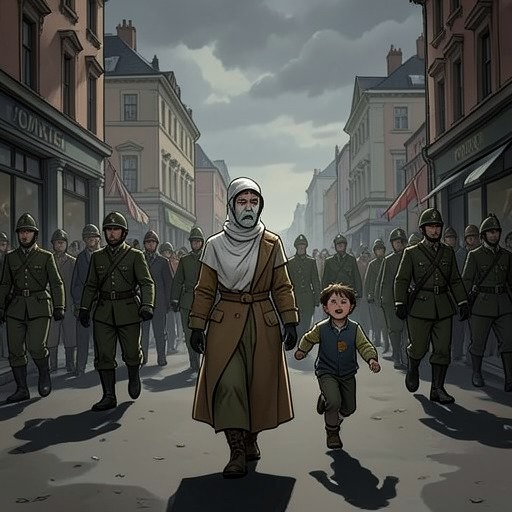
Britain declares war on September 3, 1939. Emma Harte is too bereaved to attend closely to the announcement at first, but by late September the mobilization around her can no longer be ignored. The national response recalls the speed and efficiency she had witnessed in her youth, while her expectation of a long siege gives the new war a foreboding presence. The private future she and Paul McGill had planned has already been overtaken by loss and danger.
Mobilization and Work
War reaches Emma Harte through the service of the younger generation. Her sons Kit Harte and Robin Harte join the armed forces, Kit Harte in the army and Robin Harte in the Royal Air Force. The prospect of their service makes the national conflict personal: military commitments are not abstractions but a source of continuing anxiety for a mother who has already endured bereavement.
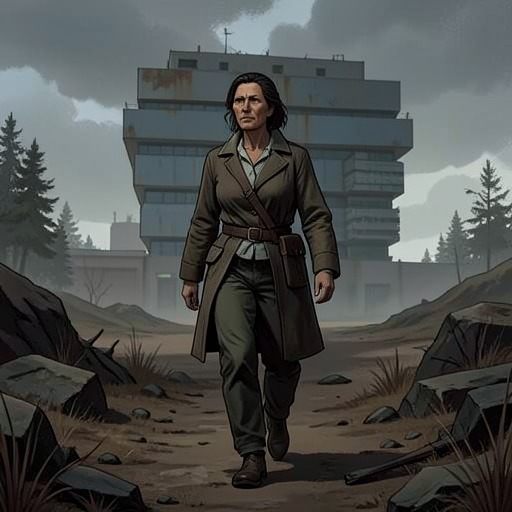
The novel’s account of Emma Harte’s response is shaped by the responsibilities she assumes. In the weeks after Paul McGill’s death, grief remains an iron burden; she misses him constantly, but gradually regains the ability to function. The widening crisis presses on her from outside, leaving little time or strength for private sorrow. The story presents her return to action not as recovery from grief so much as the difficult work of carrying it while others depend on her.
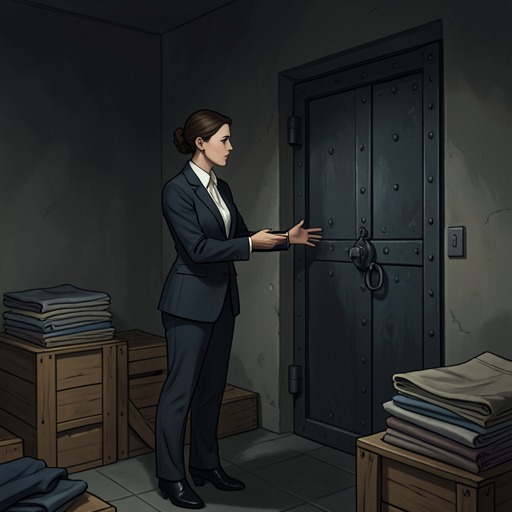
This wartime pressure belongs to a longer history of industrial change. In the earlier war, Emma Harte’s businesses had turned from ordinary production to government uniforms, and her textile operations had met large military contracts. That experience helps establish why work becomes one of her practical responses to national emergency. In the Second World War narrative, however, the emphasis falls less on contracts than on the people exposed to danger and the emotional cost of waiting for news.
The Battle of Britain and the Home Front
The summer of 1940 is the worst Emma Harte can remember. During the Battle of Britain, Adolf Hitler orders an offensive against the Royal Air Force, targeting aircraft factories and fighter bases around London. Dornier and Heinkel bombers cross the Channel while Messerschmitt fighters engage the Hurricanes and Spitfires sent up to meet them. The account moves from the scale of the air campaign to its unnerving presence in private rooms.
Air-raid sirens wake Emma Harte at night. She rises and stands at the window of her darkened bedroom, watching searchlights cut across the sky and hearing the continuous drone of aircraft. Her thoughts turn to Robin Harte, Tony Barkstone, Bryan O’Neill, and the other young pilots whose lives are at risk above her. Elizabeth Harte, who has left the small flat she took during her Royal Academy days and returned to live at home, sometimes joins her. Mother and daughter stand together with their arms around each other, watching the planes pass.
The scene makes the home front a place of anxious witness: Emma Harte and Elizabeth Harte cannot intervene in the fighting, but they experience its rhythm through alarms, aircraft, and fear for those flying overhead. Elizabeth Harte voices the question that the spectacle forces on the family: why the war began and what purpose it can serve if their young men may all be killed. The episode does not offer a reassuring answer. Its emotional force lies in the gap between the distant conduct of war and the intimate fear it creates at home.
Defeat of Germany and Relief
By the spring of 1945, the military balance has turned. In March, the American First Army crosses the Rhine at Remagen and establishes a bridgehead in Germany. Between April 20 and 25, Soviet forces enter Berlin; five days later Adolf Hitler and Eva Braun die by suicide. On May 7, Germany surrenders unconditionally at Rheims in France.
Emma Harte spends May 8, Britain’s V-E Day, in Leeds with Winston Harte and Charlotte. They celebrate with two bottles of champagne, amid flags and public festivities. Yet the day brings Emma Harte more relief than jubilation. After six years of war, she can at last take an easy breath: her sons and sons-in-law have survived, as have the sons of her brother and of her closest friends, Blackie O’Neill and David Kallinski. Their families have suffered no casualties, a fact for which she is deeply grateful.
The ending is measured in returns rather than spectacle. The war’s conclusion does not erase bereavement or restore the carefree future Emma Harte and Paul McGill once imagined. Instead, the surviving young people gradually come home, and the atmosphere of constant danger begins to lift. For Emma Harte, victory is most decisively the knowledge that her family and loved ones have lived through the conflict.