Thompson's mill
A Woman of SubstanceThompson's mill is an Armley woollen factory whose changing ownership links the practical demands of textile production to Emma Harte’s rise from learner weaver to industrial proprietor. She first encounters it as a difficult, tightly disciplined workplace, where long hours and dangerous machinery make a living; years later, it becomes a contested business asset in her struggle with the Fairley family and an enterprise she chooses to reorganize rather than close.
Setting and Industrial Context
The mill belongs to a region where geography shaped the wool trade. Fairley village lies in the foothills of the Pennines, while the West Riding’s millstone grit country supports short-haired sheep and is crossed by streams carrying soft water. The contrast with northern Yorkshire’s limestone country is significant: limestone water is harsh to fibres, whereas the soft water of the becks suits cloth-making. Sheep’s wool and water suited to processing it helped sustain the region’s manufacturing economy. The Fairleys’ broader success also depended on successive generations of business owners adopting new machinery rather than resisting technological change.
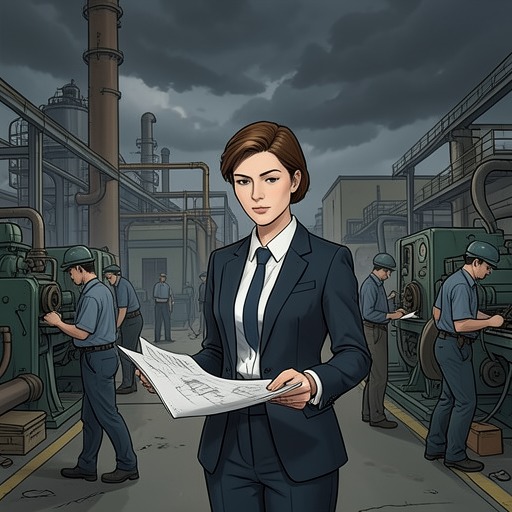
Thompson's mill is identified with Armley, within this wider Yorkshire textile world. Its operation ties local employment to a chain of manufacture and trade: workers tend looms, mills produce cloth, and finished goods serve customers beyond the immediate district. During wartime, that production could be redirected to government demand. The factory is therefore more than a backdrop for Emma’s working life: its machinery and workforce are also resources over which competing owners exercise control.
Emma as a Learner Weaver
After leaving the Kallinski household, Emma considers Laura Spencer’s suggestion that she learn weaving. Laura has spoken with the foreman, who is looking for girls to train, and can arrange for Emma to start as a learner on the looms. Emma accepts both the job and Laura’s offer to share her home, agreeing to pay her way. The arrangement gives Emma a place to live and a route to earning her own living as she approaches childbirth.
Her first impression of the mill is sharply different from her experience at Abraham Kallinski’s small factory. At Thompson's, she finds rigid discipline, demanding supervisors and little of the camaraderie she had valued elsewhere. She struggles to learn weaving and fears a “trap,” in which a large number of broken threads can leave a loom hours out of operation. The danger is not abstract: on her third day, a shuttle flies off and strikes another worker in the face, an accident the narrative describes as not unusual. Emma herself avoids a trap throughout her time there, but only through care and sustained attention.
Laura teaches her patiently, and Emma’s quick mind and nimble fingers help her master the work within a month. Skill does not make the workplace agreeable. She and Laura work from six in the morning until six at night; as Emma’s pregnancy advances, standing at the loom leaves her exhausted and with swollen legs. She continues because she needs the wages and has no alternative to proving herself a competent weaver. The mill thus marks an early conjunction in her life between vulnerability and capability: its conditions strain her, but learning its work strengthens the independence on which her later business career will depend.
Ownership and Business Rivalry
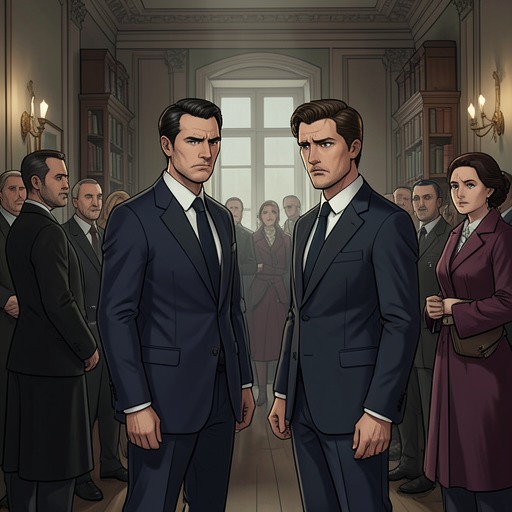
The Fairley connection to Thompson's mill becomes explicit when Gerald Fairley tells Emma that the family has bought it. Its records have revealed that she once worked there as a weaver, a detail he uses to belittle her progress into trade. He also says that Edwin Fairley had admitted Emma had his child and wanted to visit and help them, but that Gerald prevented him. The mill’s purchase therefore brings an old personal secret into the orbit of a business confrontation: Gerald’s access to its books helps him identify Emma and renew his search for the child.
Emma later turns the same mill into an instrument of commercial retaliation. Emeremm Company buys Procter and Procter, a struggling Bradford cloth warehouse, partly because its owner, Alan Procter, is Gerald’s associate. The transaction gives Emma a channel for information about the Fairleys. In 1918, she learns through that channel that Gerald is in financial trouble and wants to sell Thompson's. Emeremm acquires the mill through Procter and Procter; Gerald, believing he is dealing with an old trusted friend, accepts a quarter of its true value. Emma’s strategy joins secrecy to patient leverage: the purchase is not an open contest between her and Gerald, but one carried out through an intermediary whose apparent ownership conceals hers.
Thompson's also stands at the centre of Gerald’s explanation for his decline. He complains that it makes the same cloth as the remaining Fairley mill and has taken customers from him; he also blames Emma for recruiting Ben Andrews and other skilled workers away from Thompson's in 1914. His account presents the mill not simply as property but as a source of competition over customers, staff and managerial capacity. Edwin rejects Gerald’s insult against Emma, making the business grievance part of a wider family conflict.
Reorganization and Continuing Production
When Emma takes charge, she goes to the Fairley mill only after Gerald has left the village. She addresses workers assembled in the weaving shed and acknowledges that the cloth business has slumped, wool and cloth prices have fallen, and poor management has left the mill struggling. Several workers have already been laid off. She says she cannot reinstate them, but offers small pensions to those still without work in nearby towns and promises that the mill will not close.
Keeping it open does not mean preserving its existing organization. Emma announces that the mill must economize, reorganize and reduce its staff. Workers of retirement age, and those close to it, are to retire with pensions; younger workers, particularly single men, may take jobs in her companies in Leeds and Bradford, while those who decline can remain. She plans to sell the mill’s quality cloth to the three Kallinski tailoring factories, though those orders alone will not sustain full production. To broaden demand, she proposes making cheaper, lower-quality cloth for foreign markets and potentially for domestic sale. Her policy combines workforce reduction with an explicit refusal to abandon the local community to the consequences of closure.
The mill’s subsequent wartime role illustrates the flexibility of that industrial network. Under Ben Andrews’s management, Layton’s mill meets large government contracts, while production at the clothing factory is turned over to uniforms; Harte’s, the warehouse and the other businesses remain under Emma’s active direction. These are related enterprises, not the same factory, but they show the commercial world in which Thompson's sits: textile capacity can be redirected as markets and military needs change. Across Emma’s story, the mill moves from a site where she must master the loom to an asset she can acquire and reshape, making industrial knowledge a source of both personal livelihood and corporate power.