Yorkshire Morning Gazette
A Woman of SubstanceThe Yorkshire Morning Gazette is both a working newspaper and a family asset: its boardroom, circulation, and shares make it a point where public information and private commercial power meet. Under Adam Fairley and later Edwin Fairley, the paper remains tied to the Fairley family’s standing in Yorkshire. Emma Harte’s eventual acquisition of it is therefore more than another business victory: it removes the family’s last major holding and brings her long vendetta to its intended conclusion.
Ownership and the Fairley connection
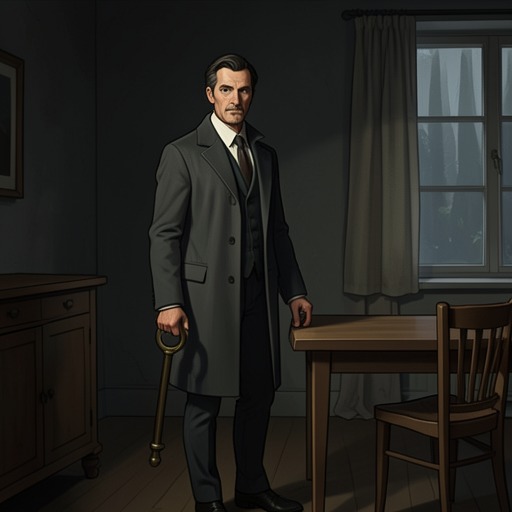
The newspaper company is based in Leeds and, at the beginning of the story, Adam Fairley is its controlling shareholder. His schedule includes a board meeting there, alongside responsibilities in the family’s wool business. The paper is one part of a wider inherited empire that Adam has enlarged without feeling that he chose or truly wanted its demands. Although he regards business as increasingly dull, he is not inept: beneath his gentle manner lies a reputation for tough negotiation and calculated opportunism. His position at the Gazette thus reflects both his inheritance and his capacity to exercise power within it.
The paper’s business coverage connects it directly to the textile economy on which the Fairleys’ wealth rests. Adam turns to its Bradford wool-market pages to assess prices and exports, citing annual English cloth exports of roughly twenty-seven million running yards and the family’s continuing strength in the world market. The scene makes the newspaper more than a passive emblem of status: it supplies information that an owner and industrialist can use to read the conditions affecting his commercial world.
After Adam, Edwin Fairley becomes the paper’s central Fairley figure. He lives and practises law in London but retains close ties to Yorkshire, devoting considerable energy to the Gazette. As board chairman and majority shareholder, he wields power over the company. By then the paper is the Fairleys’ last remaining major holding in the region, and its continued ownership gives Edwin a base of influence even as Emma has weakened the family’s other commercial interests.
A newspaper in everyday life
The Gazette appears in domestic as well as corporate settings. Emma carries it to Adele Fairley in her rooms, and Adele reads it while resting in bed. On another occasion, after taking tea, Adele occupies herself with its pages to keep her attention from returning to her anxiety and desire for whisky. She scans the Court Circular for reports of royal audiences and visits, then moves through the paper’s other contents, including the Bradford market pages and an account of a hunt near Doncaster. Her reading shows the paper’s range of matter in the scenes presented: social news, market information, advertisements, and general-interest reports sit together in a household object.
The newspaper’s circulation of information also brings the Fairley family’s social lives into Emma’s view. She learns from its reports that Edwin has received the Victoria Cross and that his wife, Jane, has given birth to a son named Roderick Adam. Such notices keep Edwin’s fortunes visible to Emma, even when she has no personal contact with him. The Gazette is thus a recurring channel through which the family’s public achievements and private milestones become part of her knowledge—and, in turn, material for her continuing attention to the people she intends to defeat.
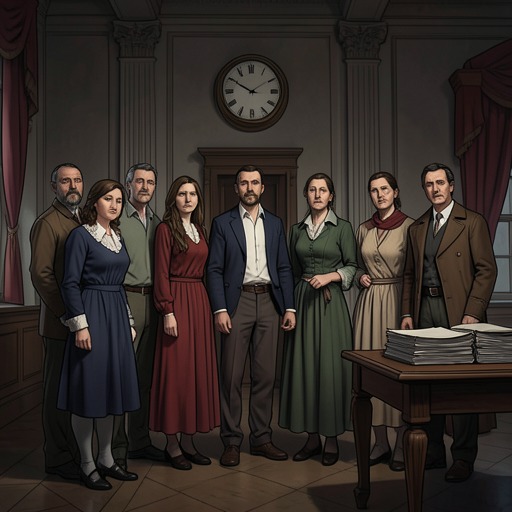
The paper’s operation is also shown through the pressure of producing an edition. In its oak-panelled boardroom, Adam and Lord Jocelyn Sydney wait tensely while an editor delays the lead story; the first edition is at risk if the delay continues. The scene places the newspaper’s daily production beside the weight of ownership: a boardroom full of shareholders and decision-makers cannot simply make an edition appear, and editorial work has its own pace and demands. The evidence presents this as a moment of deadline strain, rather than establishing a broader editorial policy for the paper.
Emma’s campaign against the paper
Emma’s interest in the Gazette grows out of her larger conflict with the Fairleys. She identifies Adam and Gerald Fairley as the primary targets of her business retaliation because they control the mills and the family fortune. She has accumulated detailed knowledge of their holdings and commercial position in secrecy, and she understands that business competition offers her a more effective means of striking back than personal confrontation. The newspaper becomes increasingly important as the Fairley empire contracts: it is a surviving concentration of ownership and influence that she is determined to take from Edwin.
By the 1930s, Emma has spent years acquiring the Gazette’s common shares as they come onto the market. Her purchases are deliberate and patient, but they do not immediately give her control. Edwin retains his own shares and remains chairman, while the company continues to operate despite losing money. Emma’s allies, including Winston Harte and Blackie O’Neill, urge her to abandon the vendetta, arguing that she has already damaged the Fairley position in Yorkshire. She refuses. She regards the paper as the final piece required to complete her revenge and waits for a moment when Edwin’s hold can be broken.
Emma’s approach combines share accumulation with competition in the newspaper market. Her own papers become the most successful in Yorkshire and gradually draw away the Gazette’s circulation. When the Gazette continues to lose money after the war, she later admits that she deliberately drove it into the ground. At the same time, Edwin weakens his position by selling a large block of shares. The company’s poor performance and the changing balance among its shareholders make Emma’s accumulated stake increasingly consequential; the paper’s decline is both a commercial crisis and the opening she has been waiting for.
The takeover and its significance
On May 8, the day the book identifies as V-E Day in Britain, Blackie arrives at Pennistone Royal with news that the Yorkshire Consolidated Newspaper Company has taken control of the Gazette. Emma confirms that she has finally won. She explains that her years of purchases, combined with her latest acquisitions, gave her substantial power. The board had long been concerned about the failing papers, and most shareholders were willing to sell to Harte Enterprises. Others who had initially resisted eventually supported Emma when she offered to introduce new management. At the decisive board meeting, Edwin was outvoted and had to relinquish the chairmanship; Harte Enterprises then offered to buy his remaining shares, and he accepted.
The victory closes a prolonged contest rather than producing a sudden reversal. Emma does not need to confront Edwin in person at the meeting: Winston represents her, while the outcome follows from the commercial position she has built over years. Her success depends on patience, the Gazette’s declining circulation and finances, Edwin’s sale of shares, and shareholders’ willingness to exchange loyalty for the prospect of a rescue. The newspaper’s transfer therefore dramatizes the difference between nominal leadership and effective control. Edwin can remain chairman only while the board and shareholders sustain him; once their support shifts, his title cannot protect his stake.
The Gazette’s importance lies in this double function. As a newspaper, it carries market, social, and general news into the lives of its readers and reflects the labor of producing an edition. As a company, it concentrates ownership and regional influence in the hands of the Fairleys, then becomes the final object of Emma’s business campaign. Her acquisition completes the movement from watching the family through the paper’s reports to controlling the institution that had helped keep its fortunes publicly visible.