
The Architecture Of Darkness
A cataclysmic lack of HarmonyThis flow traces Darkness from physical weather into a psychological structure that governs perception and suspense.
increasing Bearing strength in each event
 decreasing
Bearing strength in each eventdecreasingEerie Night
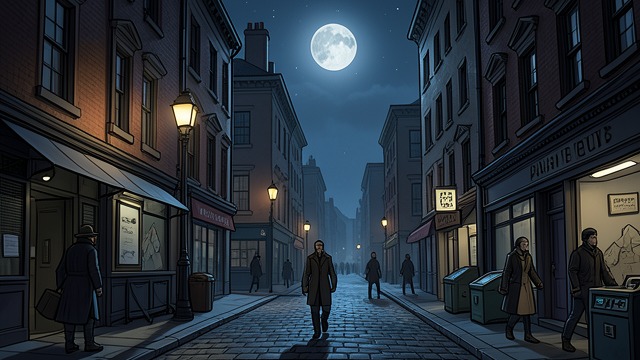
Eerie Night
The poem begins on a cold and eerie night. The Moon shines, but its light is partial, establishing a world in which visibility is always compromised.
Limited Illumination
Light exists without becoming sufficient. The speaker can perceive danger only through gaps in obstruction.
Emotional Climate
The weather does not merely surround the city; it gives suspense a material form. Fear begins as atmosphere before becoming thought.
Obscured Moon
Obscured Moon
Grey clouds partially cover the Moon while a howling wind crosses the city. The image makes celestial guidance unstable and remote.
Interrupted Orientation
The speaker cannot rely on a clear source of direction. Even the night sky participates in uncertainty.
Pressure From Above
The clouds seem to weigh over the city, turning the environment into an active force. Darkness is no longer absence; it is obstruction.
Howling Wind
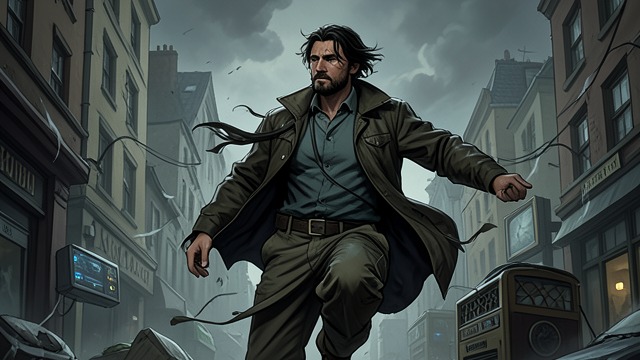
Howling Wind
The wind adds suspense to the city, making ordinary surroundings feel theatrical and dangerous. Sound becomes the means by which unseen threat enters consciousness.
Invisible Force
The wind cannot be confronted directly. Its movement demonstrates how fear can be produced by what remains unseen.
Urban Estrangement
The city loses familiarity under the weather. Public space becomes psychologically alien, isolating the speaker within a shared environment.
Suspense Atmosphere
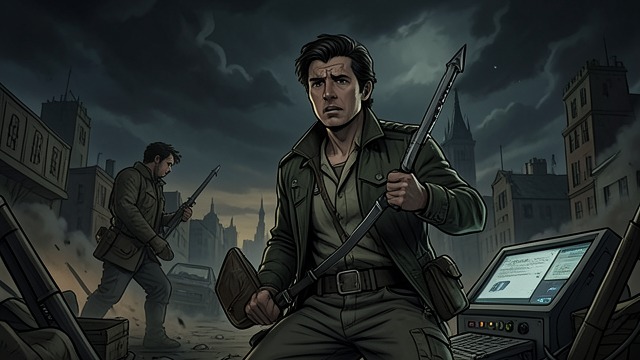
Suspense Atmosphere
Suspense takes over the city's atmosphere, suspending certainty about what might occur. The poem's tension comes from anticipation rather than disclosed action.
Threat Without Event
Nothing concrete needs to happen for fear to intensify. The mind supplies possibilities where the environment withholds answers.
Inner Projection
The city reflects the speaker's condition. External Darkness becomes the visible form of internal apprehension.
Unresolved Night
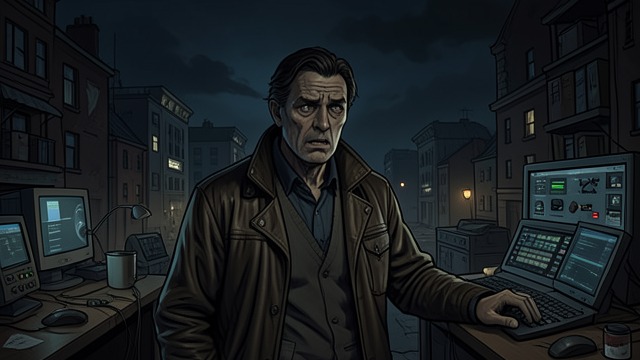
Unresolved Night
The night ends without a revelation or rescue. Darkness remains a condition the speaker must carry rather than a puzzle that can be solved.
Persistence Of Fear
The absence of an ending event keeps the emotional conflict open. Fear survives because uncertainty survives.
Perceptual Afterlife
The night continues as a template for later rooms, memories, and silences. Darkness becomes part of how the speaker reads experience.
opening of Darkness
during the clouded night
after the clouds gather
at the poem's climax
closing lines
