Earth
A cataclysmic lack of HarmonyEarth occupies a double position in the book: it is the common physical ground of human existence and the symbolic social world that organizes what may be desired, approached, or forbidden. The poems do not treat it as passive scenery. Earth receives bodies, houses intimacy, surrounds private anguish, and becomes the scale against which love and isolation are measured.
Definition and Setting
Earth is presented first as a shared mother rather than merely a planet or backdrop. A shrinking body slowly deteriorates and mixes with the common Mother, Earth, which takes back its creatures when their time comes. This image gives Earth an active biological role: it is the origin to which embodied life returns, and mortality is described as a process of reabsorption rather than an isolated ending. The individual body therefore remains connected to a larger material cycle even as it weakens.
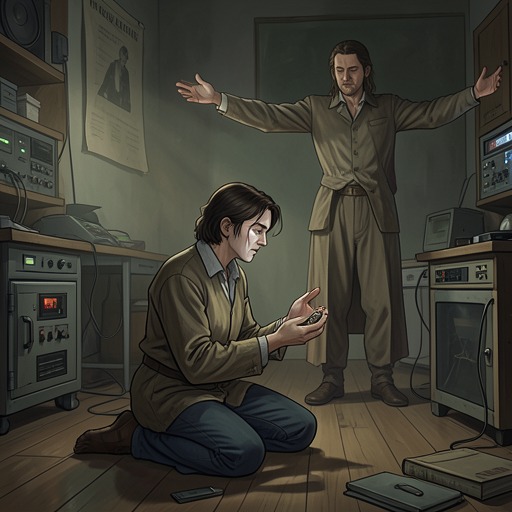
The same Earth also contains the domestic and emotional spaces through which the poems move. A speaker lies sleepless on a bed while darkness surrounds the room and no light can be seen; elsewhere, an abyss of unsaid whispers occupies language, and personal problems are painted onto a canvas hung in the corridor of life. Earth is thus encountered through beds, houses, corridors, and imagined shelters as much as through planetary imagery. Its vastness does not cancel confinement: the world can be immense while a person remains trapped inside a room, an unspoken thought, or an empty house.
Earth as Living Environment
The book repeatedly gives natural forces their own pressure and movement. A sailor fights storms and seas while overwhelming waves crash against a colourless surface, turning the environment into an adversary that tests endurance. The image does more than decorate inner suffering: danger is organized through the physical behavior of water, weather, and impact. Emotional life becomes legible as exposure to forces that cannot be fully controlled.
A related transformation occurs in the image of desire. The wave of shared desires crashes against the chains of Heteronormativity, making the natural force of water collide with a social structure of restraint. Earth becomes the field where bodily and emotional impulses meet rules imposed upon them. The contrast is central: desire moves like a wave, but the surrounding world answers with chains.
Garden, Prohibition, and Intimacy
Earth is also figured as a large garden containing a prohibited apple. The beloved is described as that forbidden apple, placing intimacy inside an image of attraction, knowledge, danger, and prohibition. The garden is not an untouched paradise; it is a socialized world in which closeness is visible yet regulated. Two people are as close as atoms, but they do not dare to touch, so physical proximity becomes a measure of the distance produced by fear and prohibition.
The image of the garden is intensified by the desire for a life among stars, with a door encircled by Christmas lights. Against that imagined threshold, Earth appears both ordinary and restrictive: it is the place where a different life might be sought, but also the place whose conventions prevent the desired crossing. The request to meet anywhere but home and the wish for souls to tiptoe-dance away from domestic space show how location affects intimacy. Home is not automatically refuge; escape from it becomes a condition of contact.
Emotional and Spatial Consequences
Earth holds the speakers’ most private crises without resolving them. One voice is driven toward Insanity while a compassionate heart corrodes; another experiences an inner thunderstorm and a tornado of emotions consuming every part of a tormented soul. These images connect planetary and meteorological scale to the body, making the inner life feel like an environment with its own storms. Earth is the medium through which such crises acquire physical form, even when the immediate scene is a bed, a house, or a corridor.
The final house image reverses the promise of shelter. An emptiness takes over the house, accompanied by repeated SOS calls and the fear that this may be the end before the end. The house, situated within Earth’s wider world, becomes a compressed image of abandonment: enclosure no longer protects the inhabitant but registers absence. Earth consequently contains both the possibility of shared life and the spaces in which that possibility collapses.
Narrative Significance
Earth’s significance lies in the tension between belonging and exclusion. As the common Mother, it receives all creatures and places individual decay within a collective material order. As the garden of prohibition, it exposes the social conditions that make two nearly touching people remain apart. As a storm-filled environment, it supplies the active vocabulary through which fear, desire, danger, and psychic turmoil are experienced.
The recurring movement from body to planet, from wave to chain, and from garden to empty house prevents Earth from becoming a neutral setting. It is at once origin, enclosure, battlefield, and witness. The poems’ most intimate conflicts therefore acquire planetary weight: the struggle is not only within a solitary person or between two souls, but also within the world that sustains life while shaping the limits of touch, speech, home, and return.