Oblivion
A cataclysmic lack of HarmonyOblivion is presented as both an imagined destination and an encroaching condition: a state where identity, certainty, bodily integrity, and ordinary communication begin to dissolve. The book links it to bliss, death, uncertainty, and silence, but does not reduce it to a single meaning. It can be feared as annihilation, desired as escape, or inhabited as the emptiness left when connection fails.
Definition and Imagery
Oblivion first emerges as a transitory state joined to bliss. The speaker imagines drawing stairs that lead toward this passage and projecting its incandescence into the heart, giving oblivion a paradoxical radiance rather than treating it as simple darkness. The image makes disappearance appear reachable and almost luminous, while the stairway preserves the sense of movement toward a threshold rather than arrival at a settled place.
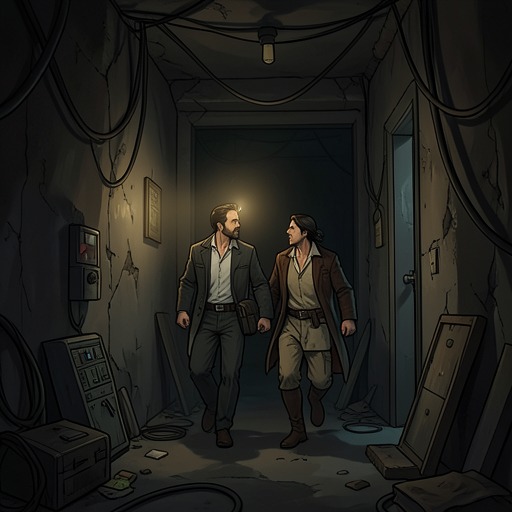
The poem repeatedly turns oblivion into a landscape. The speaker and another presence find themselves heading toward it while the land of uncertainty broadens its horizons. This spatial language enlarges private distress into a shared existential direction: the movement is not merely inward collapse but travel through an expanding territory whose boundaries cannot be known.
Relation to Death and the Body
Oblivion is closely bound to an explicit final destination: Death. A fragmented woman spends each day in solitude, while the clock sentences her to a greater escape and navigates through space and time toward that inevitable end. In this formulation, oblivion is both the escape promised by death and the condition produced by waiting for it; time does not rescue the isolated figure but carries her toward disappearance.
The body supplies a more immediate version of the same process. A shrinking body is slowly deteriorating and mixing with what is common, so the boundary between person and surrounding world begins to fail. The image makes oblivion material: it is not only a philosophical absence but a gradual loss of bodily distinction, scale, and separateness.
Another poem intensifies the association through the orchestra of Death. A figure trapped inside a crystal ball dances among the goddesses of winter while playing a song performed by that orchestra, placing confinement, seasonal cold, music, and mortality in the same symbolic chamber. Oblivion therefore has a sound as well as a destination, even when the melody is described through broken wings and silence.
Uncertainty, Recognition, and Refusal
The Earth is described as an uncertain world in which feeling flummoxed is not improbable. Oblivion grows from this epistemic instability: the speaker cannot rely on the world to provide a stable explanation, and bewilderment becomes an ordinary condition rather than an exceptional crisis. The text sustains this uncertainty instead of resolving it into a definite supernatural or rational account.
The speaker’s relation to truth is equally conflicted. The refusal to turn the head is immediately connected with fear of knowing the truth, followed by the pretense of being blind. Oblivion thus functions as a chosen suspension of recognition. It is not only something that happens to the subject; it is also a defensive posture that postpones knowledge and protects the speaker from what knowledge might expose.
The same hesitation appears in the question, “Is this the end?” The question leaves the terminal meaning open even as the surrounding mood is gloomy and miserable and the speaker walks with a head underwater. Oblivion is consequently defined by an unresolved border between ending and continuation, consciousness and surrender.
Intimacy and Failed Language
Oblivion also enters relationships. What the speaker feels for another person is called esoteric and not meant for everyone, while a tête-à-tête is imagined as immersion in the other’s mind. Intimacy offers a possible resistance to disappearance, since one consciousness may still reach another, but its exclusivity also isolates the feeling from public understanding.
The speaker repeatedly worries that expression may become banal, dull, or monotonous. This anxiety places language itself near oblivion: words risk losing force through repetition, while the attempt to describe an unusual feeling threatens to flatten it into cliché. The poem’s ornate images and abrupt shifts answer that danger by keeping the experience unstable and difficult to classify.
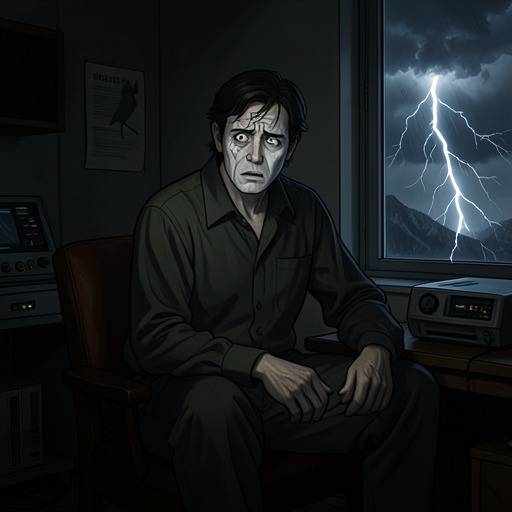
At the book’s most extreme communicative moment, inaudible sounds leave the speaker’s mouth, followed by repeated calls of SOS and the question of whether the speaker is even alive. The house is then overtaken by emptiness. Here oblivion is social and domestic as well as metaphysical: it is the condition in which a person can signal distress without producing an audible response, leaving the surrounding space empty rather than rescued.
Narrative and Thematic Significance
Oblivion gathers the book’s recurring oppositions into one open-ended state: bliss and death, radiance and darkness, intimacy and isolation, speech and silence, bodily presence and dissolution. Its meaning changes with each recurrence, but the direction remains consistent. The poems move toward a threshold where ordinary distinctions no longer hold, while continuing to test whether art, memory, or another person can make that movement visible.
The concept is therefore less a final answer than a governing horizon. The speaker may dream of it, fear it, approach it through bodily decline, or mistake it for escape, yet the poems never grant a stable arrival. Even the last question leaves consciousness uncertain. Oblivion’s decisive significance lies in that sustained tension: it names the point at which disappearance seems inevitable, while the act of writing remains a final, fragile refusal to vanish without a trace.