Solitude
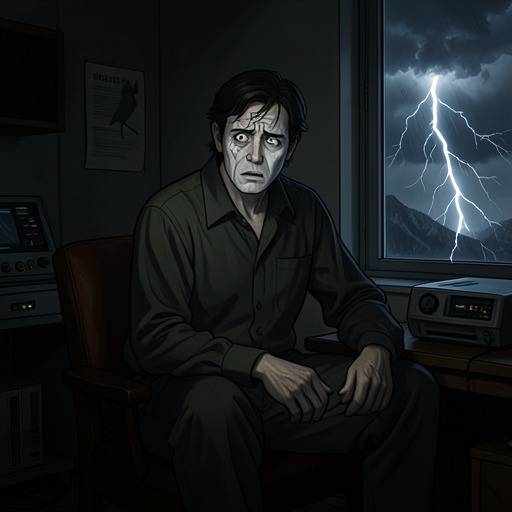
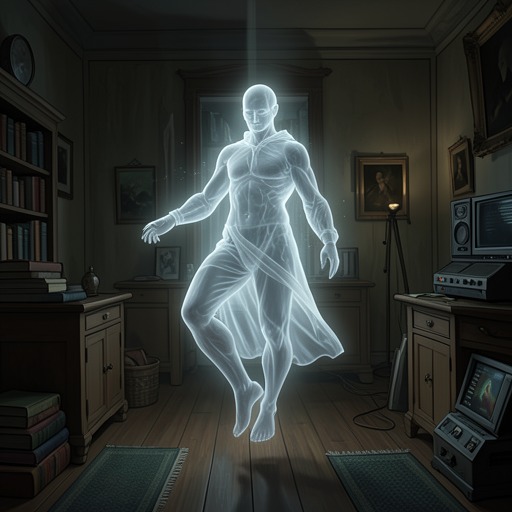
A cataclysmic lack of HarmonySolitude is one of the book’s central states of consciousness, at once an imposed absence and a chosen mode of perception. It appears as quiet composition, as the experience of being left alone, and as a pressure that fragments the self; yet it also creates the stillness in which the speaker can attend to space, time, memory, and language. The book therefore treats Solitude not as a single emotion but as a changing field in which loss, imagination, and poetic expression repeatedly meet.
Definition and Emotional Conditions
Solitude first takes shape as an inward artistic condition. The speaker attends to the inner secrets of space and time and composes notes of a “mellifluous, quiet” solitude, making isolation inseparable from observation and craft. This quiet is not simple peace. It is a disciplined withdrawal in which the speaker fluctuates through an unstable inner life, using distance from others to register experiences that ordinary conversation cannot contain.
The state also has a distinctly existential dimension. The speaker describes living in an uncertain world, the Earth, where feeling flummoxed is not improbable. Solitude is consequently linked to disorientation rather than mastery: the isolated consciousness does not stand outside uncertainty and explain it, but remains immersed in it. The speaker’s desire for equanimity and admission that being nongregarious is axiomatic suggest that withdrawal is partly recognized as a personal disposition, even while the surrounding world intensifies its effects.
From Separation to Abandonment
Solitude becomes more painful when it follows the loss of companionship. After the statement “...Silence.”, the next movement is “Alone,” followed by the accusation that the other person left the speaker. The abrupt visual and syntactic progression turns separation into a condition of suspended communication. Silence is not merely the absence of sound; in this context, it carries the force of abandonment because it arrives after an implied relationship and leaves the speaker without an answer.
The memory of earlier intimacy makes the isolation sharper. The pair once talked for days, filling a room with warm, timeless laughter, and the speaker recalls monologues under moonlight while hiding among bright stars. Solitude is therefore measured against a former abundance of speech, laughter, and shared attention. Its pain comes from contrast: the room that once held conversation now holds the afterimage of conversation, while the stars preserve an expansive setting that cannot restore the missing companion.
Fragmentation, Silence, and Repetition
The book gives Solitude a bodily and spatial form through images of isolation, breathlessness, and fracture. In the abyss, no breathing creature can hear the inaudible utterance of Solitude and acedia scratching at the heart. The condition is thus represented as both an inner wound and a message without a receiver. Its speech exists, but it cannot cross the distance separating the speaker from any possible witness.
That distance produces fragmentation. The isolated figure is left staring at life in pieces and spends each day in solitude while the clock sentences the figure to a greater escape, navigating through space and time. The language joins repetition with entrapment: each day renews the same condition, while the clock converts duration into judgment. Solitude is not simply a moment of being alone but a temporal regime that makes isolation recur and deepen.
Sound and visual form reinforce this recurrence. “Rain” is followed by another “Rain,” then by “Tip” and “Tap”; later, the sequence reverses into “Tap” and “Tip” before ending in “...Silence.” The small percussive units resemble an external clock or rain against a surface, but their alternation also dramatizes a consciousness listening for a pattern that cannot become dialogue. Repetition promises continuity while the final silence interrupts it. Elsewhere, the repeated “Words.” reduces language to separate units, suggesting that the materials of communication remain present even when their connective force has failed.
The World as an Enlarged Isolation
Solitude is not confined to an interior room. The speaker is constantly in danger from overwhelming waves crashing against a colourless sky, an environment whose scale makes personal isolation appear almost cosmic. The broken presentation of the word “sky” extends the image vertically and visually, as though the surrounding world itself were being pulled apart. The isolated self is exposed to forces too large to answer, and the absence of companionship becomes part of a wider condition of vulnerability.
The same tension appears in the relationship between Solitude and the stars. The speaker recalls hiding among bright stars and later comes alive while dreaming about the Moon landing and visiting factories of stars. Imagination does not cancel isolation, but it gives the isolated consciousness a route beyond its immediate enclosure. The dream of the Moon landing transforms distance into an object of wonder, allowing Solitude to open onto cosmic scale rather than close entirely into despair.
Solitude as Poetic Practice
Although Solitude wounds the speaker, it also makes writing possible. The speaker composes quiet notes from the inward secrets of space and time, treats another presence as something esoteric rather than universally accessible, and resists sounding banal, dull, or monotonous when approaching difficult subjects. This resistance implies that isolation creates a private pressure on language: the speaker must find forms capable of carrying what cannot be expressed through ordinary exchange.
The poetic process is consequently both compensatory and incomplete. Repeated “Words.” declare the persistence of language, but their isolation on the page also shows its insufficiency. The speaker can arrange words, images, rain, stars, and silence, yet cannot guarantee that these forms will reach the absent other. Solitude becomes the condition under which expression continues precisely because communication has broken down.
Ending and Thematic Significance
Near the book’s darker threshold, the speaker feels gloomy and filled with misery, walking with the head underwater, and asks whether this is the end. The image combines movement with submersion: the speaker continues along a path, but in an environment that obstructs ordinary breathing and visibility. Solitude here approaches crisis, while the repeated presentation of “Opinions” suggests a world crowded with judgments that still offers no intimate answer.
The book never reduces Solitude to either a virtue or a purely destructive force. It is abandonment after laughter, an inaudible utterance in an abyss, a daily sentence imposed by time, and a private discipline through which the speaker makes poems. Its decisive significance lies in this doubleness. Solitude removes the other person and threatens the self with fragmentation, but it also enlarges perception, preserves memory, and supplies the silence from which the book’s words emerge.