Uncertainty
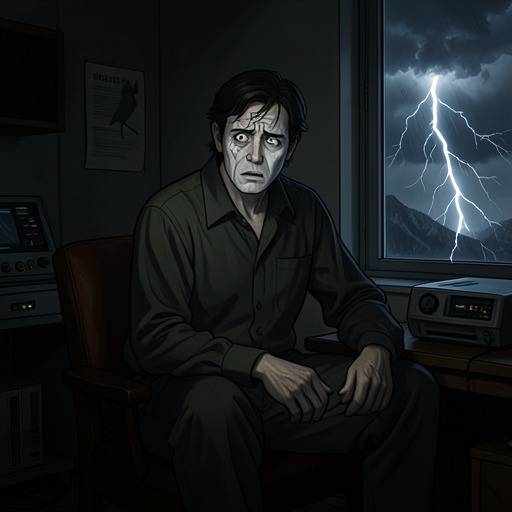
A cataclysmic lack of HarmonyUncertainty is one of the book’s central states of being: not a single crisis that can be resolved, but a pressure that continually shapes perception, intimacy, language, and the prospect of an ending. The speaker inhabits an uncertain world, struggles to release thoughts and feelings, questions whether the present has reached its end, and repeatedly turns toward images of danger, space, storms, and the unknown. Its significance lies in this persistence. Uncertainty does not merely obstruct understanding; it preserves several possible meanings at once, making hesitation itself the book’s durable emotional and philosophical condition.
Definition and Existential Setting
Uncertainty first appears as a condition of inhabiting the Earth itself. The speaker describes living in “an uncertain world, the Earth,” where feeling flummoxed is entirely possible. The phrase joins the immense and the ordinary: the planet is both a physical home and a bewildering environment whose meanings cannot be mastered. The speaker can be simultaneously astonished and emotionally detached, “paradoxically flabbergasted and blasé,” so uncertainty produces contradiction rather than a clean emotional response.
This state is also linked to danger and exposure. Like a sailor fighting storms and seas while constantly in danger, the subject is placed in a landscape where movement offers no guarantee of safety. The sailor image makes uncertainty active rather than passive: it is something navigated under pressure, with the possibility of catastrophe always present. The metaphor also frames existence as a journey whose route is not fully known, even when the traveler continues forward.
Uncertainty in Thought and Speech
Uncertainty interrupts communication before feeling can become expression. Thoughts and feelings intended for another person remain contained because uncertainty and fears prevent them from breaking out and flying away freely. The image of thoughts waiting to be filled with another’s “magical essence” gives silence a double character: it is both blockage and unrealized possibility. What cannot yet be said is not necessarily absent; it remains suspended, awaiting the conditions that might make articulation possible.
The speaker is aware that attempts to speak about intimate matters may sound banal, dull, or monotonous. This self-consciousness adds a second layer of uncertainty, since the problem is not only what is felt but whether language can represent it adequately. The speaker distrusts predictable expression and therefore hesitates at the threshold of disclosure. Uncertainty becomes a poetic method: instead of settling the feeling into a definitive statement, the text exposes the difficulty of making the feeling speak.
Love, Desire, and Relational Risk
In the relationship at the center of these passages, uncertainty marks both exclusivity and vulnerability. What the speaker feels is called something esoteric, “not for everyone,” suggesting a private bond whose meaning resists general explanation. Yet the very intensity of that bond is unstable. The two figures are described as “nothing more than just disparate souls” while the beloved drives the speaker toward Insanity and corrodes a compassionate heart. Intimacy therefore contains estrangement: closeness does not eliminate separation but makes the distance more painful.
The speaker’s devotion is presented as an imperative. The beloved’s love is the speaker’s only categorical imperative, and the speaker recognizes that accepting it is a risky game while still embracing the risk. This acknowledgment prevents love from becoming a secure refuge. Love demands commitment precisely because its outcome is not guaranteed; the speaker’s willingness is a decision made under uncertainty, not after uncertainty has disappeared.
Desire also meets a social boundary. The wave of shared desires crashes against the chains of Heteronormativity, turning uncertainty into a conflict between private longing and imposed social order. The image does not present desire as weak or merely confused. It gives desire force and momentum, while the chains represent the structure that restricts its direction. The uncertain future of the relationship is therefore shaped not only by personal hesitation but by the pressure of a normative world.
Destinations, Oblivion, and the Unresolved Future
Uncertainty governs the movement toward an ending. The clock sentences a fragmented figure to a greater escape, navigating through space and time toward an inevitable ultimate destination. Time appears both mechanical and judicial: it imposes movement while withholding control over where movement leads. The destination is inevitable, but its meaning remains unsettled, leaving escape, death, transcendence, and disappearance in unresolved proximity.
The text later describes the figures as heading toward Oblivion, while “the land of uncertainty” broadens its horizons. This formulation makes uncertainty a place rather than merely a feeling. It is an expanding territory entered through motion, and the farther the journey proceeds, the less stable the horizon becomes. Oblivion does not close the question; it enlarges it. The movement toward an ultimate destination thus intensifies rather than resolves the problem of what awaits.
Even the book’s images of awakening remain suspended between reality and dream. The speaker says, “I came alive, when I was dreaming,” while dreaming about the Moon landing and visiting factories of stars. The Moon landing offers a recognizable image of human achievement, but the surrounding dream language places it in a visionary register. Coming alive occurs within dreaming, so awakening does not necessarily mean reaching certainty. Imagination becomes a temporary form of existence whose truth is emotional rather than conclusively factual.
Fear, Repetition, and the Question of an End
Fear repeatedly converts uncertainty into avoidance. The speaker refuses to turn toward the truth and pretends to be blind, not because the truth is disproved but because facing it is unbearable. This deliberate blindness is a form of suspended knowledge: the speaker may suspect what is there, yet chooses not to confirm it. Uncertainty consequently becomes both imposed condition and defensive practice.
The same pressure returns in the image of a raging thunder inside the speaker, accompanied by a tornado of emotions consuming every part of a tormented soul. The repeated “Thunderstorm” frames inner experience as a recurring weather system rather than a completed episode. Emotion is powerful and bodily, but its exact cause remains unresolved; intensity is certain even when interpretation is not. The metaphor allows the text to testify to suffering without reducing it to a single explanation.
The final question, “Is this the end?”, leaves uncertainty intact. It follows gloom, misery, and the image of walking with the head underwater, conditions that suggest exhaustion and impaired orientation. Yet the question does not confirm an ending. Repeated “Opinions” further displace certainty from fact to competing judgments, implying that interpretation itself has become unstable. The book closes this movement not with resolution but with continued suspension, making uncertainty the state through which the speaker must keep perceiving and enduring.