
Uncertain Blame and Public Judgment
AccidentThis flow follows the struggle to establish responsibility for the bridge collision as incomplete evidence and political influence shape public opinion.
increasing Bearing strength in each event
 decreasing
Bearing strength in each eventdecreasingAn Unclear Crash Scene
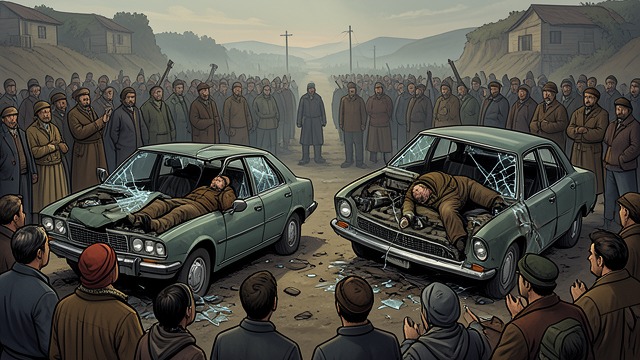
An Unclear Crash Scene
First impressions
Rescuers reach the wrecked vehicles and find Phillip Chapman dead, Allyson Clarke barely alive, and Chloe Thorensen trapped with severe injuries. The damage is so extensive that the cars have become difficult to distinguish, and the crash scene yields no easy account of how the vehicles met.
Competing possibilities
Early comments suggest that both cars may have drifted across the center line. Laura Hutchinson says she was not responsible, and the available evidence does not settle the question. The severity of the injuries gives the scene emotional force but does not, by itself, establish fault.
This uncertainty becomes the foundation for later conflict. Families need explanations, yet the physical evidence is compromised and the people most able to describe the crash are dead, unconscious, or in shock.
A Convenient Assumption
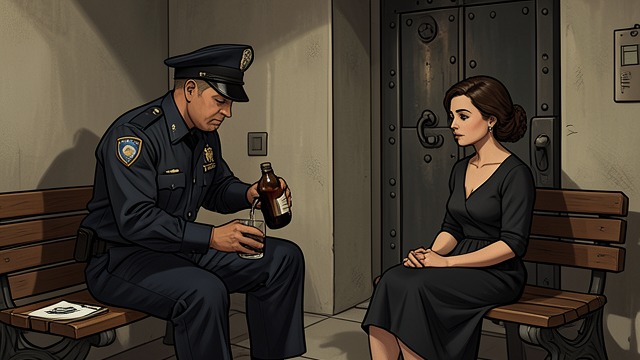
A Convenient Assumption
No test at the scene
Police do not test Laura Hutchinson for alcohol after the collision. A patrolman accepts her statement that she has not been drinking and judges her to be a shaken but sober senator’s wife. He even pours her brandy after she gets home, making a later check impossible.
Status shapes scrutiny
The decision rests on an assumption about respectability rather than a verified measurement. Phillip Chapman, by contrast, is tested, and a small amount of alcohol is found in his blood. It is not enough to establish legal intoxication, but it gives suspicion a tangible fact to attach itself to.
The uneven procedures do not prove that Laura Hutchinson caused the crash. They do, however, leave the investigation vulnerable to a perception that a powerful adult received less scrutiny than a dead teenager.
The Boy Under Suspicion
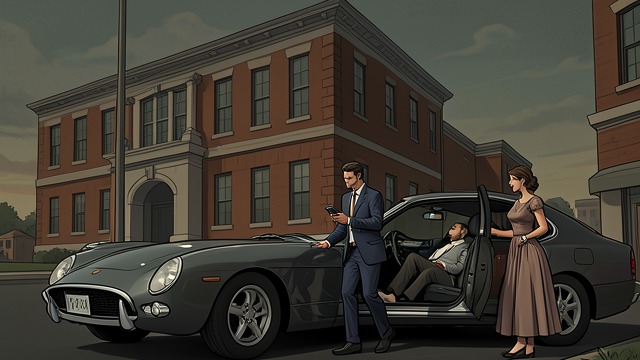
The Boy Under Suspicion
A family hears the test result
Tom Chapman and Mary Chapman learn that Phillip Chapman had a small amount of alcohol in his blood. Tom Chapman is furious that this detail may be used to imply that his son caused the crash, particularly when Laura Hutchinson was never tested.
Anger becomes a defense
Tom Chapman initially answers grief with outrage. He insists that Phillip Chapman was not drunk and resolves to prevent the press from staining his son’s memory. His anger cannot restore his child, but it gives him a task: challenge a story that seems ready to make the dead boy responsible.
As the immediate shock settles, the family’s need to defend Phillip Chapman becomes entangled with a broader question of unequal treatment. Their position is not that the evidence has already proved Laura Hutchinson guilty; it is that the investigation has not treated both drivers by the same standard.
A Story Takes Shape
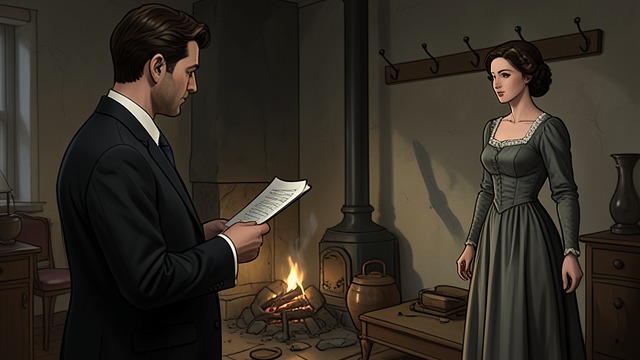
A Story Takes Shape
Implication without proof
News coverage emphasizes Laura Hutchinson’s distress and respectability while noting that Phillip Chapman had been drinking. The reporting avoids a direct accusation but leaves readers with the impression that the teenage driver may have been at fault.
The families push back
Trygve Thorensen questions how the article’s framing was constructed, while Page Clarke sees that the press is turning an unresolved tragedy into a story with a preferred villain. Tom Chapman, determined to protect his son’s name, prepares to challenge the paper’s insinuations.
The dispute extends beyond the crash itself. Each family must endure public speculation while caring for an injured child or mourning a dead one. The more the coverage simplifies events, the more sharply it collides with the families’ experience of uncertainty and loss.
Evidence Reverses the Narrative
Evidence Reverses the Narrative
A second fatal collision
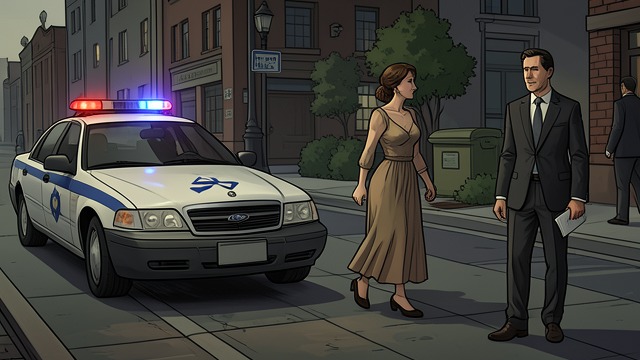
Laura Hutchinson is arrested after a fatal drunk-driving crash in La Jolla. The news reports that she was intoxicated and connects the arrest to the earlier Golden Gate Bridge collision, where Phillip Chapman died and Allyson Clarke and Chloe Thorensen were gravely injured.
The cost of earlier doubt
Further reporting uncovers Laura Hutchinson’s history of treatment for alcoholism and a record of previous accidents. The new information supports the families’ longstanding suspicion that she may also have been drinking on the bridge, though it cannot conclusively reconstruct the earlier collision.
The public account shifts dramatically: Phillip Chapman’s reputation is no longer the easiest explanation for the crash. Accountability arrives late and incompletely, sharpening the injustice of the first investigation while confirming that the consequences of overlooked risk reach far beyond the people first involved.
Late Saturday night, immediately after the collision
Early Sunday morning, after Laura Hutchinson returns home
Sunday morning after Phillip Chapman’s death
The first days after the crash
About eleven weeks after the Golden Gate Bridge crash
