
The Fight Over Allyson’s Future
AccidentThis flow follows the conflict between urgent medical decisions and the parents’ differing fears about survival, disability, and what recovery may mean.
increasing Bearing strength in each event
 decreasing
Bearing strength in each eventdecreasingMinutes to Consent

Minutes to Consent
A grave prognosis
The neurosurgical team explains to Page Clarke that Allyson Clarke has a severe brain injury, a skull fracture, substantial blood loss, and a dangerous loss of oxygen. Doctors warn that she may die or survive with major impairment, and that waiting could eliminate any chance of preserving brain function.
A decision without her husband
Page Clarke wants to reach Brad Clarke before signing consent, but the surgeon says they have minutes, not hours. With no way to obtain another opinion in time, she authorizes the operation herself.
The conflict is stark because the decision is both unavoidable and consequential. Page Clarke cannot know what outcome she is choosing for Allyson Clarke; she can only decide that her daughter deserves the available chance to live.
A Different Meaning of Survival

A Different Meaning of Survival
Fear of impairment
Brad Clarke cannot bear the sight of Allyson Clarke in intensive care and wonders aloud whether she should be allowed to die if she will be severely brain-damaged. He focuses on the possibility that she may never again be the bright, capable teenager he remembers.
Page Clarke refuses the bargain
Page Clarke rejects the idea that Allyson Clarke’s life is worth preserving only if she returns unchanged. She argues that their daughter remains their child even if she is disabled, and that every possibility of treatment should be pursued.
Their disagreement reveals different responses to helplessness. Brad Clarke frames a life of dependency as a fate to prevent; Page Clarke sees that fear as a reason to abandon hope too soon. Neither knows what the doctors will be able to restore, but their conflicting assumptions deepen the family crisis.
The Second Operation
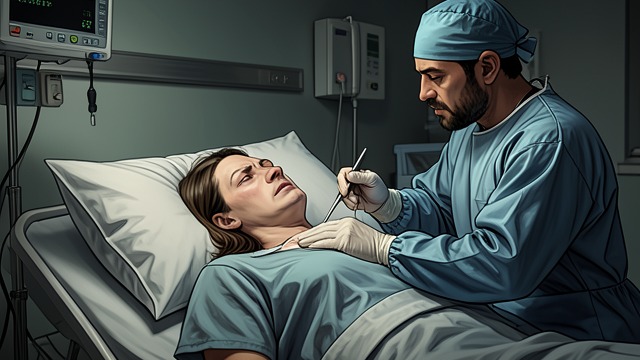
The Second Operation
Pressure builds again
After swelling develops in Allyson Clarke’s brain, doctors warn that the pressure may cause further damage and recommend another operation. Page Clarke is prepared to sign consent again, understanding that without surgery Allyson Clarke may not survive.
Unequal ways of facing risk
Brad Clarke questions how often surgery can be repeated and what it will mean if Allyson Clarke does not recover. Page Clarke answers that her daughter deserves every possible intervention. Although he remains frightened, Brad Clarke does not try to stop her.
The operation becomes a test of how much uncertainty the parents can bear. They cannot secure a guarantee of recovery, so the choice is between accepting a dangerous procedure and allowing a threat they may still be able to counter to continue unchecked.
A Night at the Edge
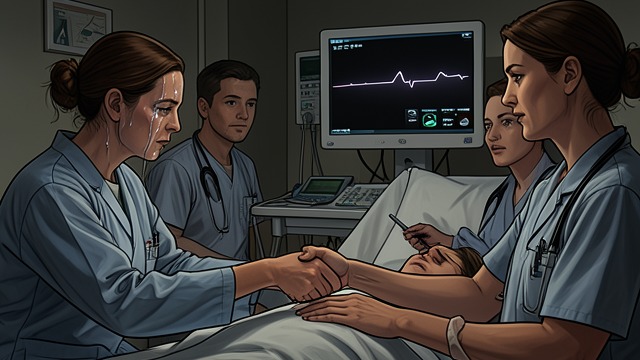
A Night at the Edge
The crisis returns
Allyson Clarke suffers postoperative complications and appears to be fading. Page Clarke stays beside her, holding her hand and speaking to her, while the medical team watches for signs that the damage may be irreversible.
Page Clarke changes her grip
Believing that her daughter may be dying, Page Clarke tells Allyson Clarke that the family loves her and tries to let her go rather than demand that she remain at any cost. Then Allyson Clarke’s pulse strengthens, and the medical team sees that she may be stabilizing.
The reversal does not resolve the fear of brain damage or a prolonged coma. It changes the immediate conflict from deciding whether to continue treatment to enduring the longer uncertainty of what Allyson Clarke may recover. Page Clarke’s experience deepens her belief that presence matters even when she cannot control the outcome.
Recovery Without Certainty
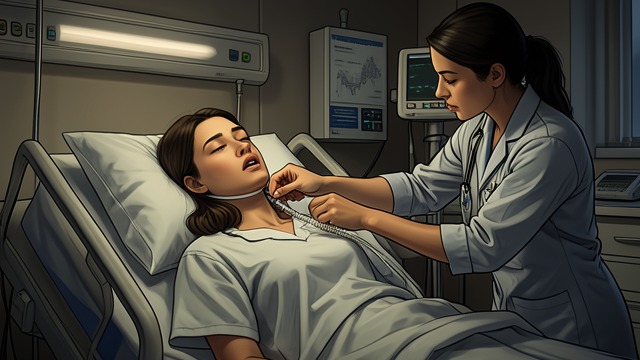
Recovery Without Certainty
A changed starting point
After nearly four months in a coma, Allyson Clarke wakes and can say only a few words. Doctors explain that she has lost much of her language and major motor skills, and that rehabilitation may take years.
A new measure of progress
Page Clarke is prepared to work with therapists on speech, movement, and basic independence. Brad Clarke, who had once feared that survival without full ability might be worse than death, is confronted with a daughter who is alive but profoundly changed. Later assessments suggest that substantial recovery is possible, though not a return to perfect function.
The conflict shifts from whether Allyson Clarke should be saved to how the family will recognize and support the person she becomes. Progress comes in small, uneven gains, challenging the assumption that a worthwhile future must look like the one imagined before the crash.
Early Sunday morning after the crash
Monday, after Brad Clarke sees Allyson Clarke in intensive care
The fourth day after the accident
The night after Allyson Clarke’s second surgery
The weeks after Allyson Clarke wakes from her coma
