
Truth Against Family Denial
AccidentThis flow traces how Page Clarke confronts the childhood sexual abuse her family has concealed and rejects the silence that once protected her abusers.
increasing Bearing strength in each event
 decreasing
Bearing strength in each eventdecreasingAn Unwelcome Return
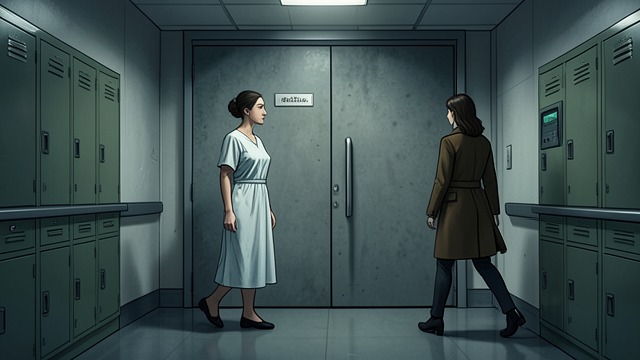
An Unwelcome Return
Help that does not arrive
Maribelle Addison and Alexis come from New York, presenting themselves as support for Page Clarke during Allyson Clarke’s crisis. In practice, they avoid the hospital, focus on shopping and familiar comforts, and expect Page Clarke to attend to their needs.
An old pattern reappears
Their retreat from Allyson Clarke’s condition recalls the family’s longstanding habit of turning away from distress. Page Clarke feels that she must once again perform the work of keeping everyone comfortable while her own fear remains unacknowledged.
The visit intensifies rather than relieves the pressure on Page Clarke. The immediate crisis at home is made harder by relatives who insist they are helping while refusing to face the reality that has brought them together.
A Marriage Becomes the Trigger
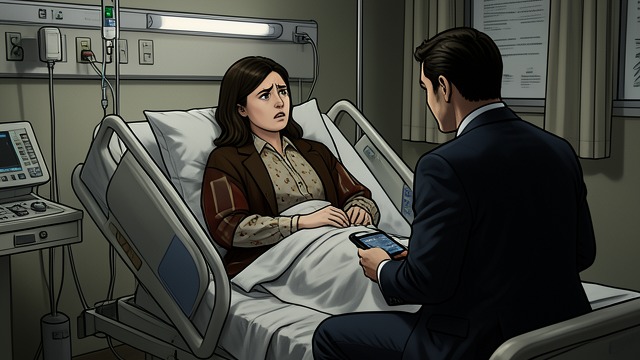
A Marriage Becomes the Trigger
The disclosure is dismissed
When Page Clarke tells Maribelle Addison that Brad Clarke is involved with another woman, her mother refuses to believe her. She describes marital trouble as ordinary and insists that Brad Clarke would never jeopardize the marriage.
A familiar demand for silence
For Page Clarke, the denial is not a harmless misunderstanding. It repeats a family rule: painful events must be softened, hidden, or denied so that the household can continue to look respectable. The argument over Brad Clarke forces her to confront the older silence beneath it.
The immediate dispute breaks open because Page Clarke can no longer accept reassurance that contradicts what she knows. Her anger turns from the current betrayal toward the family’s history of protecting appearances at her expense.
The Hidden Abuse Is Named

The Hidden Abuse Is Named
A direct accusation
Page Clarke tells Maribelle Addison and Alexis that her father sexually abused her beginning when she was thirteen. She says the abuse continued for years and that Maribelle Addison knew, brought him to her room, and left her alone with him.
Denial meets testimony
Maribelle Addison calls the accusation untrue and protects her dead husband’s reputation. Alexis appears frightened and does not offer a clear acknowledgment. Page Clarke insists that her memory cannot be erased simply because the family has chosen not to speak of it.
The confrontation destroys the family’s practiced calm, but it does not produce the apology Page Clarke might have hoped for. Naming the abuse changes the conflict: the truth is now spoken openly, even though the people who could confirm or answer for it refuse to engage with it.
Alexis’s Escape Exposed
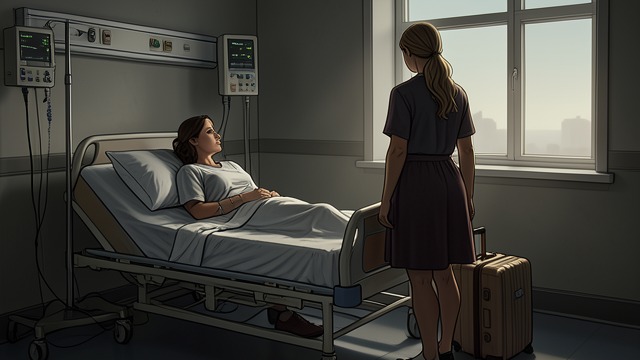
Alexis’s Escape Exposed
Two different survival strategies
Page Clarke accuses Alexis of having been abused before her and of turning away when their father shifted his attention. She links Alexis’s early marriage and repeated cosmetic surgeries to an attempt to become someone else rather than face the family’s past.
An old alliance holds
Alexis does not confirm Page Clarke’s account, and Maribelle Addison remains protective of the family’s public image. Their closeness contrasts with Page Clarke’s isolation, showing how one sister could survive by silence while the other survived by leaving and eventually speaking.
The argument is not simply about who remembers what. It is about the cost of coping strategies that preserve a family’s surface while leaving harm unaddressed. Page Clarke refuses to treat Alexis’s disappearance into a polished identity as proof that the past no longer matters.
Choosing Distance and Speech

Choosing Distance and Speech
Leaving the old performance
After the confrontation, Page Clarke ends the visit and later tells Trygve Thorensen what happened. She describes the abuse and her mother’s refusal to acknowledge it, speaking with the trust that the family conversation did not allow.
A boundary, not a reconciliation
Page Clarke does not receive a confession or repair from Maribelle Addison or Alexis. Instead, she chooses distance from their denial and recognizes that they may never admit the truth. Her decision to speak does not undo the abuse, but it prevents their silence from being the only version of events.
The conflict resolves provisionally through Page Clarke’s refusal to keep protecting the family’s image. In the midst of the crisis surrounding Allyson Clarke, she claims the right to name her own history and to decide who may remain close to her.
The week after the accident, when Maribelle Addison and Alexis visit
Several weeks after the accident, during the family’s dinner at home
Later that evening, during Page Clarke’s confrontation with her family
During the same confrontation in the kitchen
That night, after the confrontation
