
The Chapmans Defend Phillip
AccidentThis thread follows Phillip’s parents as grief is compounded by public insinuations about their son’s drinking, prompting Tom Chapman to defend Phillip’s character and seek to clear his name.
increasing Bearing strength in each event
 decreasing
Bearing strength in each eventdecreasingA Family’s Sudden Loss
A Family’s Sudden Loss
News from the hospital
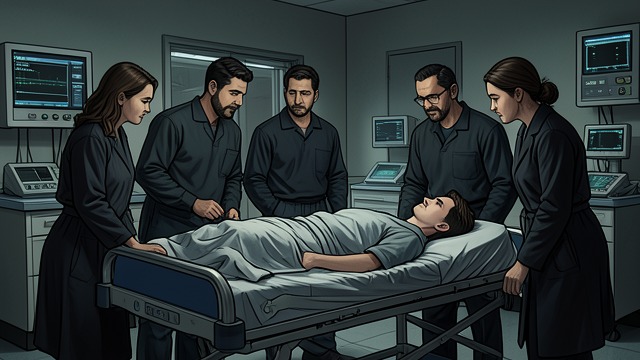
Tom Chapman and Mary Chapman are called to Marin General Hospital after the collision and learn that their only child, Phillip, has died from catastrophic injuries. They had gone to Carmel and trusted him to spend the evening with friends; now the ordinary decision to let him go out becomes inseparable from their grief.
A future erased
The doctors explain that Phillip died at the moment of impact. His parents see his body and confront the abrupt finality of losing a son they had expected to watch grow into adulthood.
Their bereavement becomes especially vulnerable to public interpretation because the crash also involved the wife of a senator. As reporters begin treating the deaths and injuries as a political story, the Chapmans must mourn while anticipating that strangers may define Phillip’s final night for them.
Alcohol Becomes an Accusation
Alcohol Becomes an Accusation
Unequal scrutiny
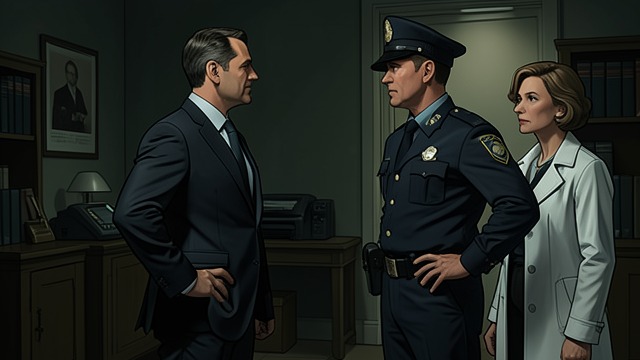
The Chapmans are told that a small amount of alcohol was found in Phillip’s blood, though the amount was below the legal threshold for intoxication. They also learn that Laura Hutchinson was not tested at the scene because officers believed she appeared sober.
Grief turns to protest
Tom challenges the implication that his son’s modest drinking makes him responsible for the collision while the other driver escapes comparable scrutiny. His anger is sharpened by the difference in how the two drivers are treated: Phillip is a teenager whose behavior can be questioned, while Laura is an adult connected to political power.
The evidence does not yet establish who caused the crash, but the early handling of the investigation creates a public imbalance. For Tom, defending Phillip’s name becomes part of defending his son from an easy story that the facts have not proved.
A Promise to Clear His Name
A Promise to Clear His Name
Refusing a convenient verdict
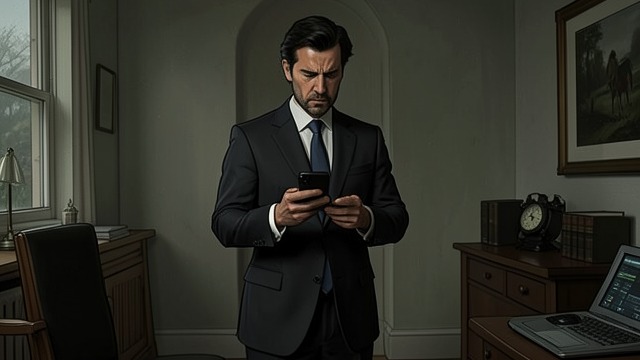
After the Chapmans learn of the alcohol test, Tom reacts against any suggestion that Phillip was a drunk or reckless driver. He knows his son as a responsible young person and insists that the blood result does not prove that Phillip caused the collision.
A father’s limited power
The crash scene is too badly destroyed to provide a clear account of which car crossed the center line. Tom cannot undo the loss or establish the facts by force of will, but he can resist the innuendo that begins to gather around Phillip’s name.
His resolve arises from both grief and an instinct to protect his son. A public account can become part of what remains of Phillip, and Tom refuses to let an uncertain investigation turn that memory into an unjustified accusation.
A Funeral Under Cameras
A Funeral Under Cameras
Public mourning
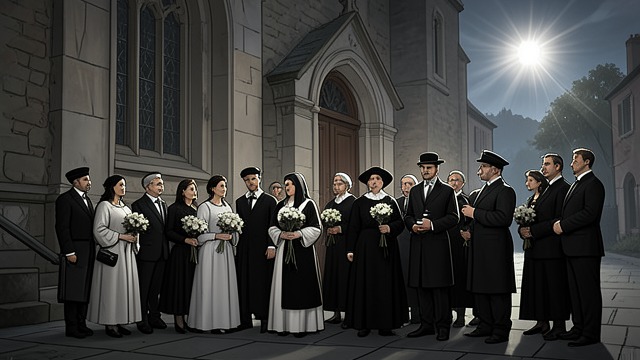
Hundreds of young people attend Phillip’s funeral, along with his parents and grandparents. Their grief makes visible the friendships and hopes that the collision has cut short, while the service gives the community a chance to remember Phillip as a person rather than as a name in a report.
The press intrudes
Reporters and photographers pursue the Chapmans outside the church, even as they struggle to leave the service. Tom denounces the intrusion and recognizes that the family’s private agony is being folded into the public argument over Laura Hutchinson and responsibility for the crash.
The funeral cannot settle what happened on the bridge. It does deepen Tom’s determination to protect Phillip’s memory, because the family can see that the press is already shaping an account in which an uncertain detail may eclipse the son they lost.
Seeking Legal Vindication
Seeking Legal Vindication
Challenging the newspaper’s story
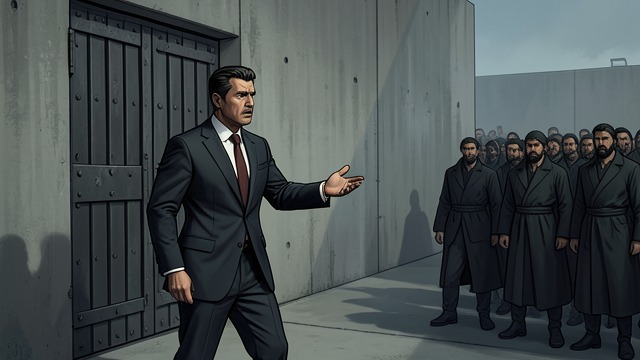
As coverage implies that Phillip’s drinking made him responsible, Tom prepares to sue the paper to clear his son’s name. The evidence remains inconclusive, but he objects to the way suggestive reporting allows readers to treat suspicion as a verdict.
Vindication comes too late
Jamie Applegate and others describe Phillip as a responsible boy, and the Chapman family continues to defend his character. Later, revelations about Laura Hutchinson’s drinking history and a subsequent fatal crash strengthen the belief that she may also have been impaired on the Golden Gate Bridge, though they cannot restore Phillip or conclusively recreate that night.
Tom’s campaign is ultimately about the limits of what public vindication can accomplish. A cleared reputation cannot return his son, but resisting a false account preserves a measure of dignity for Phillip and for the family left to remember him.
The night Phillip dies
The morning after the crash
The hours after the hospital investigation
The day after the crash
The weeks after the funeral
