
The Limits of Toughness
Across the River and into the TreesThis flow traces Cantwell’s changing understanding of toughness, from military aggression and hard jokes toward restraint, care, and the acceptance of vulnerability.
increasing Bearing strength in each event
 decreasing
Bearing strength in each eventdecreasingA Hard Exterior

A Hard Exterior
Testing others
Cantwell calls Jackson surly, prissy, and overly cautious, using insult as a way to test his subordinate. The language protects Cantwell from openly showing concern.
The cost of the pose
Jackson’s quiet compliance does not mean he is unaffected. Cantwell’s habit of toughness creates friction even when his intentions are protective.
The Gentle Hand

The Gentle Hand
A request for gentleness
Renata asks to touch Cantwell’s damaged hand and later tells him she loves him when he is gentle. Her attention challenges his assumption that tenderness is weakness.
Strength redefined
Cantwell tries to soften his language and behavior without denying his past. Gentleness becomes an active discipline rather than an absence of force.
Violence and Restraint
Violence and Restraint
Force used
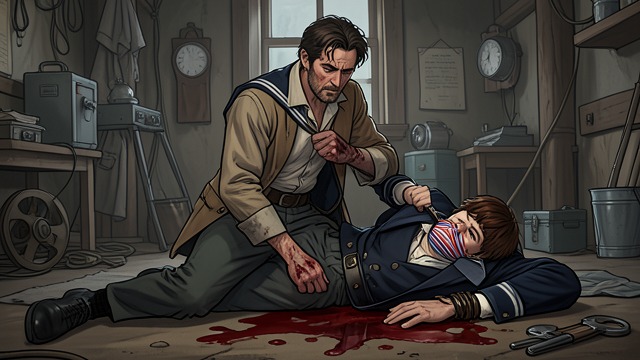
Cantwell defeats two sailors who harass Renata, then walks away rather than prolonging the violence. His skill is real, but so is his ability to stop.
A complicated lesson
Renata sees that toughness can defend someone, yet Cantwell does not present fighting as cost-free or noble. He tells her that combat is favorable only when one is lucky.
The Boatman’s Wound
The Boatman’s Wound
Understanding an enemy
Cantwell learns that the boatman’s family suffered sexual violence during the war. His initial irritation gives way to recognition of a wound that the man cannot easily put aside.
Toughness without contempt
Cantwell does not demand that the boatman behave as though nothing happened. He lets the explanation stand, even though it complicates his own sense of grievance.
An Apology at the Roadside
An Apology at the Roadside
A final correction
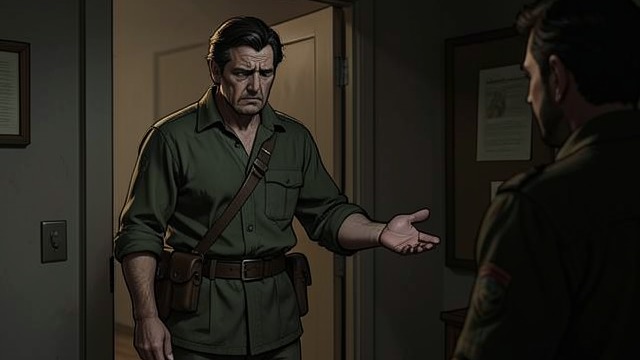
After sharply silencing Jackson, Cantwell explains that he needs to think and apologizes for the way he spoke. His authority does not prevent him from admitting an error.
Imperfect decency
The apology cannot undo his brusqueness, but it shows that he continues trying to be decent. Toughness is measured by whether he can accept responsibility, not only endure pain.
During the first conversations with Jackson
During Cantwell and Renata’s first evening together
On the walk after the fight with the sailors
After Alvarito explains the boatman’s anger
On the drive away from the shooting grounds
