
The Portrait and the Emeralds
Across the River and into the TreesThis flow traces how Renata and Cantwell use objects to express love, negotiate obligation, and preserve what cannot be made permanent.
increasing Bearing strength in each event
 decreasing
Bearing strength in each eventdecreasingThe Inherited Stones
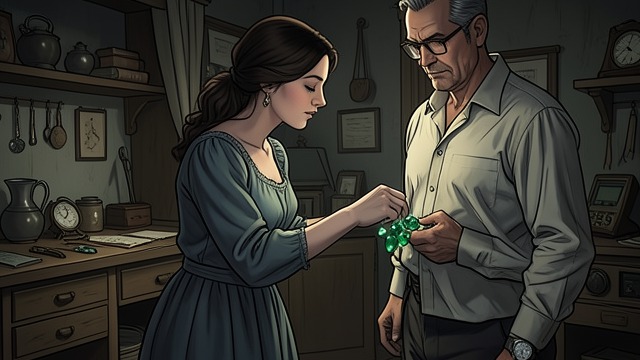
The Inherited Stones
A family inheritance
Renata explains that her emeralds came through generations of women in her family. Their significance lies less in their price than in the history they carry.
A chosen gift
She places them in Cantwell’s pocket to give him pleasure and something lasting. His hesitation shows how affection and financial value can become difficult to separate.
A Gift of the Portrait
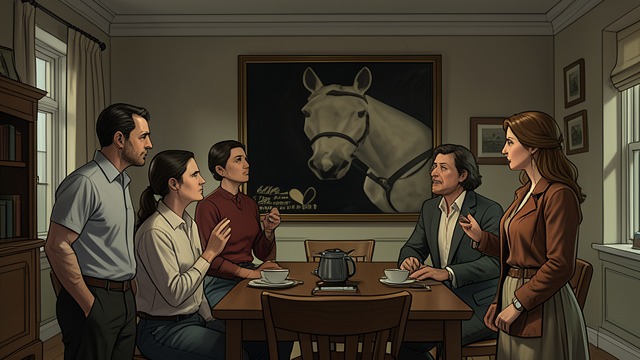
A Gift of the Portrait
The canvas arrives
Renata’s portrait is brought into the dining room and admired by the small group gathered around it. Cantwell is moved by the painting but recognizes it is not the woman herself.
A public acknowledgment
He says he will buy it, while Renata insists that she has already given it to him. The exchange makes their private attachment briefly visible to others.
The Image at Daybreak
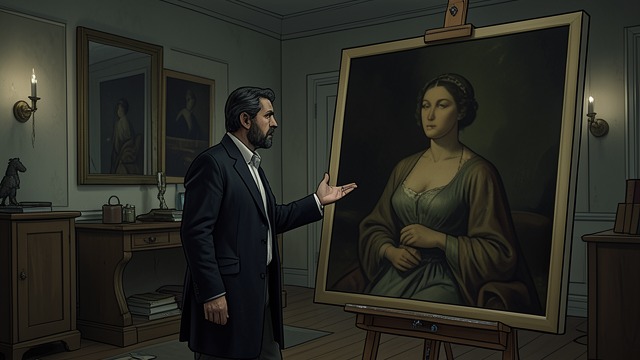
The Image at Daybreak
A conversation with absence
Alone in his room, Cantwell speaks to the portrait as if Renata were present. The canvas gives him company, but it cannot answer him.
Comfort and limitation
He keeps the portrait in view while acknowledging that it is only an image. Its usefulness lies in helping him endure separation, not in undoing it.
The Ebony Figure

The Ebony Figure
A requested keepsake
Renata chooses a small jeweled ebony figure from a shop window and asks Cantwell to give it to her. He arranges to buy it, accepting the importance of a gift chosen for its meaning rather than its cost.
A different kind of exchange
Unlike the emeralds, the figure is an object he can give without feeling that he has taken too much. It becomes a modest token of their remaining hours.
The Returned Emeralds

The Returned Emeralds
An ethical boundary
Cantwell places the emeralds in the hotel safe under Renata’s name. He refuses to keep an inheritance so valuable, even though she offered it freely.
Love without possession
Renata understands the distinction between accepting a portrait and keeping the stones. His refusal establishes that love does not require ownership or disregard for his own code.
Outside the jewelry shop before dinner
During dinner at the Gritti
The early morning after the portrait arrives
The morning of Cantwell’s departure
During the final morning at the hotel
