
The Face in the Mirror
Across the River and into the TreesThis flow traces Cantwell’s changing view of his own appearance, from self-disgust to the recognition that his face records a life of endurance and injury.
increasing Bearing strength in each event
 decreasing
Bearing strength in each eventdecreasingThe Ugly Face
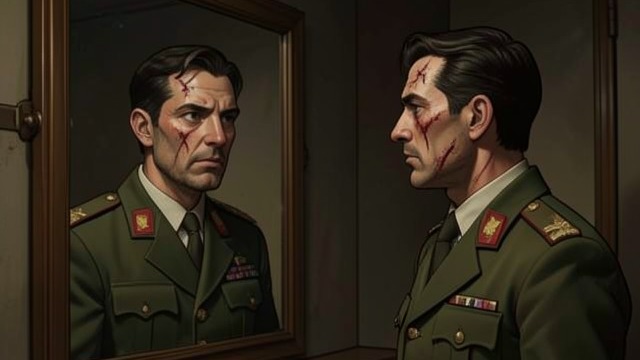
The Ugly Face
Self-judgment
Cantwell looks at his reflection and calls his face ugly. His scars and damaged features make him think of what combat has done to him.
A practiced response
He uses humor to describe his appearance, but the judgment is sincere. The mirror becomes a place where he confronts bodily damage without consolation.
The Bathroom Mirror
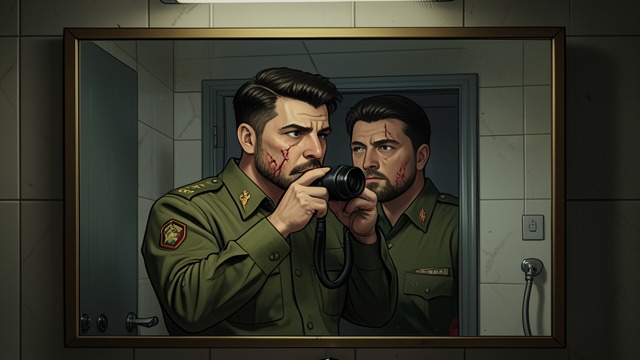
The Bathroom Mirror
A harsh inspection
Before rejoining Renata, Cantwell studies the ridges and scars on his face. He notices the injuries but fails to see the kindness and humor others might recognize.
Worth reduced to damage
He judges himself as though his face were an inadequate offering. His private assessment contrasts with Renata’s affection and her willingness to look at him closely.
The Portrait’s Gaze
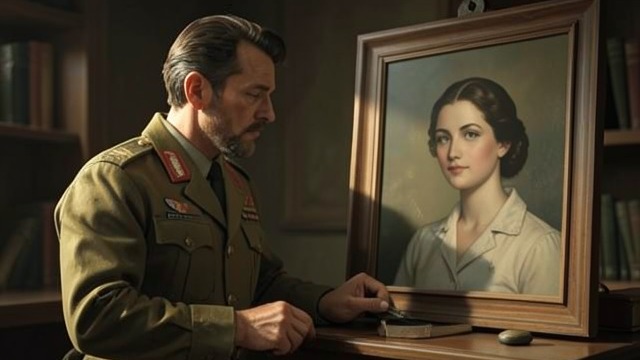
The Portrait’s Gaze
A second face in the room
Cantwell looks from himself to Renata’s portrait, which appears composed and beautiful in the morning light. The portrait offers a contrast to the battered man in the mirror.
Comparison resisted
He knows the painted image is not a response to his own face. Yet he continues speaking to it, seeking a presence that only Renata can provide.
The Living Woman
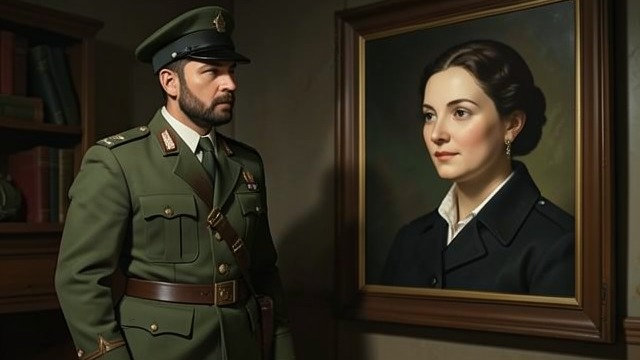
The Living Woman
Beauty acknowledged
Cantwell sees Renata standing beside the portrait and understands that no canvas can replace her. Her living voice and decisions matter more than the image.
A changed measure
He responds to her character and presence, not simply her appearance. Their intimacy challenges the contempt he directs toward his own body.
The Face at the End
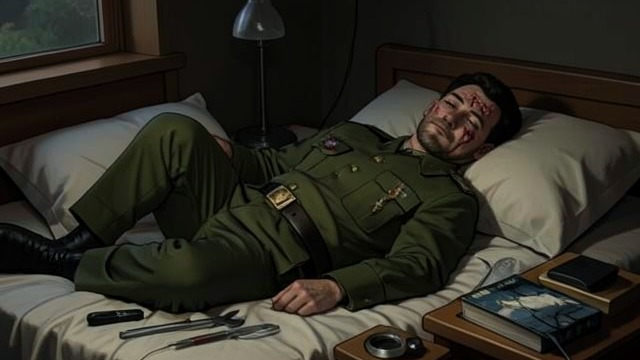
The Face at the End
Identity beyond appearance
Cantwell dies without revising his harsh judgment of his face. His life has been marked by a body that shows the cost of the military trade.
A human record
The injuries that he saw as ugliness also testify to survival, service, and endurance. The novel leaves that interpretation implicit in the contrast between his self-image and the affection others give him.
On the walk to Harry’s Bar
Before dinner at the Gritti
At first light in Cantwell’s room
During their morning together at the hotel
During Cantwell’s final journey
