Barone Alvarito
Across the River and into the TreesBarone Alvarito is a courteous and unusually shy figure in Richard Cantwell’s Venice circle, introduced through a brief visit that sets the next duck shoot in motion. His quiet manner distinguishes him from the more practiced, socially confident personalities around him, while his attention to the hunt gives him a concrete role in Cantwell’s plans.
Introduction and Bearing
Before Barone Alvarito appears in person, Ettore reports that he is not at the place Cantwell is considering visiting. Later, the Barone enters the dining room looking for Cantwell and Renata, and, described as a hunter, spots them immediately. He approaches their table and kisses Renata’s hand in greeting, then addresses Cantwell respectfully as his colonel.
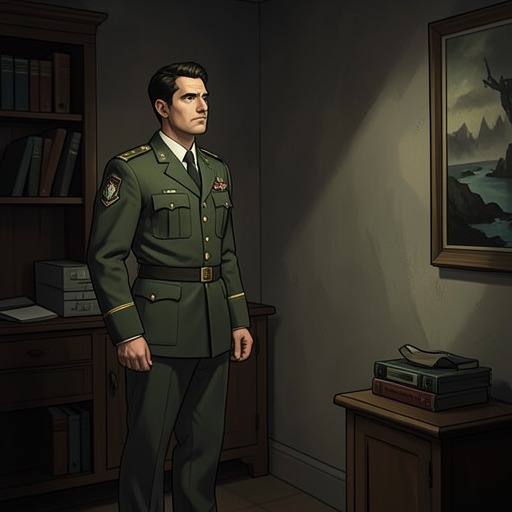
The narration presents his shyness as fundamental rather than the result of ignorance, unease, or some personal defect. He is almost tall and well-built in town clothes, but his defining feature is his smile: neither the easy grin of a confident man nor the quick, calculating smile associated with durable or wicked people. It is portrayed as rare and inward, giving his reserve a depth that the brief scene otherwise leaves unexplained.
Relations and Social Manner
Barone Alvarito’s greetings establish different forms of regard for the two people at the table. He addresses Renata by name and kisses her hand; to Cantwell, he uses a respectful military form of address. The scene offers no extended account of his relationships with either, but his arrival specifically to find them places him within their shared social world.
His conduct is notably unassuming. When Cantwell invites him to sit, he declines, explaining that he can stay only a moment. Rather than prolonging the visit, he delivers the news that matters and proposes a practical arrangement. The contrast between his reserved manner and his direct attention to logistics makes the encounter efficient without making him seem abrupt.
The Duck Shoot
Barone Alvarito reports that the prospects for the shoot look good: ducks are arriving heavily from the north, including many of the large kind Cantwell likes. He then suggests meeting at the garage at half past two, asking whether Cantwell has his car. Cantwell confirms that he does, and the Barone concludes that leaving at that hour will allow them to see the ducks in the evening.
This exchange is the clearest evidence of the Barone’s place in Cantwell’s daily life. He brings specific field knowledge, remembers Cantwell’s preference, and converts that information into a shared plan. His brief appearance therefore links the novel’s social encounters to its outdoor pursuits, while his quiet courtesy remains as distinctive as the practical purpose of his visit.