Fossalta
Across the River and into the TreesFossalta is a small town on the Piave River whose ruined and rebuilt streets preserve the force of the First World War in Richard Cantwell’s memory. The place is more than a setting for his recollections: its riverbank, sunken road, and grassed-over gun position become a private memorial landscape where physical recovery and national history refuse to separate cleanly.
Setting and Wartime History
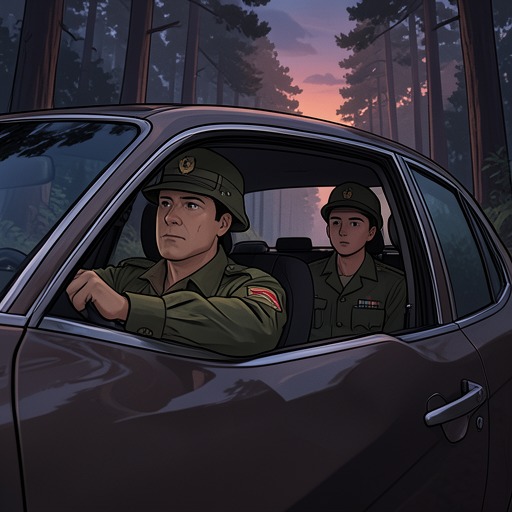
On a winter drive, Cantwell contrasts Fossalta with nearby San Dona di Piave. San Dona appears new, prosperous, and cheerful; Fossalta remains miserable and gloomy. He wonders whether it never recovered from the First World War, recalling that it was heavily shelled before the major offensive of June 15, 1918, and shelled again before it was retaken. The difference between the towns gives the past a visible, uneven aftermath: rebuilding has not made every place feel restored.
Fossalta lies within the Piave battlefield landscape that Cantwell once traversed as a young soldier. In his recollection, the attack had moved from Monastier through Fornace. Decades afterward, the river and the roads still orient him toward those operations, even where the ground has become ordinary in appearance. The setting is not preserved as a battlefield; it has to be read through the details Cantwell remembers and recognizes.
The Riverbank and Cantwell’s Return
A few weeks before the drive, Cantwell had gone through Fossalta and followed the sunken road to find the place where he had been badly wounded thirty years earlier. The bend in the river made the location identifiable. The former heavy-machine-gun position had become a smoothly grassed depression, cropped by sheep or goats until it resembled a deliberately shaped hollow. The transformation is quiet but consequential: a position associated with violence has been softened by years of use and growth, yet Cantwell can still locate it with precision.
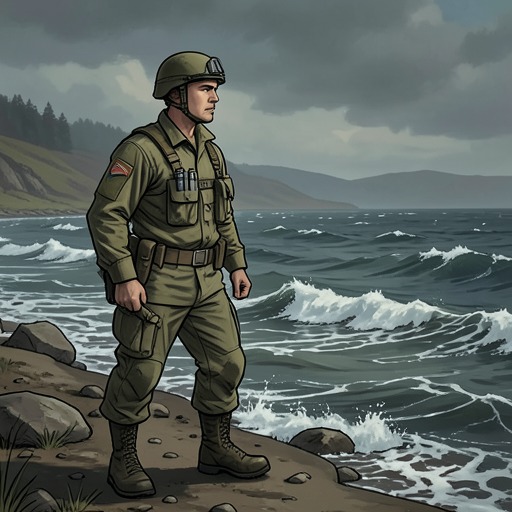
At the riverbank, he looks across the slow, muddy-blue water and reeds to the place where he had determined, by triangulation, that he was hit. The exactness of his search makes the return more than a general act of remembrance. He comes to a specific point in the landscape, compares it with his remembered battlefield, and treats the ground as evidence of what happened there. The sunken road and river bend have outlasted the visible military works, preserving a way to find the wound even after the position itself has disappeared beneath grass.
A Private Monument
Cantwell makes a small, deliberate memorial at the site. Using an old clasp knife, he cuts a neat hole in the moist earth, places a brown 10,000-lira note inside, covers it with the removed grass, and tamps it down. He calculates the sum as twenty years of payments at 500 lire a year for the Silver Medal of Military Valor, setting that compensation against the ten guineas associated with the Victoria Cross, the non-productive Distinguished Service Cross, and the free Silver Star. The comparison turns military decoration into an accounting of what a soldier’s service is worth, while the buried note makes that accounting part of the soil itself.
In Cantwell’s private reading, the monument contains fertility, money, blood, and iron. The grass growing over the burial offers fertility; the note supplies money; the place carries the memory of his wounds and those of Gino and Randolfo; and the material traces of war belong to the earth alongside them. He connects these elements to the idea of a nation and to the meaning of fatherland, then punctures the solemnity with the practical observation that they still need coal. Fossalta thus becomes the ground on which a personal, bodily history and a skeptical idea of national identity meet.
The Battlefield Landscape Afterward
On the road across the Piave, Cantwell again sees the old sunken road and recognizes the former positions beside a route that now looks smooth and undistinguished. Along the nearby canal road, willows mark waterways into which the dead had been thrown after the fighting. The gates downstream remained in Austrian hands and were closed, so little water passed through; the bodies stayed in the canals for a long time before organized labor troops removed them at night and buried them near the road. Cantwell recalls that they were later dug up again and reburied in a large ossuary near Nervesa. These recollections place Fossalta within a wider landscape of battlefield clearance and burial, without making the present-day road itself visibly announce what happened.
The altered river is also part of a changing human landscape: Cantwell remarks that the Piave no longer contains its former volume of water because it has been diverted for hydroelectric projects. Near the road, he sees ducks and geese on the canals and people fishing. The contrast between those ordinary uses and the remembered disposal and burial of the dead is central to Fossalta’s significance. Its wartime past persists not as an intact monument but in Cantwell’s ability to recognize the terrain, revisit a precise site, and attach memory to ground that has returned to grass, roads, water, and everyday life.