Luck in war
Across the River and into the TreesIn Richard Cantwell’s account, luck is an unavoidable condition of war, not a plan for fighting. A soldier may need it, and may survive by it, but Cantwell insists that it cannot replace skill or sound judgment. His memories trace the distance between a lucky escape and lasting safety: the wounds that seemed to spare him, the operations shaped by decisions beyond his control, and the renewed vulnerability he faces at the end.
Luck and the Limits of Command
Speaking with Renata beside the Grand Canal of Venice, Cantwell answers her wish that she could fight under him by warning that he is not lucky. Napoleon, he says, wanted luck for his soldiers, and was right to value it. When Renata suggests that they have had luck, Cantwell accepts that it has been both good and bad, but rejects the idea that a force can fight on luck alone. Those who relied on it, he says, are dead, like Napoleon’s horse cavalry. Luck is necessary, then, but reliance on it is fatal: it can affect a battle’s outcome without making a reckless method into a dependable one.
This distinction is central to Cantwell’s military outlook. He presents luck as something a commander must recognize rather than command. Skill and calculation matter, but they do not give a soldier mastery over the conditions in which a decision is carried out. The General’s or Army’s orders, the enemy’s position, and the uncertain results of an attack can set limits that competence cannot remove. His skepticism toward luck is therefore not a denial that chance matters. It is a refusal to confuse survival by chance with a method that can be trusted.
Survival and the Loss of Invulnerability
Cantwell’s winter fighting on the Piave River gives that distinction a personal history. He recalls killing enemy soldiers who attacked through bombardment, while commanding with a sore throat and teaching his men to shoot effectively. After each shelling they had to count their remaining shooters quickly; survival was measured not just in whether a position held, but in how many men remained to defend it. Cantwell was hit three times, but the wounds did not break bone. He came to regard them as gift wounds and grew confident in his personal immortality, having survived bombardments in which he believed he should have been killed.
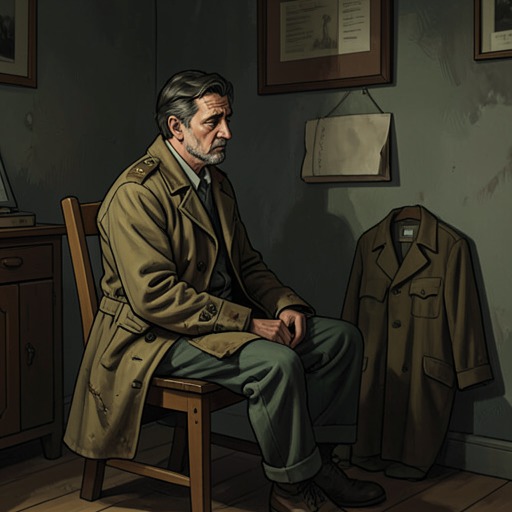
That confidence did not last. Cantwell eventually suffered a serious wound, unlike the earlier ones, and recognizes that what he lost was his sense of being protected from death. His recollection turns luck from an abstract military factor into a temporary conviction: repeated survival can feel like immunity, but it does not establish that a person is safe. The distinction between a wound that leaves a man intact and the wound that ends his confidence cannot be known in advance. In this account, luck’s most consequential effect may be the false assurance created by surviving it more than once.
Cantwell’s attitude also informs how he speaks of the enemy. When Renata explains that Germans killed her father, burned the family villa on the Brenta River, and that she saw a German officer shooting pigeons in Saint Mark’s Square, Cantwell tells her he understands her anger but asks her to understand his own capacity for kindness after killing so many. Asked for his count, he gives 122 confirmed kills, not counting possible ones. The figure makes clear that his restraint is not innocence or distance from combat. His claim is that extensive killing can leave room for kindness; it does not mean the killing was lucky, or that those killed were merely figures in a game of chance.
Operations, Chance, and Responsibility
Cantwell’s stories of later operations show how luck intersects with command decisions. In one attack, the front of the Valhalla Express drops colored smoke to mark the German positions, and following sections bomb the positions and the places where the defenders live and work. Cantwell calls it a good bombing. Yet the description also makes its effect concrete: the prisoners taken afterward shake uncontrollably despite their bravery. The successful attack demonstrates the destructive power organized against a defended position; it does not establish that success was produced by luck alone, nor does it erase the human consequences of the operation.
Elsewhere, Cantwell recounts receiving a regiment after a younger commander is relieved, then losing it while it works toward high ground. He describes a situation in which the defenders were professionals and might have been willing to discuss surrender, but orders from higher headquarters required an assault after the town’s name appeared in the newspapers. The episode places chance alongside institutional pressure: the commander’s tactical view may point toward one course, while orders from above demand another. Cantwell emphasizes that he lost the regiment under orders, but the story does not make the loss a lucky accident. It shows how decisions and their consequences remain entangled even when no single person appears to control the whole chain.
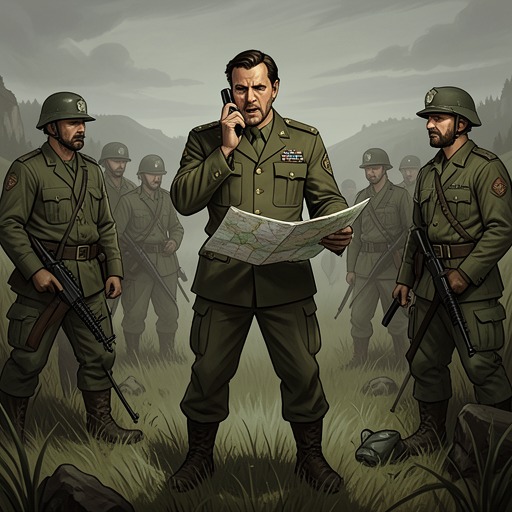
His account of a later attack sharpens that problem. The unit removes its identifying patches, yet is ordered to commit one regiment before the attack begins, making it likely that the enemy will capture a man who could identify them. The attack is to proceed with three units in line and nothing in reserve, against wooded conditions Cantwell compares to Passchendaele with tree bursts. A nearby division has already been bogged down, providing warning of how unfavorable the terrain is; nevertheless, the regiment is committed and destroyed. Cantwell rejects the idea of a simple villain, but the sequence resists any easy explanation through luck: the risks are identified, an order is given, and the consequence is catastrophic. Luck cannot absolve command of foreseeable danger, even where responsibility is distributed.
The Final Reversal
Near the end, Cantwell reflects that a great miracle may have happened without his consciously bringing it about or opposing it. The thought leaves the event uncertain: he cannot say whether that day, or another, made the difference. Soon afterward, while out with decoys, he is struck and thinks, “Three strikes is out, and they gave me four. I've always been a lucky son of a bitch.” The familiar arithmetic of survival briefly makes the blow sound like one more reprieve, but he is hit again badly. The episode does not turn luck into a guarantee or provide a neat explanation for what has happened. Instead, it brings the earlier distinction to its limit: a man may have been lucky before, may even call himself lucky now, and still remain exposed to the blow that luck cannot undo.