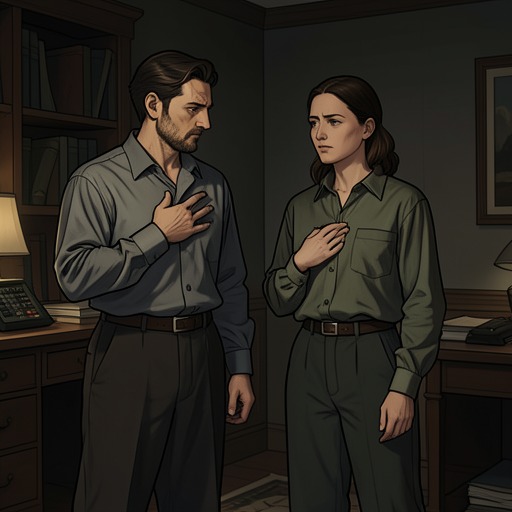
Richard Cantwell and Renata’s romantic bond
Across the River and into the TreesRichard Cantwell and Renata’s romantic bond gives the novel’s late Venetian scenes their private measure of tenderness and loss. In the gondola they call home, in a meal beside the Grand Canal of Venice, and finally at the landing place, love is expressed not as a promise that separation can be defeated but as a reason separation hurts. The Colonel’s military language persists even at the moment of farewell: he presents himself as someone who gives and obeys orders, while Renata’s presence makes clear what that discipline cannot settle.
Intimacy and the Gondola
As the gondola moves into the dark, Renata names the boat as their home and asks the Colonel to kiss her with all his love. He holds her close and kisses her until the kiss gives way to desperation. The scene makes their intimacy physical before it makes it explanatory: the kiss carries affection, urgency, and the knowledge that the moment cannot be made permanent. Renata’s request is not merely for a declaration but for love to be fully present in the act between them.
Their exchange also exposes an asymmetry in how easily each can speak about feeling. Renata says that she always uses the wrong words and wishes she could be the one capable of loving him; the Colonel answers that she does love him. She then confirms that she loves him with all her heart. The conversation does not resolve her difficulty with words so much as make it part of their intimacy: he recognizes the feeling she struggles to phrase, and she affirms it plainly. Their closeness is therefore built from both bodily certainty and verbal hesitation.
Love, Sorrow, and Anticipated Loss
When the Colonel asks Renata what her great sorrow is, she answers that it is him. His response—that he does not want to be a sorrow, despite having been a sorry son of a bitch many times—shows his attempt to resist being cast as the source of another person’s pain. Renata does not withdraw the answer; she tells him that he is her sorrow now. The exchange holds love and hurt together rather than allowing either to cancel the other. Her attachment makes him precious, but it also makes the prospect of losing him real.
At a later meal, with the Gran Maestro gone and the Grand Canal of Venice visible outside the window, the Colonel asks whether he has told Renata lately that he loves her. She replies that he has not told her for quite a long time, though she loves him. Their exchange shifts from the immediate intimacy of the gondola to the maintenance of love over time: affection is still mutual, but she notices the interval in which it has gone unsaid. When Renata asks what happens to people who love each other, she answers that they have whatever they have, are more fortunate than others, and then one of them gets emptiness forever. The prospect of an enduring absence enters their conversation before the farewell itself.
The Colonel answers gently, saying he could have responded roughly but will not, and asking her not to have any emptiness. His restraint matters because the fear she has named cannot be disproved by reassurance. The relationship offers them a present they value, not a guarantee about what follows. Love makes them fortunate, in Renata’s formulation, while making the possibility of permanent absence harder to evade.
Farewell and the Language of Orders
At the landing place, Ronald Jackson is handing the luggage to a porter and looking after Renata’s portrait. The Colonel asks Renata whether she wants to say goodbye there; she asks whether she has to, and he tells her no. The practical scene of luggage and the portrait places the separation amid preparations to leave, while their brief exchange distinguishes the necessity of parting from any requirement to perform it immediately. Renata is not required to make the goodbye easy or even to begin it at that spot.
When she asks what comes next, the Colonel says that they must stand up, kiss each other, and say goodbye, then admits that he does not know how people are supposed to do it and that everyone must figure it out for themselves. The uncertainty is striking in a man accustomed to command: he can describe the expected actions, but has no procedure that could make them emotionally sufficient. Renata asks him to keep trying, calling that their only hope, and he promises to do so. They hold each other and kiss hard and truly before he takes her across the gravel and down the stone steps.
Renata chooses the old displaced-engine boat rather than the better one the Colonel recommends. He answers that he does not mind, then casts himself as someone who only gives orders and obeys orders before saying goodbye to her as his dear, lovely, beautiful beloved. The line turns military obedience into a painfully inadequate description of the moment: he can claim not to mind, but the farewell has already shown what he stands to lose. Her choice of boat remains hers, and the last exchange preserves both their affection and her agency within a departure he cannot undo.
After the Separation
After the goodbye, the Colonel’s thoughts return to Renata as he tries to tell himself not to think of her. He recalls the farewell as complete with tumbrils and imagines that she would have climbed into one with him, provided it were a real one. The image makes their willingness to share hardship vivid, but it does not reverse the separation. He calls loving and leaving rough trade and recognizes that people can be hurt by it.
His question about who gave him the right to know a girl like Renata receives no claim of entitlement: nobody did. He remembers instead that Andrea introduced them. That closing recollection places the relationship’s beginning beside its immediate aftermath, narrowing the distance between the accidental opening of their intimacy and the pain of leaving it. Renata remains present in his thoughts precisely when he is trying to suppress them. The bond’s significance lies in that unresolved contrast: the lovers have spoken openly of love, sorrow, and emptiness, yet their final kiss cannot protect either of them from the consequences of parting.