Trieste
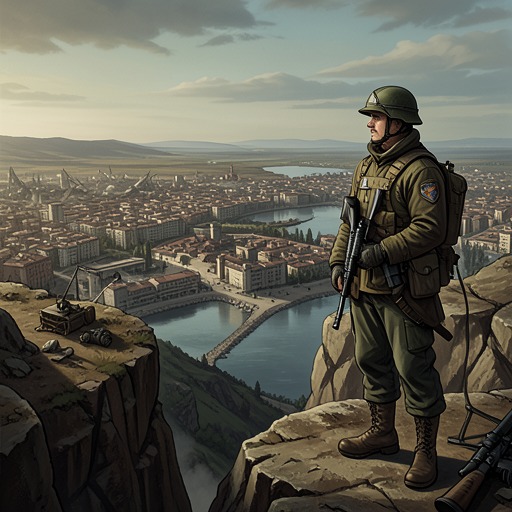
Across the River and into the TreesTrieste is both a practical destination and a measure of distance in Richard Cantwell’s final journey. The novel connects it to Venice by roads that carry the Colonel through landscapes altered by age and war, then makes his return to Trieste the destination he cannot reach. Though the city itself receives little direct description, its presence shapes the route, the memories attached to it, and the final instructions left after Cantwell’s death.
Departure Through a Changed Landscape
Cantwell has driven from Trieste to Venice along the old road from Montfalcone to Latisana, crossing the flat country he knew as a boy. The journey prompts him to measure not only the landscape but his changed relation to it: the distances seem smaller now that he is older, while the roads are better and free of dust. In his youth, travel through this country meant riding in a military truck or walking; on foot, a soldier looked for patches of shade, wells in farmyards, and ditches. The remembered details turn the route into a record of bodily experience, contrasting the Colonel’s present ease in a car with the hardship of his earlier passage.
The road also bears visible traces of war. Cantwell and Ronald Jackson cross the Tagliamento River on a temporary bridge while its damaged permanent bridge is being repaired with the noise of riveting hammers. Nearby, the smashed buildings and outbuildings of a ruined country house mark where bombs had fallen. These are features of the country between Trieste and Venice rather than scenes set in Trieste itself, but they give the journey a history that the improved road cannot erase. The Colonel travels through a landscape made more accessible by repair and modernization, yet still marked by destruction.
Venice as the City He Fought For
The drive toward Venice brings Cantwell’s past into view before he reaches the city. Across the marshes, he sees the church tower at Torcello, the campanile of Burano, and sailing barges running before the wind toward Venice. He expects to see the city more clearly after crossing the Dese River above Noghera. The sight recalls the winter when he and others fought along the canal to defend Venice, often without being able to see the place they were defending. On another clear, cold day, he saw it from as far back as Noghera but still did not get inside.
Cantwell understands Venice as his city because he fought for it when he was young; now, at roughly fifty, he believes the people there know of that service and treat him well. He wonders whether their regard is instead due to his rank and to having fought on the winning side, but does not accept that explanation. The contrast matters to his sense of belonging: the city is not simply a place where he is welcomed, but a place whose defense has bound his younger self to it. Trieste provides the route’s point of origin, while Venice carries the remembered claim of a place defended but once unseen.
A City Learned by Walking
In Venice, Cantwell’s movements are governed by an intimate, practical knowledge of streets and bridges. Leaving the Gritti Palace Hotel at the end of a day, he walks through the square, pauses to look at Santa Maria del Giglio, and continues past shops and a bridge over a feeder canal. His body registers twinges as he crosses, but he keeps his familiar stride, notices the people around him, and eventually reaches Harry’s Bar in Venice. The walk ends in the reassurance of having made it there again and being at home. That sense of home is achieved through movement and repeated orientation, not merely through a view of the city.
On another walk, after crossing by gondola, he deliberately enters the far side of Venice facing the Adriatic and sets himself a navigational game. He will cross north-and-south streets without counting them, avoid dead ends, and try to emerge at the market. The rules keep the route uncertain enough to be a challenge, while making him attend to houses, small views, shops, trattorias, and old palaces. He thinks of the exercise as a kind of walking solitaire: its prize is the pleasure of looking and the possibility of finding the market without being stymied. He has a related route from the Gritti to the Rialto by way of the Fondamente Nuove. These self-imposed paths show a city possessed through attention and practice, in contrast to Trieste, which is chiefly present as a road’s beginning and end.
The Unreached Return
After Cantwell and Ronald Jackson leave Barone Alvarito at his villa, Alvarito invites the Colonel to return for a weekend of shooting. Cantwell declines, saying he must get back to Trieste and asking Alvarito to give his love to Renata. The exchange makes the city the immediate destination of the car’s next journey, while the personal message carries another attachment back toward Venice. Trieste is not described as a homecoming already achieved; it is a return still ahead.
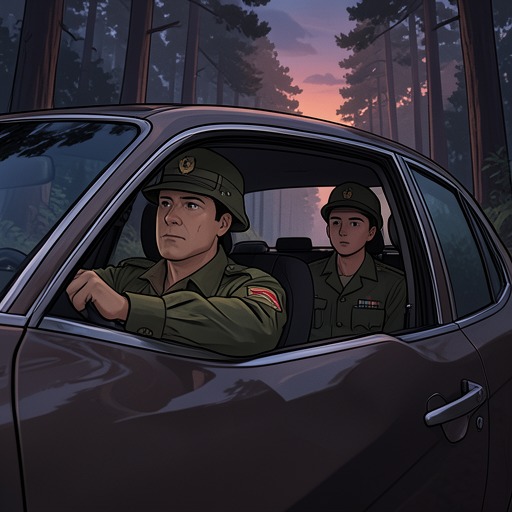
On the road, Cantwell orders Jackson to turn left, rejecting the assumption that there is only one way to reach Trieste. He then sharply tells Jackson not to speak unless addressed. Later, after a remark from Jackson, Cantwell begins to answer but stops as another attack strikes him; he grips the seat and understands that he cannot live. He asks Jackson to pull over, switch to parking lights, and confirm that Jackson knows the way to Trieste. Cantwell’s final spoken words concern getting into the car’s large back seat. He manages it and carefully shuts the door, but the destination remains unmet.
Jackson eventually turns the car toward the highway leading to Trieste. Before setting off, he reads Cantwell’s written order: if Cantwell dies, the wrapped painting and two shotguns in the car are to be returned to the Gritti Palace Hotel, where their rightful owner will claim them. The practical direction survives the man who gave it. In the novel’s closing movement, Trieste thus remains a destination rather than a reached place: Cantwell’s final journey points toward it, while his death and the written order redirect the living toward Venice.