
Power, Empire, and Providential Ambiguity
Acts of the ApostlesRoman power alternately threatens, protects, confines, and transports witnesses, producing a sustained tension between practical survival and imperial injustice.
increasing Bearing strength in each event
 decreasing
Bearing strength in each eventdecreasingEmpire as the Old Order
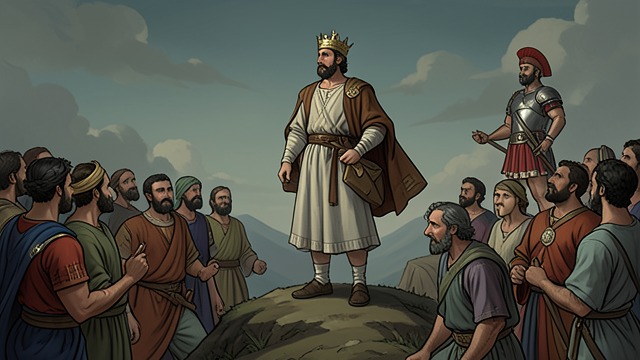
The Realm Challenges Imperial Claims
A different sovereignty is announced
The Ascension presents Jesus as possessing authority beyond rulers such as Caesar. The message challenges any power that demands ultimate allegiance.
Rome remains the narrative horizon
The mission moves toward the imperial center, where the contrast becomes concrete. The story does not portray political power as neutral, even when individual officials act helpfully.
A Tribune Saves Paul
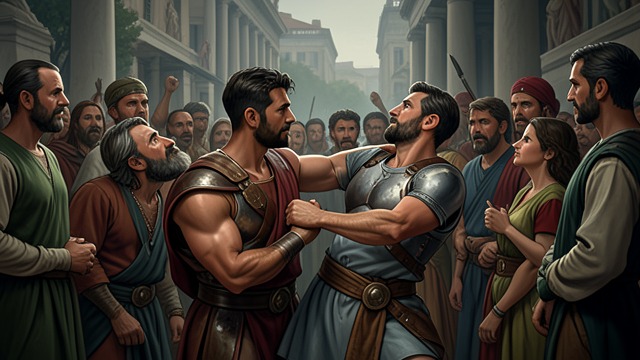
Imperial Force Interrupts a Mob
Paul is removed from danger
A Roman tribune sends soldiers to rescue Paul from the crowd. The intervention prevents immediate death, though it also places Paul under custody.
Protection carries a cost
The same authority that saves Paul limits his freedom. The scene begins a recurring pattern in which Roman structures preserve the witness without becoming just or harmless.
Citizenship Blocks a Flogging

Legal Privilege Becomes a Shield
Paul invokes his status
The tribune orders a beating, but Paul says he is a Roman citizen and has not been condemned. The officers fear consequences and stop the punishment.
Unequal protection is exposed
The incident shows the usefulness of citizenship while implying that people without such status are more vulnerable. The Realm’s standard of justice exceeds the protection available only to privileged citizens.
Roman Procedure Moves the Case

Law Both Protects and Imprisons
Governors delay judgment
Felix and Festus manage Paul’s case amid political calculations. Their procedures keep him alive but fail to release an innocent prisoner.
Appeal sets the destination
Paul’s appeal sends him toward Rome. Imperial law becomes the route by which the mission reaches its geographic goal, without validating the Empire’s claims to justice.
A Centurion Preserves the Passengers
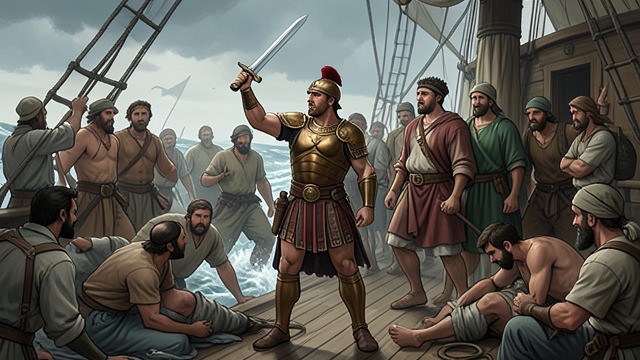
A Roman Officer Prevents a Killing
Soldiers consider execution
As the ship breaks apart, soldiers plan to kill the prisoners so no one can escape. Their fear of punishment threatens the lives of people already in danger.
Julius intervenes
The centurion stops them and orders everyone to reach shore. His action serves life, even though he operates within the military system that holds Paul captive.
From the opening commission’s promise of worldwide witness
During the violence after Paul’s Temple arrest
During interrogation in Jerusalem
From Caesarea toward Paul’s appeal to Caesar
During the final moments of the shipwreck
