
From Jewish Roots to Gentile Belonging
Acts of the ApostlesThe narrative explores continuity with Israel alongside the difficult expansion of a community that includes people who do not fully adopt Jewish identity.
increasing Bearing strength in each event
 decreasing
Bearing strength in each eventdecreasingIsrael’s Hope Frames the Story
The Mission Begins within Jewish Hope
Restoration is the central horizon
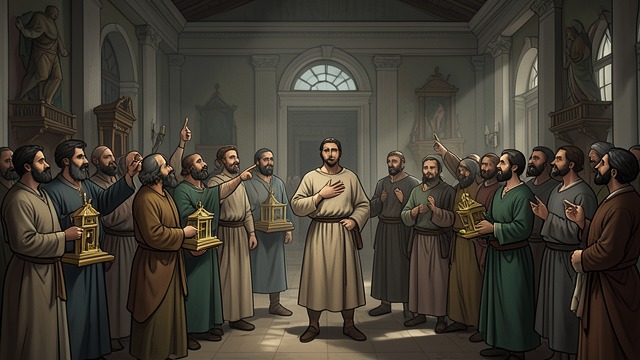
The story presents Jesus’s ministry and the church’s witness as part of God’s purpose to restore the world. The apostles interpret events through Jewish Scripture and communal expectation.
Gentiles enter an existing story
The expanding mission does not begin with rejection of Israel. Its claim is that blessing intended for the nations is now reaching them through a movement rooted in Israel’s tradition.
Samaritans Test the Boundary

A Near Neighbor Is Welcomed
Shared roots and differences
The Samaritan religious community shares traditions with Jewish people but maintains a distinct identity. Its reception of the message challenges those who treat difference as an insurmountable barrier.
Recognition requires relationship
The apostles visit rather than leaving the new believers isolated. The episode makes inclusion a communal decision, not merely an individual response.
An Eunuch Reads Isaiah

A Marginal Traveler Enters the Story
Scripture meets a complicated life
The Ethiopian eunuch reads about a suffering servant and asks Philip to explain the passage. His own experience of vulnerability gives the reading personal force.
Baptism signals a place
The eunuch’s baptism presents belonging as possible for someone whose status and body place him outside ordinary expectations. The story invites attention to Jewish traditions of concern as well as restrictions.
Gentiles Join Without Circumcision

The Community Reconsiders Its Requirements
A contested demand
Believers disagree over whether Gentiles must be circumcised to be saved. The question is not whether Judaism matters but how Jewish practice relates to Gentiles in the community.
Inclusion is negotiated
The council decides that circumcision is not required, while asking Gentiles to observe selected practices. The settlement preserves Jewish interpretive authority even as it makes room for new members.
Rome Receives the Final Witness
An Ending Holds Two Traditions Together
Paul speaks of Israel’s hope
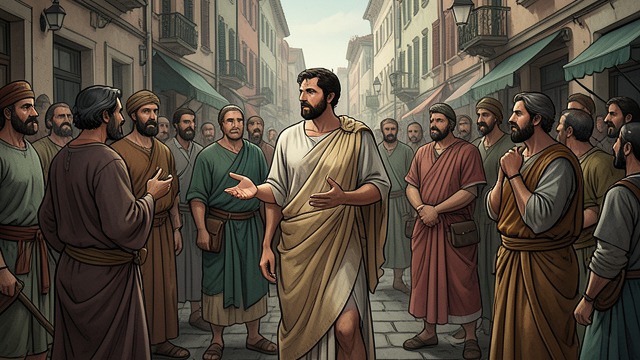
Paul explains his work to Jewish leaders in Rome, who agree to hear him despite reports about the movement. Some listeners accept his argument and others do not.
The future remains open
Paul turns to proclaiming the message to Gentiles but welcomes all who visit. The ending neither resolves the relationship nor erases its tensions, leaving the church accountable to its Jewish origins.
From the opening commission through the first Jerusalem sermons
After Philip’s mission in Samaria begins
On the road from Jerusalem toward Gaza
At the Jerusalem council
At the closing meeting with Jewish leaders in Rome
