Apollos
Acts of the ApostlesApollos is an eloquent and scripturally learned teacher whose story shows that leadership does not mean discipleship is complete. Having received only John’s baptism, he needs further instruction; Priscilla and Aquila supply it, and he accepts their teaching. His willingness to respond makes him a contrast to those who refuse the Realm’s invitation and gives his brief appearance a wider significance: learning and shared leadership help the community grow.
Identity and Place in the Narrative
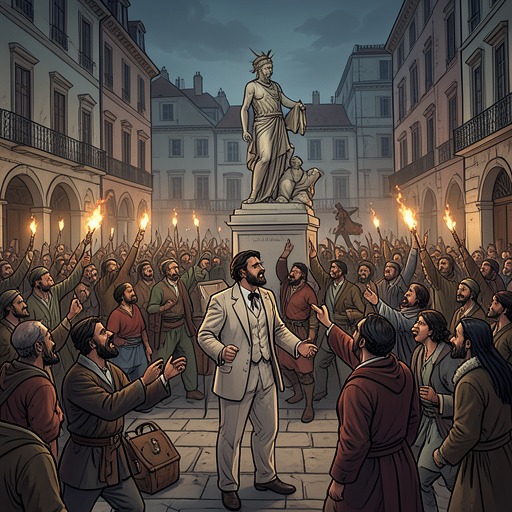
Acts introduces Apollos within the account of the early Christian movement’s work in Ephesus and its surrounding regions. Luke describes him as both eloquent and well versed in scripture, and also identifies him as a teacher. He is therefore not a novice in every respect: he already possesses public speaking ability, scriptural knowledge, and a role in teaching others. Yet the narrative marks a significant limit in his understanding and practice. He has received only John’s baptism, rather than the fuller pattern associated with entering the community of the Realm.
That combination of accomplishment and incompleteness shapes how the book uses him. Apollos is not depicted as an opponent who must be defeated, but as a capable leader who still has room to mature. The gap in his formation matters precisely because he is already a teacher: learning remains necessary even for someone whose gifts and knowledge are evident.
Priscilla and Aquila’s Shared Teaching
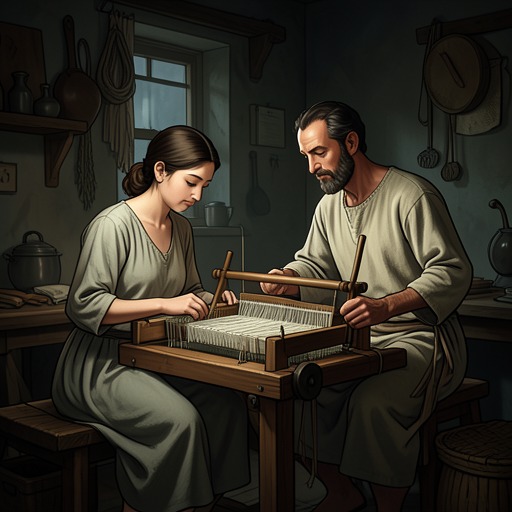
Priscilla and Aquila teach Apollos, and their role continues a pattern of shared leadership. Their instruction is not incidental to their place in the narrative. The book presents them as jointly responsible teachers of the Realm, extending a model of women and men sharing authority in the community. Their relationship to Apollos is therefore both educational and exemplary: they help complete his understanding, while their teaching demonstrates how leadership can be exercised together.
The account also connects this scene with their earlier association with Paul. Priscilla, Aquila, and Paul are identified as tentmakers, a trade that provided a way to support missionary work and to engage people in the marketplace. The book’s discussion of their ministry emphasizes, however, that their significance extends beyond shared work: they teach together. Calling them the first clergy couple would impose a later category on the story, but their joint responsibility offers a model of egalitarian leadership within the Realm.
Incomplete Formation and Response
Apollos’s limitation is specific: he has received John’s baptism, but his experience is incomplete in the account’s understanding of entry into the community. The pattern described for belonging includes repentance, baptism in the name of Jesus, and receiving the Holy Spirit. His status as a learned teacher does not remove the need for this further formation. The narrative thus distinguishes intellectual accomplishment and existing leadership from full participation in the movement.
His response is as important as the instruction he receives. When Priscilla and Aquila explain the need for baptism in Jesus, Apollos accepts their guidance. The book contrasts this readiness with people in the Gospel who turn away from invitations to join the Realm, preferring the familiar conditions of the old age to the risks of its journey. Apollos, by contrast, receives the invitation as a gift that calls for a response. His example allows the narrative to portray growth not as a repudiation of his existing gifts, but as their completion within a larger community.
Welcome and Significance
After accepting the instruction, Apollos is welcomed by the community in Achaia. That reception completes the movement traced in his episode: an already gifted teacher encounters a need for further formation, receives help from shared leaders, responds, and enters a community ready to receive him. His story connects personal learning with communal welcome rather than treating either as sufficient on its own.
For the book’s account of the Realm, Apollos serves as a compact but revealing example of continuing discipleship. A person may be eloquent, knowledgeable, and influential while still needing to grow. At the same time, the people who help him grow are a woman and a man acting as fellow teachers, not as a hierarchy in which only one kind of leader can instruct. Apollos’s acceptance of their teaching and his welcome in Achaia bring these themes together: maturity involves openness to instruction, and the community advances through shared leadership and receptive belonging.