Experience as a basis for theological interpretation
Acts of the ApostlesExperience as a basis for theological interpretation is the idea that a community’s lived encounters can disclose and help interpret God’s purposes. In Luke-Acts, experience becomes especially consequential in recognizing the full standing of Gentiles: the Spirit’s welcome of them presses the church to revise its understanding, but the narrative presents discernment as a process involving testimony, Scripture, reason, and communal deliberation rather than experience in isolation.
Experience and the Gentile Mission
The expansion of the community beyond Jewish members is presented as a development the church must learn to understand. In the account of Cornelius and Peter, both receive visions they initially do not understand; their experiences become intelligible as God opens the community’s eyes to the Gentile mission. The book identifies this turn to experience as pivotal in justifying Gentiles’ full standing. It also frames the episode as a question for later congregations: to what degree can experience be trusted as a source for interpreting God’s purposes?
The consequences are concrete. When Gentiles receive the Holy Spirit and baptism, their inclusion is not merely an abstract claim but an experienced reality within the movement. The book invites Gentile Christians to give thanks to the God of Israel for making their participation possible, and urges solidarity with Jewish neighbors. Experience here supports inclusion without severing the movement from its Jewish roots.
Experience in a Plural Religious World
Luke-Acts situates religious experience within a varied landscape of practices and claims. Samaritans worship the God of Israel in a closely related but distinct tradition: their canon centers on their version of the Pentateuch, their worship is associated with Mount Gerizim, and they maintain their own priesthood and observances. The book cautions against depicting Jewish-Samaritan relations as unvarying hostility, noting periods of tolerance and cooperation. Such context makes Samaritan reception of the message a meaningful encounter across communities, not a simple contrast between religion and its absence.
The account of Simon offers another kind of encounter. Simon is a widely heralded magician in a world where magic meant attempts to influence the forces governing life through incantations, formulas, and ceremonies. Many Jewish people regarded such practices as false or demonic. Yet Simon responds positively when Philip proclaims the news of the Realm and is baptized. The episode marks the community’s expansion to include Samaritans, while showing that interpreting religious experience requires attention to the different practices and assumptions present in a setting.
The book also places Paul’s witness among the philosophers of Athens in this wider landscape. Epicureans prized present happiness and denied continued consciousness after death; Stoics emphasized universal reason and a moderate acceptance of what life brings. Against these differing accounts of life, Paul’s proclamation of resurrection initially sounds to some like a message about foreign divinities. Their request to hear what he means, rather than respond to a caricature, underscores the importance of interpreting claims in context.
The Council’s Method of Discernment
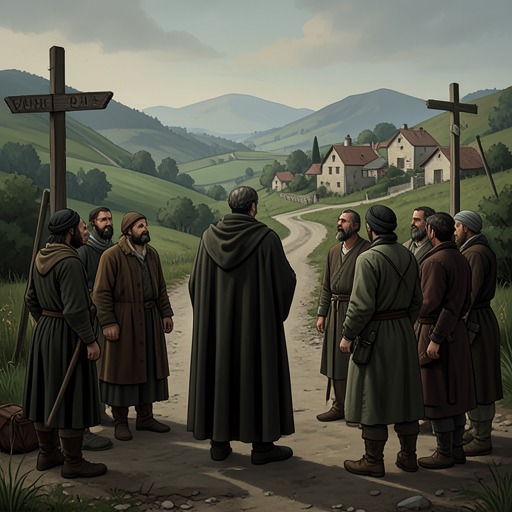
The Jerusalem council gives the clearest account of experience being weighed within a deliberative process. Its meeting begins with much debate, described as direct conversation among the believers. Peter recounts his eyewitness experience: God initiated the Gentile mission, gave the Gentiles the Holy Spirit just as God had given the Spirit to the Jewish believers, and made them clean. Paul and Barnabas then provide their own eyewitness accounts.
James connects these experiences with Scripture, interpreting Amos as evidence that God had long intended to welcome Gentiles into the community. The reasoning does not treat Gentile inclusion as a departure from Judaism; it understands the development as part of Israel’s purposes. The council therefore listens to multiple witnesses and sources rather than relying on a single person or authority. Its members also pause to hear one another, a discipline the book contrasts with meetings where participants speak before others have finished.
This method gives experience a substantial but not solitary role. Eyewitness accounts and lived experience are brought into conversation with Scripture and collective reasoning. The council’s procedure offers a model for theological interpretation precisely because it tests an emerging understanding through several kinds of evidence and through the community’s shared deliberation.
Limits and Continuing Questions
The book does not treat group discernment as infallible. A community may reach a mistaken conclusion, while an individual prophet may be right—a truth that may become clear only in retrospect. Communities therefore need criteria for judging claims, including claims grounded in dreams and visions. The account raises rather than settles the question of how a congregation can tell whether such an experience is from God.
The issue remains practical as well as historical. The church continues to face questions about which values, practices, communities, and systems function as idols, and where injustice, exploitation, violence, and death call for a renewing word. Experience can alert a community to possibilities it has not yet recognized, but the book’s account of discernment calls for interpretation, testing, and solidarity rather than automatic acceptance. Its lasting emphasis is that faithful theological judgment listens closely to lived encounters while asking how they cohere with Scripture, the community’s witness, and the purposes of the Realm.