Malta
Acts of the ApostlesMalta is the island south of Sicily where Paul and the other survivors of the shipwreck come ashore on their way to Rome. The island’s significance lies in the reversal of apparent danger into welcome and service: its inhabitants receive the travelers, Paul survives a viper bite, and healings associated with him reveal the Realm among gentiles. What might seem like a detour becomes a consequential setting in Luke’s journey narrative.
Setting and Arrival
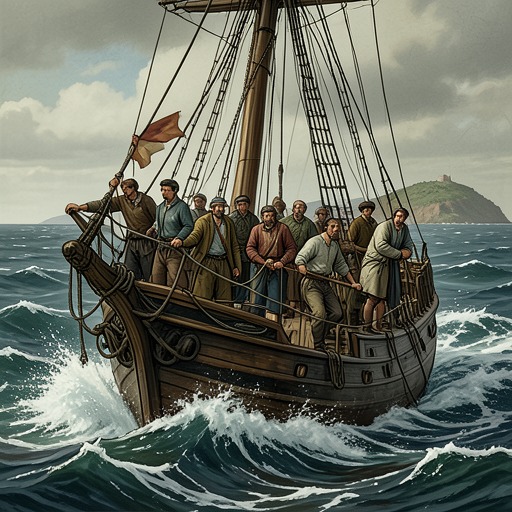
The travelers discover that they have reached Malta after the storm and the breakup of their ship. Earlier in the voyage, Paul had warned of difficult waters and urged that the ship’s load be lightened; when the vessel finally broke apart, soldiers considered killing the prisoners to prevent their escape. Julius intervened to save Paul and the others, and they reached shore alive. Malta is therefore entered not as a planned destination but as the landing place at the end of a crisis at sea.
The island lies south of Sicily. The local people welcome the shipwreck survivors, an act that shifts the scene from the threat of death to the possibility of shelter and assistance. The account makes their reception significant beyond practical kindness: people who do not know God can nonetheless cooperate with divine purposes by offering hospitality.
Hospitality and the Viper
Because it is cold, the survivors build a fire. As Paul gathers brushwood, a poisonous snake fastens on his hand. The islanders interpret the incident through the ancient assumption that wrongdoing ultimately receives punishment. Since Paul has escaped death at sea only to be bitten, they conclude that he must be a murderer receiving deserved condemnation. Their judgment shows how the same events that might become signs of preservation can first be read through a framework of retribution.
Paul emerges unharmed. The islanders then revise their interpretation, but their new conclusion is also mistaken: they take the unusual event to mean that Paul is a god. The episode thus gives Malta a double role in the narrative. Its inhabitants are hospitable, yet their theological assumptions do not enable them to recognize what the events signify. The account notes that this scene has also contributed to religious practices involving the handling of venomous snakes, a later use that raises questions about how the episode is interpreted.
Healing and the Realm
Publius, the leading resident of Malta, has a father who is confined to bed with fever and dysentery. Paul visits him, lays hands on him, and prays; Publius’s father is healed. Other islanders come as well, and they too are cured. These healings are presented as signs of the Realm, not merely as a sequence of recoveries: they embody restoration of human life toward what God intended.
The island’s welcome continues after the healings. In contrast to Paul’s recent encounters with Jewish and Roman provincial leaders, the people of Malta honor him and supply the provisions needed for the final voyage to Rome. The travelers’ arrival in danger is followed by hospitality, healing, honor, and material support. Paul therefore leaves Malta for Rome on a positive note, and the gentile islanders’ response affirms the reach of witness beyond the places where he had met resistance.
Place in Luke-Acts
The episode connects Malta’s events with the wider shape of Luke-Acts, a narrative of movement from Galilee to Jerusalem and onward through Judea and Samaria to the ends of the earth. The church is called the Way in Acts, a name that reflects a people on a journey; Paul’s passage from Caesarea toward Rome makes that movement concrete. The sea, figured as a source of chaos and danger, becomes the setting in which the story affirms that God can bring the witness to a successful landing.
Malta also recalls promises voiced earlier in Luke. The account links Paul’s preservation from the storm, the threat of execution, and the viper with the promises associated with the birth of John the Baptist and Zechariah’s prophecy: God preserves Israel and brings forth a representative through whom gentiles may enter the Realm. On Malta, Paul is preserved and becomes an agent of healing among gentiles. The island is thus more than a pause before Rome; it is a place where the journey’s larger purpose becomes visible.
Narrative Significance
The island’s episodes turn on competing interpretations of vulnerability and power. The snake bite first appears to confirm the islanders’ belief in punishment, then prompts them to mistake Paul for a god. Luke’s commentary draws attention to the gap between witnessing an extraordinary event and understanding it. The inhabitants’ hospitality and honor matter in their own right, but their changing explanations also show why witnesses may need to interpret events in terms of the Realm rather than leave them to assumptions that distort their meaning.
Malta also makes room for a tension between the promise of preservation and the fact that suffering is not always prevented. The narrative tells of Paul surviving the storm and the viper, and of Publius’s father and other islanders being cured; it does not establish that everyone in comparable circumstances will escape death or illness. Its significance rests instead in the claim that the Realm can be present amid danger and that hospitality, healing, and shared provision can disclose its character. For Luke’s readers, the island marks a point where a perilous journey yields welcome and renewed support before its final passage to Rome.