Malta viper incident and healings
Acts of the ApostlesThe Malta viper incident and healings recasts a shipwreck’s aftermath as a scene of welcome and restoration: Paul survives a snakebite, heals the father of the island’s leading resident, Publius, and becomes the focus of further healings. The episode presents Malta not as a mere stop on the way to Rome but as a place where the Realm is made visible among Gentiles—and where observers’ assumptions can mistake its signs for something else.
Arrival and Welcome
After the shipwreck, the travelers discover that they are on Malta, south of Sicily. The islanders welcome the survivors. The account makes their hospitality significant beyond simple kindness: they need not know God in order to help carry out divine purposes. The welcome recalls the covenant with the whole human family associated with Noah, suggesting that cooperation in the Realm can begin outside the community’s own religious understanding.
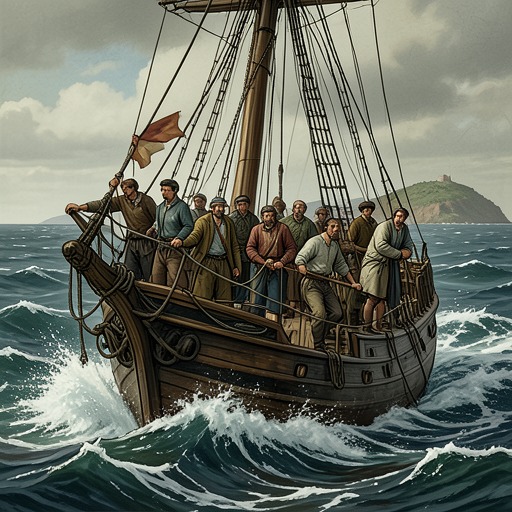
The travelers are cold, so they build a fire. As Paul gathers brushwood, a viper fastens on his hand. The sequence moves quickly from shelter to danger, making the fire both a practical response to the circumstances and the setting for a new test of how the islanders interpret what they see.
The Viper and the Islanders’ Interpretations
The islanders reason that Paul must be a murderer: although he escaped death at sea, justice is now overtaking him. Their judgment reflects an ancient assumption that wrongdoers ultimately receive punishment. The account also notes a possible association between the word for justice and Dike, the goddess of justice, while distinguishing this Greek wordplay from certainty about what the islanders themselves intended.
When Paul does not die, the islanders reverse their judgment and conclude that he is a god. Their first conclusion casts him as a condemned criminal; their second elevates him to divinity. Both readings reveal the limits of their interpretive framework. Even recognition that something unusual has occurred does not, by itself, help them name the Realm. The episode thereby distinguishes witnessing an extraordinary event from understanding its theological significance.
The incident has also been used to support religious practices involving the handling of venomous snakes. The account identifies that later use as a consequence of the passage, without treating it as the episode’s own stated purpose. Its interpretive concern is instead the gap between the event and the conclusions people draw from it.
Healing and Provision
Publius, the island’s leading resident, has a father who is sick with fever and dysentery. Paul visits him, lays hands on him, and prays; Publius’s father recovers. The narrative then extends the healing beyond this household: the other people on the island also come and are cured. These recoveries are presented as signs of the Realm, not only because illness gives way to health, but because restoration embodies the Realm’s purpose for human life.
The islanders respond to Paul with honors and provide what the travelers need for the final voyage to Rome. This welcome contrasts with Paul’s recent encounters with Jewish leaders and provincial authorities of the Roman Empire. Malta’s inhabitants, who first misread the viper episode, nevertheless become generous hosts and supporters of the journey. The episode thus places practical care—healing, honor, and provisions—alongside the public sign of survival.
Echoes of Luke and the Realm
The Malta episode is paired with the birth of John the Baptist and Zechariah’s prophecy in Luke. In that earlier passage, John’s birth prompts questions about what he signifies, and Zechariah affirms promises that God will preserve Israel and bring forth a representative through whom Gentiles can enter the Realm. On Malta, the travelers’ survival and Paul’s healing work among islanders enact that promised movement toward Gentiles.
The parallel also reaches back to the preceding shipwreck. Paul has been preserved from the storm and from the threat that the prisoners might be killed; on Malta, he is preserved again, this time from the viper. His survival is joined to action on behalf of others: he heals Publius’s father and the islanders who come to him. The episode therefore links preservation not to private escape alone but to continuing witness.
Malta might appear to be a detour on the route to Rome, yet the narrative makes it a place where the Realm is disclosed. The islanders’ welcome and care become part of that disclosure, even though their initial explanations of Paul’s survival do not adequately identify it. The account also recognizes that its images of healing and protection do not mean that suffering always ends in recovery: people may die from snakebites, and fever and dysentery may prove fatal. Its emphasis is on discerning the Realm amid peril and vulnerability, rather than claiming that every danger is averted.