Sadducees
Acts of the ApostlesThe Sadducees are portrayed in Acts as a wealthy group closely associated with the temple authorities and committed to a theology that rejects the resurrection of the dead. Their encounters with the apostles turn that disagreement into a public struggle over who can interpret Israel’s faith and command allegiance. Luke places them among the authorities resisting the movement, but the narrative’s longer perspective sharply reverses the apparent balance of power: the leaders who try to silence the witnesses fade from influence, while the church continues to grow.
Identity and Beliefs
The Sadducees’ defining theological position in these episodes is their disbelief in the resurrection of the dead. The book also situates them within the social and economic life of Jerusalem: they are described as wealthy, and the priests who control the temple bank are often intertwined with them. Their resistance to resurrection preaching therefore has more than a doctrinal dimension in Luke’s reading. A claim that God has raised the dead challenges their theology and, in the author’s analysis, threatens the social and economic power attached to their leadership.
That position belongs to a wider contrast between the broken old age and the coming Realm of God. In the end-time outlook described in the book, the old age is marked by injustice, exploitation, violence, and death; God will ultimately replace it with a new order of justice, mutual support, peace, health, and life. Empires that demand ultimate allegiance belong to the old creation. Against that horizon, resurrection is not an abstract proposition: it announces that death does not have the last word and that the old order is not final.
Conflict with the Apostles
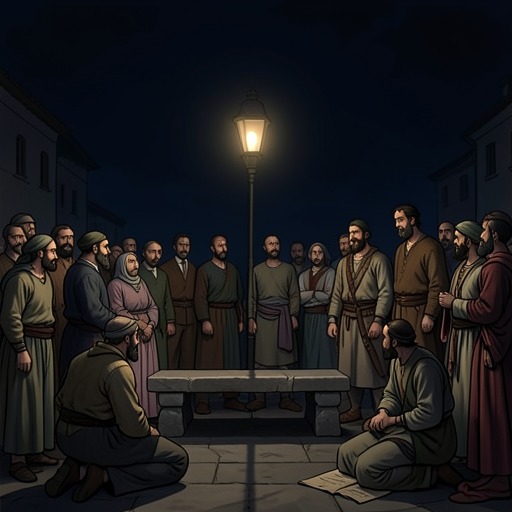
The Sadducees become active opponents when the apostles preach that the dead are raised in Jesus. Alongside temple authorities, they are greatly disturbed by the proclamation and have the disciples arrested and held overnight. The delay before examination follows Jewish legal protocol, which called for proceedings in daylight. At the hearing, the council asks by whose name the apostles healed the person who had previously been unable to walk.
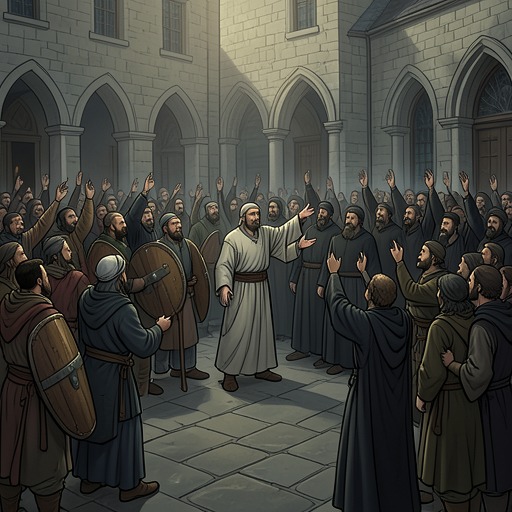
The question of the name is a question of authority. In the ancient setting described by the book, invoking a name meant invoking the force associated with it; if the authorities could establish that the healing derived from a power they could discredit, their position would remain secure. Peter instead identifies Jesus as the source of the apostles’ action and declares that God raised him from the dead. The healing at the Beautiful Gate thus joins bodily restoration to the larger claim that the Realm is already present. The council’s challenge, intended to test the apostles, becomes a confrontation over resurrection, healing, and the legitimacy of the new movement.
Luke frames the hearing with an irony: although the authorities put the apostles on trial, readers are invited to see the authorities themselves as judged. The people have already responded positively to the testimony. Moreover, Luke’s audience reads the episode after the Jerusalem Temple’s destruction in 70 CE, so the leaders’ apparent institutional strength is set against the later collapse of their world and the survival of the witness they tried to suppress.
Dispute over the Witness
The conflict recurs in the account of the apostles’ public testimony and renewed confrontation with the council. Luke sets the dispute alongside the earlier Gospel scene in which the Sadducees challenge Jesus about resurrection. The pattern is parallel: the Sadducees provoke a controversy, and Jesus in the Gospel or the apostles in Acts answer by correcting their understanding. In Acts, the immediate issue is also the council’s order that the apostles stop teaching. The apostles refuse, placing obedience to God above compliance with human authorities and affirming that they must testify to Jesus’ resurrection.
The book presents the dispute as a contest between interpretations of Jewish tradition, not as a simple opposition between Judaism and a separate Christian faith. Jesus and the apostles are portrayed as interpreting that tradition more faithfully than their opponents. The narrative also warns readers not to turn its criticism of particular leaders into a condemnation of Jewish people. The Sadducees’ role is specific: they represent opposition to resurrection and to the apostles’ public witness in these episodes, while the book’s broader account includes varied responses among Jewish groups and communities.
Decline and Narrative Significance
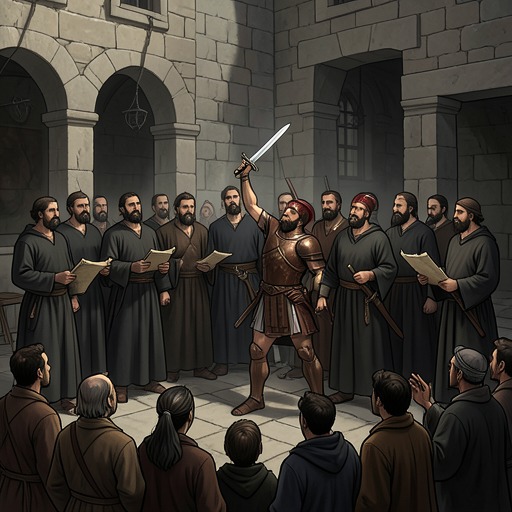
In a later council scene, Paul identifies himself as a Pharisee on trial because of the resurrection. The Sadducees reject end-time theology and resurrection, and the disagreement between them and the Pharisees divides the council. This episode makes the theological boundary explicit again: the resurrection is not a marginal detail but a fault line within the leadership assembled to judge Paul. The division becomes so violent that the Roman tribune removes Paul to protect him.
Luke’s account of Gamaliel offers a different response to the apostolic movement. When the enraged council wants to put the apostles to death, the respected Pharisee urges restraint: the council should allow the undertaking to continue and judge it by what follows, since opposing a work that comes from God could mean opposing God. The Sadducees are part of the council whose hostility Gamaliel checks, but they do not control the outcome. Luke thus contrasts their resistance with the possibility of a more cautious and discerning response.
The narrative’s retrospective judgment is sharpened by historical change. By the time Luke’s congregation heard Acts, the Temple had been destroyed and the Sadducees, high priest, and council had lost their former power. Jesus, by contrast, is presented as raised from the dead, and the church is flourishing. The contrast does not merely record a change in influence: within Luke’s argument, it vindicates the resurrection proclamation and exposes the limits of the authorities’ attempt to silence it. The Sadducees’ decisive narrative function is to embody a powerful challenge to resurrection whose apparent victory proves temporary, while the witness they resist carries the promise of the Realm forward.