
The Logic of Revenge
AeneidThis flow follows how acts of retaliation accumulate until Pallas’s death becomes the decisive reason for Turnus’s execution.
increasing Bearing strength in each event
 decreasing
Bearing strength in each eventdecreasingPriam’s Accusation
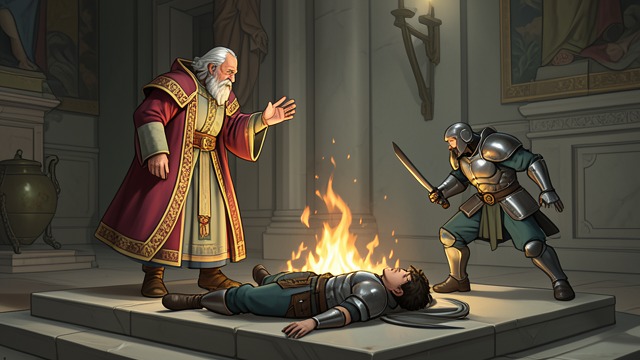
Priam’s Accusation
Witness
Priam sees Pyrrhus kill Polites before him and responds with the last strength of age.
Charge
He condemns Pyrrhus for violating filial and sacred law, invoking the gods and the duties of nations.
Death
Pyrrhus kills Priam at the altar, making the fall of Troy inseparable from an unresolved moral debt.
The Belt Taken
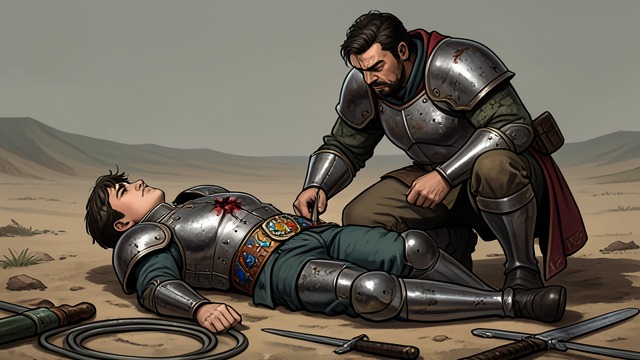
The Belt Taken
Victory
Turnus kills Pallas after overpowering the young Arcadian warrior.
Insult
He removes the Belt of Pallas and wears it as a trophy, treating grief as an object of triumph.
Repercussion
The belt carries the memory of violated funerary and heroic limits into the final encounter.
Aeneas’s Captives
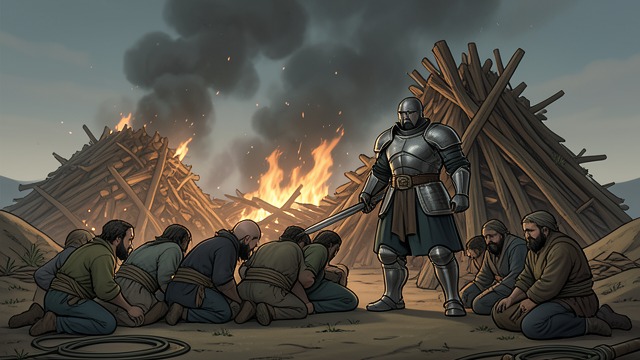
Aeneas’s Captives
Fury
Aeneas captures enemies and kills them in honor of Pallas, briefly suspending ordinary mercy.
Justification
He frames retaliation as a debt owed to the dead youth and to Evander’s trust.
Danger
The logic of vengeance expands the war beyond defense and makes Aeneas resemble the violence he opposes.
Turnus’s Trophy
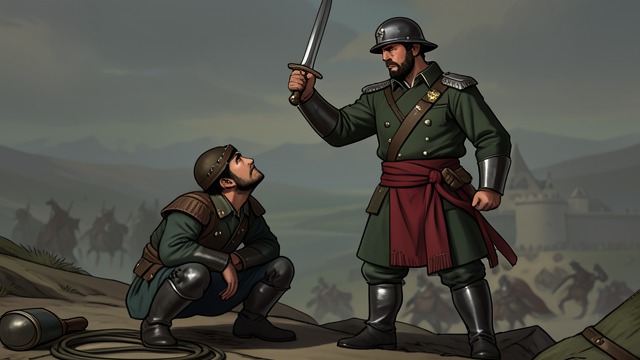
Turnus’s Trophy
Memory
The Belt of Pallas remains visible on Turnus’s body long after the battlefield victory.
Judgment
Aeneas initially considers sparing Turnus when the defeated prince invokes fatherhood and mercy.
Reversal
Recognition of the belt reawakens revenge and converts hesitation into execution.
The Final Stroke
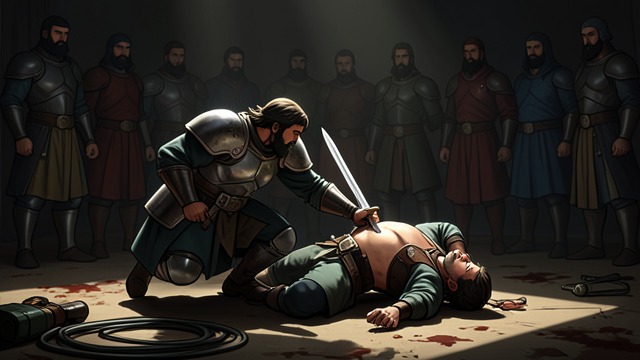
The Final Stroke
Decision
Aeneas interprets Turnus’s trophy as proof that mercy would betray Pallas.
Execution
He drives the sword into Turnus’s chest while the Latins watch the war’s final settlement.
Ambiguity
The victory establishes peace, but its final image remains one of grief-driven violence rather than uncomplicated justice.
during the sack of Troy
during Turnus’s duel with Pallas
immediately after Aeneas hears of Pallas’s death
before the final duel
the closing moments of the poem
