
The Harpy Route
AeneidThis flow follows the Harpies’ attack, Celaeno’s curse, and the way famine becomes an unexpected confirmation of destiny.
increasing Bearing strength in each event
 decreasing
Bearing strength in each eventdecreasingThe Unwatched Herds
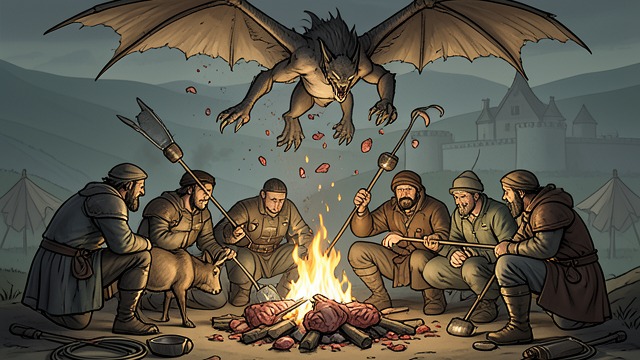
The Unwatched Herds
Relief
The Trojans find cattle and goats wandering freely after a long sequence of storms and shortages.
Feast
They sacrifice and eat, believing the island offers a temporary refuge.
Threat
The Harpies descend and defile the food, converting abundance into supernatural hostility.
The Failed Counterattack
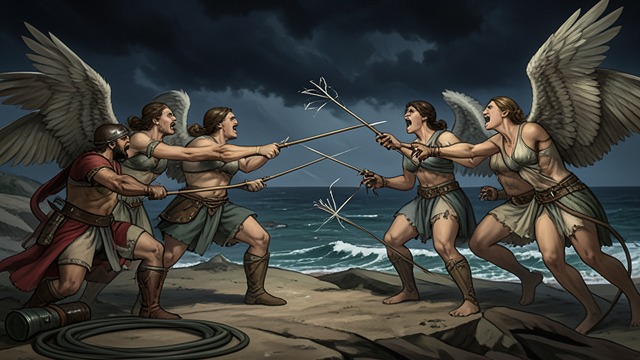
The Failed Counterattack
Anger
Aeneas orders the Trojans to defend their meal and punish the creatures.
Futility
Weapons rebound from the Harpies’ bodies, revealing that ordinary force cannot solve the encounter.
Lesson
The Trojans must interpret the event rather than win it militarily.
Celaeno’s Curse
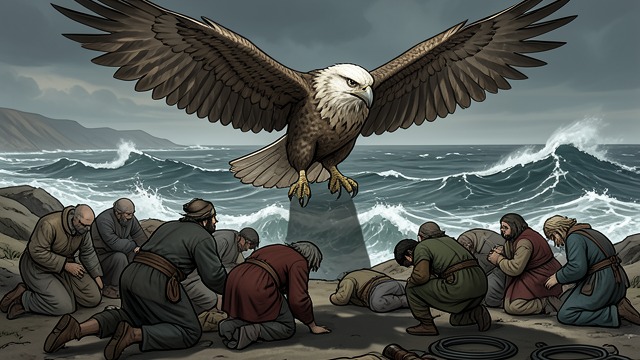
Celaeno’s Curse
Prophecy
Celaeno grants the Trojans passage to Italy but predicts fierce famine before their walls are built.
Ambiguity
The warning sounds like punishment, yet it also confirms that the promised shore is real.
Response
Anchises abandons combat and turns to sacrifice and prayer.
The Bread Tables
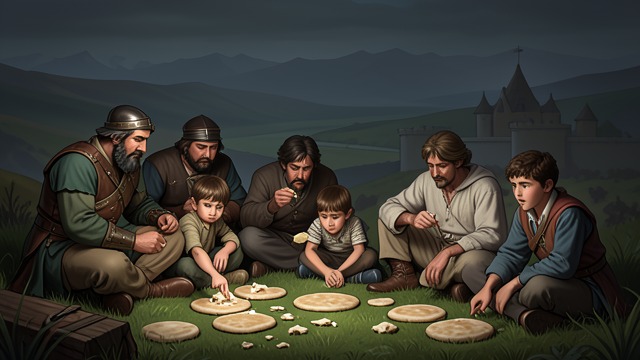
The Bread Tables
Fulfillment
The Trojans eat the flat cakes beneath the food and realize that the tables themselves have been consumed.
Recognition
Ascanius’s joke recalls Celaeno’s prophecy and Anchises’s earlier warning.
Settlement
Famine becomes a sign that the wandering is ending, not merely an affliction to survive.
Auspicious Hunger

Auspicious Hunger
Interpretation
Aeneas recognizes the meal as the prophesied moment of rest and orders the Trojans to search the surrounding land.
Reversal
The curse is absorbed into the larger destiny and loses its power to frighten.
Meaning
The episode demonstrates how suffering becomes meaningful only when connected to a future community.
the Trojans’ first arrival at Strophades
later the same day at Strophades
after the Harpies withdraw to the cliffs
during the first meal on the Tiber
immediately after the bread-table omen
