
The Politics of Marriage
AeneidThis flow follows Lavinia’s marriage from dynastic promise to the central contested object of the Latian war.
increasing Bearing strength in each event
 decreasing
Bearing strength in each eventdecreasingLavinia’s Inheritance

Lavinia’s Inheritance
Position
Lavinia is Latinus’s only surviving child and therefore carries the succession of the Latian crown.
Suitors
Neighboring princes seek her hand because marriage grants access to land and sovereignty.
Pressure
Her personal future is inseparable from the political future of Latium.
Turnus’s Claim

Turnus’s Claim
Expectation
Turnus is favored by Amata and regarded as Lavinia’s likely husband.
Identity
He treats the marriage as a reward for lineage, loyalty, and martial service.
Threat
The arrival of Aeneas turns expected inheritance into disputed succession.
The Foreign Bridegroom
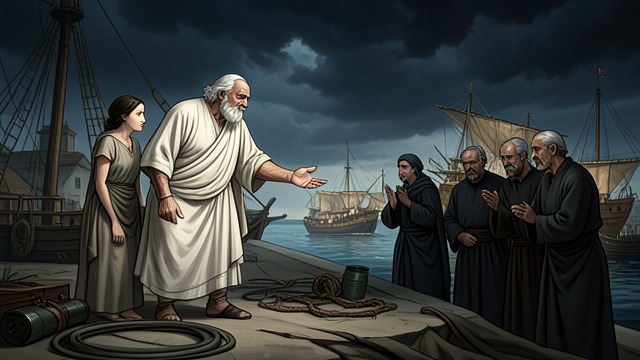
The Foreign Bridegroom
Prophecy
Latinus recognizes that the promised son-in-law must come from abroad.
Choice
He offers Aeneas land and Lavinia, making prophecy a public political decision.
Fracture
The king’s obedience to fate appears to Turnus’s supporters as betrayal of the native order.
Amata’s Resistance

Amata’s Resistance
Argument
Amata warns Latinus that a foreign prince will take Lavinia and the throne away from their family.
Madness
Alecto intensifies her maternal fear until it becomes public ritual and disorder.
Consequence
Her resistance makes Lavinia’s marriage the emotional center of the civil conflict.
The Marriage after War

The Marriage after War
Victory
Aeneas wins the right to marry Lavinia by defeating Turnus.
Restraint
He promises not to erase Latin sovereignty and names a new city for Lavinia.
Resolution
The marriage becomes a treaty between peoples, though it has been purchased through devastating violence.
before Aeneas’s arrival in Latium
before the Trojan embassy reaches Latinus
during Latinus’s audience with the Trojan ambassadors
during Alecto’s possession of the Latin court
after Turnus’s death
