Hardin Scott
After Ever HappyHardin Scott is a writer, partner, and father whose movement from rage and addiction toward accountability gives his story its central tension. His childhood sense of being unwanted and the revelation that his understanding of his paternity may be false help explain his anger, but they do not erase the harm he causes. Across his life with Tessa, he can be both devoted and controlling; his later efforts to change matter precisely because they follow real injury, not because they make that injury disappear.
Identity and Background
Hardin remembers growing up out of place and unwanted. His mother, Trish, tried to care for him, but worked too much and slept through the day after being on her feet all night. In his account, her effort could not replace the father he believed a lost boy needed. The memory offers context for his loneliness without making his mother indifferent: the failure he describes is one of circumstance and absence as much as intention.
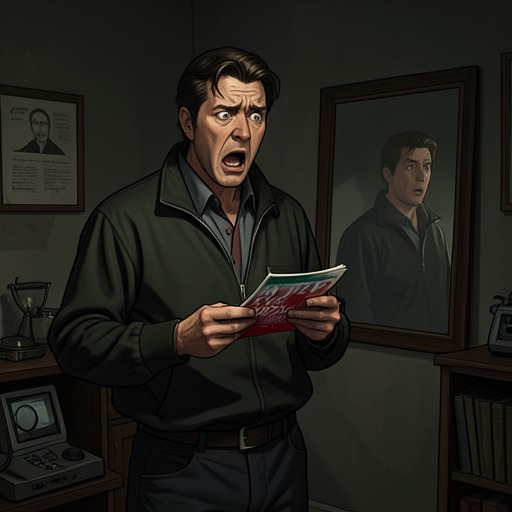
As an adult, Hardin struggles with addiction and anger. He attributes part of his temper to the father he was raised to believe he had, and the possibility that his family history is not what he understood destabilizes that explanation. He reacts to the fatherhood revelation with confusion and fury, dismissing the apparent switch in fathers as an absurd plot that cannot belong to his own life. Buried memories resurface, making the discovery not merely a change in family labels but a rupture in his account of himself.
Anger, Attachment, and Harm
Hardin's volatility becomes concrete in his confrontations and in his relationship with Tessa. Outside the bar across from Trish's house, he points toward the neighboring brick house associated with Christian Vance and wonders what Vance was doing on the night men came into his family home. He then bends to pick up a brick and raises it behind his head. Suspicion and old trauma turn the setting into a focus for his rage; the scene shows how quickly a painful question becomes the prospect of violence.
His destructiveness also reaches the place itself. At the old house, Hardin rejects another person's authority to approve his actions, lowers a flame to the arm of a couch, and waits for it to catch, imagining the fire consuming the building. The act gives anger a physical target: instead of resolving what happened there, he tries to destroy the site bound up with it. Fire becomes an expression of his wish to end the past by force, even as the impulse reveals how tightly he remains caught in it.
The harm in his relationship with Tessa cannot be reduced to anger directed at houses or other men. In one encounter, she tries to get off his lap and scratches his arms as he prevents her from moving. He gathers both her wrists behind his back and holds them in one hand while ordering her to stop fighting him. The scene establishes physical restraint within their intimacy; it complicates any account of their relationship that treats passion as proof of safety or mutual ease.
Jealousy likewise turns into a threat to the relationship. On seeing another woman wearing Hardin's shirt, Tessa says that the image will remain burned into her memory and recognizes the significance of what she is seeing. Hardin's response to the rupture is an ultimatum: he offers one last chance to leave with him and return home, warning that if he walks out without her, that will be the end. The declaration frames departure as a final test, but its pressure also exposes the coercive edge of a relationship in which love, fear, and control can occupy the same moment.
Paternity and Family Conflict
When Hardin confronts Christian Vance about being his father, he challenges the certainty of the claim and asks whether any testing was done. The question reflects the larger shock of the switched-fathers revelation: the man he had understood as his father and the man now claiming that place no longer fit into a stable story. His anger is therefore directed not only at a person but at the history and identity he thought he possessed.
The revelation reopens memories of childhood and intensifies Hardin's sense of betrayal. His first response is disbelief and rage, not reconciliation. That response sits alongside his earlier account of needing a father, making the revelation especially painful: the absence that shaped his childhood is now entangled with a possible truth about who his biological father is. The evidence leaves the question of testing explicit in Hardin's challenge, rather than presenting his immediate reaction as settled acceptance.
Change, Accountability, and Recovery
Hardin's progress is most visible when he is provoked and does not repeat his familiar response. During a confrontation, Landon demands that he hit him. Hardin feels betrayed and pushed toward anger, but walks away instead. The refusal does not make the conflict disappear; it marks a consequential interruption in the pattern of answering hurt with violence.
He also begins to recognize how his withdrawal affected Tessa. He apologizes for not returning with her, for ending their relationship because of his own problems, and for pushing away the support he had wanted to offer her. He understands that she had repeatedly tried to help him while he resisted, and compares that experience with how it feels when he wants to care for her. The apology is significant because it names his actions and their effect rather than asking her to treat his intentions as enough.
In the discussion about abuse, however, Hardin initially answers Tessa's concern by insisting that he has never hit her and never would. Tessa has asked whether he has considered the signs of an abusive relationship; his immediate focus on whether he has struck her does not address the physical restraint she has experienced or the broader question she raises. He acknowledges repeated mistakes and says he would never abuse her, but concludes that if she sees him or their relationship that way, there is no hope for them. The exchange preserves a painful gap between his self-understanding and Tessa's concern. His later self-recovery should not be used to erase that gap.
Hardin's efforts to change include more than promises to Tessa. He attends weekly sessions with a mental-health professional and meets Luke there; Luke and his girlfriend, Kaci, become his closest friends. Hardin describes them as a small, quieter circle, unlike the parties and bets associated with his former social life. He also begins taking calls from Trish after avoiding her, while acknowledging that he has not forgiven her and is only trying to be less angry. Recovery here is gradual and incomplete: new habits coexist with injuries and grievances that remain unresolved.
Work, Love, and Later Life
Writing gives Hardin a way to revisit the relationship and make a public account of its meaning. He recalls recording moments between himself and Tessa, including the first time he said he loved her and the later time he did not take it back. He describes After as a love story concerned with forgiveness, unconditional love, addiction, family history, and the possibility of self-recovery. The book-within-the-book turns private memories into a deliberate argument that people can change if they try and have someone to lean on. That conviction is part of Hardin's hope, though the events of his relationship also show why love cannot stand in for accountability.
By twenty-five, Hardin has published four books and become a New York Times bestseller. At his graduation ceremony, the diploma matters less to him than the possibility that Tessa might be there; he attends in large part because she urged him to go. He says that everything he has done since she left has been directed toward becoming better for her. That devotion is powerful but still marks Tessa as the measure of his improvement, even as his therapy and changed choices indicate work beyond a single romantic gesture.
Their later family life gives the story a different scale. Hardin and Tessa try for more than a year to conceive, attending fertility appointments and following ovulation schedules while continuing to hope despite the odds. Their efforts include Tessa's wives' tales and a bitter, chunky mixture she believes helped a friend's husband. The detail makes their hope practical and repetitive rather than effortless: it is organized around appointments, schedules, and remedies as well as intimacy.
Hardin is later shown as Emery's father, on the receiving end of his daughter's glare and eye-roll across the kitchen island. She taps her painted nails on the granite, a gesture the narration compares to Tessa's. The domestic scene places him in a role far removed from the lost boy who believed he needed a father, while also linking his daughter to her mother through a small, familiar mannerism. The ending affirms that he and Tessa have made it together and presents their souls as alike, but it does not require readers to forget the harm that preceded that outcome.
Narrative Role and Significance
Hardin's character is built around a contradiction the story repeatedly stages rather than neatly solving: he needs connection, yet anger and control help drive away the person whose support he wants. His memories of an overworked mother, his uncertain paternity, his addiction, and his damaged relationship with Tessa shape the conditions of that conflict; they are explanations, not exonerations. The narrative's emphasis on apology, therapy, restraint, and changed behavior places responsibility alongside the language of love and redemption.
His strongest evidence of change comes when behavior shifts under pressure: he walks away when Landon challenges him to violence, begins to accept help, and recognizes that he pushed Tessa away while wanting her support. At the same time, his insistence that he has not hit Tessa cannot settle her question about abuse, especially against the scene in which he holds her wrists and prevents her from leaving. That tension keeps his arc from becoming a simple story of a dangerous man cured by devotion. Hardin's later writing, partnership, and fatherhood are forms of a future he works toward, but the story's own record of his actions remains part of what that future must contain.